

Relevance of Harriet Tubman's Efforts in Today's Modern World
1. Introduction
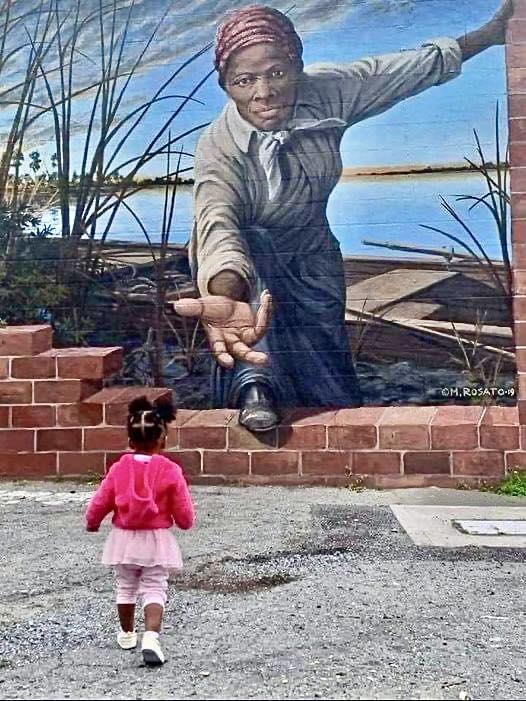
Harriet Tubman is a historical figure who did heroic work: she freed many women and men from slavery. Because of the work done by Tubman, people can see what she was able to do for other people constituted heroism in its truest form. The powerful presence she has in our collective memories as well as in present-day artistic, historical, and educational communities speaks to her continued relevance.
In the Tide of Light, a novel written by Ellen Coburn about Tubman, Coburn writes that it was in fact Tubman’s decision to free others from the institution of slavery that has made it possible for anyone who wants to know to learn about her heroic struggles and mighty deeds today. Celebrating those mighty deeds when reading historical novels, or recounting the same historic struggles Tubman so valiantly undertook, is one way to continue to keep close to us in our homes of the mind all those most near to our heart’s concerns. These concerns manifest in dreams when we dream of individuals who need help. Dreams containing assistance requests might reference the legacies of our ancestors or stranger-dreamers whose dreams belong to them broadly.
Harriet Tubman’s physical person, though now passed into spiritual mystery and into dust, continues to help people today. She is a constant fixture in museum exhibits and in children’s classrooms. The Tubman Special Study is part of the National Park Service (NPS). The National Underground Railroad Network to Freedom (NTF) Program of the NPS exists alongside Linda Theus-Lee’s "Aboard the Underground Railroad" program at North Star Village Inc. These programs help remind people of the people who continue to require legal and illegal, overground and underground help today. They address Tubman’s remaining personal question: that is, will people in the modern era continue to go and do and help and keep helping the assisted and the issuer of "rescue letters"? Only in the modern world will it become increasingly clear why Tubman did what she did. Because Tubman was once helped (when she was 27 years old), Tubman would grow up giving help to others.
2. Historical Background of Harriet Tubman
Before discussing the relevance of Harriet's work with the Underground Railroad or her migration in today's modern society, one must consider who Harriet Ross Tubman was and the historical events leading to her life and work. Tubman was born into slavery between 1819 and 1823. She and her parents were owned by Edward Brodess, a small slave-owner and overseer. According to John C. Humez, Edward Brodess was generally defined as rough but not brutal. What made him unique was his sadistic and often unprecedented methods of punishment. Additional disciplinary methods for her, as well as her family and other slaves, included selling a few sealed iron masks. One of these masks she faced for refusing to get a piece of sugar to swat bugs away from her sleeping body laying on the kitchen table. During the 1830s and 1840s, Brodess loaned her and her brother, Ben, to merchants in Baltimore. She was sometimes hired out to families in the city, which was unusual because field hands were more valuable than domestic slaves.
In one highly notable quotation that is often taken out of context, the reviews point out much about her need for peace and a new and better home. This unique quotation communicates Harriet Tubman's life experiences and how they have shaped her. As an enslaved woman with epilepsy, she undoubtedly yearned for the literal freedom of owning herself. Harriet wanted to escape constantly. Even though she was free from the iron chains of slavery, it was as if mental shackles were merely replaced by those cold, sharp chains. Harriet Tubman believed she would be free as long as at least one person remained in prison. Would she consider herself lost in today's modern world?
3. Harriet Tubman's Contributions to the Abolitionist Movement
Harriet Tubman was an influential figure in the anti-slavery movement. Tubman contributed to the movement in a variety of ways, from her involvement in the Underground Railroad to providing legal representation to refugees. Nevertheless, Tubman is possibly most famous as a "conductor" on the Underground Railroad. The Underground Railroad was a secret network of escape routes made up of individuals willing to help slaves escape, not trains or underground tunnels. It stretched from the southern slave states to the northern free states and beyond into Canada. Tubman helped find and free hundreds of people bound in slavery as a "conductor."
Tubman was a well-recognized figure whose actions triggered profound change during the abolitionist era in the United States. She contributed to a social movement that shaped the course of the country. Women and African Americans won rights close to two centuries after the start of this movement: the right to vote and full and equal citizenship, respectively. Both changes represented the potential to alter U.S. society and guide the course of America's relationship with race and women. Harriet Tubman is famous for all the "conductor" work she did on the Underground Railroad. But she became a unique figure in the history of the social movement and in United States history for many more reasons. She was an abolitionist, conductress, scout, and nurse in the United States Civil War, as well as a suffragist and advocate for oppressed people in the United States.
4. Harriet Tubman's Role in the Underground Railroad
Harriet Tubman was born Araminta Harriett Ross in Dorchester County, Maryland in 1822. After escaping in 1849, Harriet returned to the south many times - at great personal risk - to guide other enslaved people to safety through the Underground Railroad, a secret network of routes and safe houses. During the American Civil War, she served as a spy and nurse for the Union Army and participated in a series of armed agricultural raids along the banks of the Combahee River, which further liberated the enslaved population. 178.2 miles of trails make up the Underground Railroad in Maryland.
Harriet Tubman is known for her extraordinary courage, confidence, and common sense. Her grit and determination not only saved lives and inspired a generation, but they continue to inspire and provide a guide for people fighting for freedom today. If Harriet lived in the modern world, not many things would be different. She feared nothing and no one. "Harriet was full of fight," one observer reported. She knew all too well the scars left by the lash of a plantation overseer. She received her own face and her sisters'. To escape that unbearable life, she changed it to get away. Harriet's role in the Underground was with the group. She was welcoming, always ready to help abused human beings in any way she could. "Except for those who could or would fight other slaveholders, Tubman became the de facto general of a growing pilgrimage. Now a woman in her 30s, she returned south again and again, sometimes even singing spirituals aloud at the heads of her groups so that they wouldn't attract attention.
5. Harriet Tubman's Work as a Union Spy during the Civil War
It is more than just a philanthropic act of holding onto history; practicing remembrance has been shown to create connections in our modern-day world. Activating the past evokes dialogue amid a diverse population. Thus, makers of America's past, present, and future will continue efforts to keep African Americans in the annals of the American story: 1608 Jamestown, Virginia "20 and odd black slaves; 1619 the arrival of the White Lion (a Dutch frigate equipped as a Man-Of-War but sailing under English colors); 1861 the gathering in Philadelphia of Harriet Tubman and the North's leaders "Tubman with information; Wendell Phillips (an abolitionist and orator); and Brigadier General Thomas A.J. Greason's all-inclusive spy network "the Coral Network "in the Mozley-Powell Papers; Abigail's Presentation. From abolishing slavery to spying in Dorchester County, Maryland, Harriet Tubman shifted from an Underground Railroad conductor to an espionage expert.
Here at home in Dorchester County, she took the struggles for freedom at Atkinson's Quaker Neck alone. When the Civil War broke out, and personal tragedy had struck her and her family, she turned her gaze from her dying father and the dead lies of her siblings and looked to her home. Her plan was to take Atkinson's Creek (Smithville, Maryland) and any other town necessary to force short a winning war. Her Union superiors in Washington and her Confederate slaveholders on the Eastern Shore both knew Tubman as Moses of their respective disgruntled captives. As a Union spy for Colonel Montgomery and Colonel Higginson, she led expeditions on the Combahee River, where she proved that a handful of men with Harriet's direction could undo the Systemic Plantation Complex. Unlike the previous attempts, this one made it into the historical record. It is still talked about today. Today, we are watching Tubman via the modern lens of worldwide social movements in the African United States. It is a vibrant image. She is now called St. Harriet.
6. Harriet Tubman's Advocacy for Women's Rights
Harriet Tubman is widely known for her efforts in freeing enslaved black people during the 1800s via the Underground Railroad and contributing to the Union Army during the Civil War. However, her work for the rights of women in the 1800s should also be acknowledged for its advancement of women’s rights and gender equality. She was a suffragette and cared for the advancement and equality of all genders. Nevertheless, Harriet Tubman was also a member of multiple intersectional groups. She was a woman fighting for the rights of all women, and also a black woman fighting for the rights of all black people, which still has modern connections to intersectionality between race and gender. Her work as an advocate for women has helped to build a modern society where acts of inclusion and equity between all genders exist. Today, firefighters, nurses, welders, soldiers, and many other professional categories in which women or people who are not identified with their assigned sex at birth can work in without gender discrimination are results of Tubman's efforts.
When reflecting on activism by Harriet Tubman, students have an example from the 1800s of a person who was one of the first fighters for gender equality and women’s rights. "As a woman, she was already vulnerable. As an enslaved woman, the fathered children the Benners 'disposed' of, mandatory to preserve their enslavement" (Blanton, T., Jr. speech, April 28), but Tubman saved herself and worked to save others. Additionally, Tubman never stopped fighting for the advancements of all women, no matter their race or background. Like her counterparts, Tubman was enlightened with the physical and psychological abuse women openly and slyly bear. A northern abolitionist, Tubman sided with women’s rights warriors.
7. Harriet Tubman's Legacy and Recognition
Despite having been an enslaved African-American woman, Harriet Tubman played a crucial role in helping many slaves escape the inhumane oppression and circumstances of their lives in America. Tubman's story has many aspects, from running away from slavery, saving a multitude of others, and even working for the Union cause as a nurse and spy during the Civil War. Her most monumental efforts of bringing slaves to freedom via the famous 'Underground Railroad' have etched their place into the historical record to this day. The station by the name 'Underground Railroad' was known to be the last place of safety for the runaway slaves seeking freedom in their perilous journey. However, as slavery began to erode in America, Tubman's legacy did not see its end with her. She spent the rest of her life working towards the establishment of educational institutions that catered to the educational needs and welfare of African Americans. Her death in 1913 failed to eradicate the impact of her deeds. Tubman has been honored and acknowledged by many throughout history in various forms and continues to be recognized today.
The most widespread method of preserving Tubman's legacy has been the adoption of her image and legacy by popular culture. Many films, TV shows, books, music albums, paintings, and murals have depicted her to tell the audience of her life and achievements. Furthermore, she has also been used as a caption or inspirational figure by many authors and musicians. However, Tubman has also been recognized via different methods. For example, she was stamped on the U.S. postage in 1978. Regarding her physical recognition, she is quoted by Secretary Jacob J. Lew as "one of the strongest the country has ever produced as a woman." To pay her a more direct tribute, in the year 1944 the country due to "valiant" efforts did end up using "Special Designations" for a Liberty cargo ship at New Orleans which had survived a German submarine assault to be named USS Harriet Tubman as well as the sealing of a military camp in Beaufort, N.C. complete with her namesake, Camp Tubman. Harriet Tubman had no shortage of accomplishments, as is evident from her recognition and tributes. Her remarkable memorials prove that her commendable deeds are indeed worthwhile.
8. Intersectionality: Harriet Tubman's Impact on Race and Gender Equality
Intersectionality, heralded by Harriet Tubman Intersectionality has become something of a catchphrase in modern feminism. Rooted in the sociology of Kimberlé Crenshaw and steeped in the metaphoric language of bell hooks's "theory of the center," it is an attempt to lyricize the abstractions of antiracist identity politics; to place it altogether in a song of interpretive subjectivist meaning; a painting of power's dominion ad crudele—the assertion of overlaps and the folds of minority oppression, the criticism of single-issue fixations. Harriet Tubman, at any rate, was intersection.
Despite her well-established mythos, she remains all too significant in the current year. Though I have yet to be the victim of chattel slavery, I have noticed that young black boys currently kill (and are killed by) themselves at a rate my instructions never could; and that no woman has suffrage to summon to her bedside in attempts to cleanse herself in the floweriest of perfumes. "Girl power" resonates in a particular key not just the old-fashioned tug of overcoming the once and still second sex; but to achieve efficacious interfeminine impulse such that co-eternally (forever and ever) arguing about it.
9. The Continued Struggle for Racial Equality in the Modern World
Despite the gains made in the name of civil rights over the past century, racial tensions still remain palpable in the United States. In a world where skin color still heavily influences one's socioeconomic status, encounters with the police are often influenced by race, and representational diversity is still largely a far-off dream, it is important to address the sheer relevance of Harriet Tubman in today's world. Here are nine ways the United States remains pertinent over a century after her death.
A simple search will show that deaths as a result of encounters with the police are disproportionately people of color, and that these deaths often result in little to no consequences for the officer that caused it. In a society where black people wearing hoodies can get them killed, where outrage is expressed when endorsement deals cannot effectively suppress athlete protest, where stereotypes of blackness should not get one killed but often lead to arrest, and where tensions over "transplants" erode support networks in remote Native American communities, it is clear that inequality is a staple of Western society. In order to be so accustomed to such egregious transgressions, it becomes clear that society as a whole has become desensitized to social problems. With entire news cycles devoted to how people of color themselves are often relegated to intergenerational poverty, must rely on food stamps to survive, and must even live in racially tarnished neighborhoods, it is evident that systemic mistreatment under colonialism is alive and well.
10. Challenges Faced by Marginalized Communities Today
Though Harriet Tubman contributed in innumerable ways to the fight for freedom and equality for herself and those she led out of bondage, what's astonishing today is how much her struggles and hardships remain relevant in our contemporary social world. Current events are filled with stories of attacks on immigrants and refugees, neither of whom are welcome in the United States today, despite its longstanding reputation as home to the tired, poor, and huddled masses teeming to be free. Anyone wearing a hijab knows that separate is inherently, perhaps intentionally, unequal. Persons in a wheelchair face constant barriers to moving through the world.
How is it that small towns and large cities continue to be places where one can be assaulted for one's race, ethnicity, religion, sexual preference, or gender identity? How is it that giving a person who beats up someone for being Jewish or Sikh the benefit of the doubt can affect public opinion or judicial outcomes? Why does a successful woman of color often remind people of a man? We tend to think that all barriers have been removed, yet college campuses, workplaces, and even quiet neighborhoods are full of the kinds of barriers that Tubman overcame and defeated. Many of the struggles faced by these marginalized communities, such as refugees, religious minorities, and differently-abled individuals, are similar to those Tubman and the "railroad" worked to dispel or alleviate. These tasks can only be completed by careful reading and re-reading of the landscape, reading for the connections, for the newly visible ties that were previously obscured by the initial, surface readings of dissimilarity between our world and that of Harriet Tubman's.
11. The Importance of Activism and Advocacy in the 21st Century
In the years leading up to the start of the American Civil War, Harriet Tubman employed a twofold strategy - a mix of direct social service and activist advocacy to advance social ends - that, as it turns out, has relevance for us in the 21st century. For in the wake of Tubman's passing, the US seems to be embroiled in at least two of the main issues that raise their heads in any society when it is advancing - racism and economic inequality. A number of the proposed candidates for the 2020 US presidential election, from both sides of the aisle, are campaigning on policies intended to address these two ills - policies, it is instructive to note, that depend to some extent on American-style Tubmanite strategies. But direct social service and activist advocacy need not always go hand in hand; we can have the one without the other. We needn't be interested in securing long-term change to be interested in improving society. For this reason, the two are here discussed separately.
The remarkable thing is, of course, that she did both. As it turns out, Tubman had her finger on the pulse of certain needs that are yet pressing. Some thinkers contend that activism is passé, that it breeds a detrimental arrogance. Yet, people do seem to be participating today. It is living - not just the letters - that are fighting now. People seem to think that communicating their views and putting their money and time where their mouths are can bring about change. Is there really harm in thinking that one mind actually matters, after all? To believe, as the long line of Tubmanite activists does, that we should invest ourselves to improve the quality of our collective lives, is not a stab at arrogance but a call to confidence, a plea to be clearer in our understanding that we all share the lot and we are all diminished when we fail one another.
12. Harriet Tubman's Leadership and Courage as Inspirational Models
Leaders who exhibit attributes similar to Tubman’s may also inspire a courageous collective action. Horse and associates hypothesize, "the core of charismatic stories is the notion that the leader has an unusual power, heroism, or exceptional character." Similarly, Bass proposes, "charismatic leaders are perceived as the agents of radical change and as being of exceptional courage." Kohye and associates believe that one American woman of the late 19th century possessed these traits: Harriet Tubman. Of Tubman, they said, "with instincts that made her a natural leader, and a heart that truly felt the weight of injustice, she organized and led a movement that liberated 300 men, women, and children."
Of these courageous traits shown by Harriet Tubman, leadership is the most relevant because it has the highest effect size of any of the tools examined here. In fact, the effect size of leadership above connectedness is 2. Ondago, O'Brien et al. press, "does anything sound more relevant today than a movement led by individuals or organizations with the kind of heart that 'truly felt the weight of injustice'?" Because we follow the scholarship just outlined that believes such a movement stands a great chance of achieving historically significant levels of public support, we advocate the Kindness, Connection, and swapping of stories that aim for high levels of public support.
13. Harriet Tubman's Relevance in the Black Lives Matter Movement
Few figures are as synonymous with the fight for freedom as Harriet Tubman, and in many ways, she looms larger in the American consciousness than many other more recognizable American civil rights figures. If her name has stood taller than her portrait, that's because the most famous likeness of Tubman, which graces everything from US postage stamps to everyday t-shirts, isn't even exactly of her - it's a composite created from photos of other women who lived during her time. Even as a stock image, Tubman more often stands in as the face of freedom.
In recent weeks, Tubman's story has been cited many times, most often by young people standing up for racial justice. Her blend of abolition and civil rights, her long military service, and her singlehanded mission to the front lines of Mississippi during the Civil War can make Tubman seem almost made-to-order for the Black Lives Matter movement that's sweeping America and the rest of the world.
Today's Black Lives Matter movement has demonstrated that, in much of the public's imagination, the abolition of slavery and the struggle for civil rights are naturally intertwined. A recent upsurge in interest - and action - by American high schoolers is building a new raison d'etre: calls for removing systemic racial barriers that impede access to good schools, neighborhoods, and jobs, the very obstacles that Tubman excelled in dismantling in her life's work.
In 2019, law enforcement and property laws that rooted in slavery are seen as enabling economic, educational, and health disparities by reinforcing inequality via racial profiling, providing gerrymandered districts representation that disproportionately favors a white economic elite, and in an era of mass incarceration, often trapping Americans of color in a cycle of never-ending servitude. In fact, the 21st-century version of convict labor, voluntary prison labor employed by corporations, remains a target for the anti-slavery movement, a potent reminder that the root cause - for Tubman - of a life of service to freedom was fundamentally economic.
14. Harriet Tubman's Influence on Contemporary Activists and Leaders
A hero of her time, Harriet Tubman's legacy endures today through our most influential athletes, world leaders, and social influencers, whose work ranges from conversations surrounding economic justice, education to environmental issues, and immigration reform. As a society, we are lucky to have individuals like Common, Alicia Keys, and Madonna fighting for positive change in our communities. Conversely, students from Harvard to Howard are engaging in the college application process so they can learn, organize, and mobilize across borders to make the world a safer, healthier, and more inclusive place for people everywhere. Amy Mann, midstream manager at British Petroleum, even pontificated that leaders dedicated to helping others, like these, find out about themselves and why they are willing to dedicate their time and resources to helping others. A sophomore at Emory University, Anoush Badmajian thought it impossible for her and her peers to ignore what was happening in the world and choose careers that did not work to solve these problems. About the time she learned about Tubman in a Women's History course, she linked Tubman's story to the work she is now doing as a volunteer with the International Rescue Committee. "Her story encapsulates what makes leaders in the modern era successful in their work," reflected Badmajian. "Her bravery, selflessness, and resilience define who she is and why she continues to inspire us today."
Through stories, music, and ongoing curiosity, it is clear that the work of individuals like Common, who was influenced to write "A Letter to the Free" as part of the documentary 13th, and who just recently visited UNC-Chapel Hill to perform a socially conscious Hip-Hop concert, rely on historical narrative, like Tubman's, to inspire them as leaders in their respective fields of making a positive difference and affecting the world at times when it may need it the most. James Kenan High School teacher Sonia Bell Williamson reminded her students of this when she created a pop-up museum filled with children's literature designed to pay homage to black leaders who've come before them. "These lessons and activities lock in an experiential learning opportunity and solidify the idea that this leader is within grasp. They can perhaps see all or parts of themselves in this leader. The relevance of this lesson is that these individuals are modern-day Harriet Tubmans leading our people to the Promised Land of success, and their contribution to society can be as small as teaching," said Bell Williamson.
15. Harriet Tubman's Ethical and Moral Framework in Today's Social Justice Movements
Tubman states, 'I freed a thousand slaves. I could have freed a thousand more if only they knew they were slaves.' Harriet Tubman was not just motivated to declare freedom for the rest of the slaves. She saw and named frames as the ethical wrongs that are and the inabilities of those who are oppressed. Her work as an abolitionist required a total shift in frames of blacks from mental incapacity to an inability to advocate for themselves while serving as a foundation for necessary freedom for the Negroes. In today's social justice movements, specifically, Black Lives Matter and #SayHerName, the same system & provisions are upheld. The framework of white saviorism, allowing saviors if you will, to uphold an ethical and moral framework just long enough until those able to seek freedom figure it out and give the opportunity.
Principles such as: those oppressed know nothing of their rights to human values, respecting the human right made by the 'abolitionist' to speak on behalf of the real issues, free of the enslaved persons. Instead of applying Tubman's ethical framework today, #SayHerName and other feminist movements commit to approaches that downplay how black women's rights are being violated within breasts, pay life, and exit from jails, tribunals, or about their medical. Objectives: The world has evolved since Early America, however; Black Lives Matter and #SayHerName would argue, among others, only technically. In the 1800s, blacks were lynched publicly, now they are imprisoned. In 2019, blacks are the most imprisoned per capita in the United States. In the 1800s, whites could report slaves to the police for the most minor of grievances. In 2019, Hispanics cannot speak their primary tongue inside the Democratic Debates without being told they are in America now, and to speak English. Harriet Tubman was a pioneer of advocating for the freedom of a people seen as unable to do so themselves.
16. The Role of Education in Perpetuating Harriet Tubman's Legacy
In today’s modern world, it is imperative that Harriet Tubman’s legend, incorporation, and support for oppressed people be discussed and learned. Through classrooms, community lectures, or educational collaborations, her contributions serve at least two crucial purposes. They illustrate her dedication to social justice, freedom, and autonomy as values that need ongoing protection. Harriet Tubman and other freedom fighters have helped to build and lay the groundwork for social justice initiatives. They formed the foundation, and their values and sacrifices continue to inspire and support activist leaders and activists working towards equality today. In the least, through sharing her story, we can better come to understand what social justice and equality look and feel like in the lives of those fighting for these values year after year.
Education about Harriet Tubman, whether it is an in-person visit or an imaginative experience through imagination and internet searching, allows for further public understanding and engagement with these stories. In our bustling lives, there is value when educational films, biographies, and "top ten things" lists are developed and broadcasted about Tubman. As the founder and executive director of Tubman by Tubman, I do not have to personally partner with every individual or group creating, producing, and sharing these products to have a real appreciation for all that they do. They extend the network of relationships between us and our fellow freedom fighters, thus they contribute to the sustainability of our initiatives. Our best content throughout 2020 has occurred in collaboration with others; this is the same spirit in which we were founded and are encouraged to move forward.
17. Harriet Tubman's Resilience and Determination as Lessons for Today's Challenges
Tubman’s resilience, unfailing determination, and unadulterated grit are something that should be an example to everyone, no matter what walk of life you come from. Not only did Tubman suffer from epileptic seizures, severe headaches, and narcoleptic episodes, she was beaten, whipped, kicked, punched, and tortured. But she never, ever allowed it to stop her or deter her from fulfilling her life's purpose – to free as many slaves as she could and have them escape to freedom, whether it be in Canada or the South. Tubman was not going to allow any man or woman to control her destiny or lay out the path that she was supposed to walk. Tubman was a modern-day woman ahead of her time, relevant to any modern-day woman who wants to create change in a world that does not always want to move forward and is willing to fight for it.
The characteristic most commonly associated with Tubman is her uncanny ability to persevere. Tubman was a woman who never gave up, no matter what the cost. This characteristic is one every single person shares, from every race, creed, and religion. Using Tubman’s example, all kinds of people can come together in a common goal, to create the change necessary. This ‘change’ can refer to the challenge of the 21st century, which is allowing peace and justice to prevail, both internationally and within our own country. Her example is as relevant today as it was 300 years ago. Given today’s reality, I would argue that it resonates even more strongly today in our modern world.
18. Analyzing the Impact of Harriet Tubman's Values on Present-Day Leadership
Tierra Jackson Dr. James N. Upton EH 101 8 November 2021
Creating a Leader from a Legend As the world has continued to evolve from the mid-1800s to present day, so have its values. As a result, Harriet Tubman's strength, spiritual foundation, and virtuous values have continued to make significant leadership impacts in the world. After organized odds against African American slaves, verbal abuse, and daily struggles of life and hidden dreams for freedom, Harriet risked her life repeatedly to set these women and men free. There is no human way she alone could throw it out with such strength, but there was something and someone greater behind Harriet Tubman. What powered Harriet was a mix of love, faith, and hope that allowed her to fight in the name of the Lord. Although there are no full cloning centers or time machines to confirm that a recreated Harriet would lead an organization effectively enough to maintain a high level of efficiency and compassion, Elizabeth Moss's voiceover on Harriet's intention still resonates today. Is the essence or core of Harriet a good guide for present-day leaders?
Harriet's spiritual foundation was just one piece of her hologram of being the best leader, rather the best leader for good. Harriet's direct personal relationship with God meant she was made of also some of His most necessary characteristics. This would then make her the leader most capable of showing and fighting for the principles and proper morals of her Lord. Her works were meant to be an example of God's faith and His own way to trust in Him to lead by example. Harriet's character goes beyond her spiritual walk with God. It is therefore safe to say they measure up enough with today's leader skills for good reason. The strongest leaders today understand the strong principles of God, the necessity of faith in the Lord, the importance of hope in bad times, love towards all no matter the race, and trust in God's ability rather than humanity's. These hiring capabilities of organizations were tested against Deloitte's research of High-Impact Leadership. Harriet Tubman's virtuous leadership encompassed characteristics of faith that saw the greatest results.
19. Harriet Tubman's Strategies for Overcoming Adversity and Oppression
Harriet Tubman was born into slavery with inhumane conditions that provide the essence of today's modern world. In this part of the documentary, her strategies for overcoming adversity and oppression are provided, with examples of how her methods offer helpful and applicable advice and shed new understanding and light for those facing current systemic challenges. Today's modern world may have gotten rid of extreme, personally confrontational adversity but still fights systemic racism and class systems with still-harmful consequences: who would we be, and what could we do if we are no longer weighed down by negativity, fear, or ingrained teachings of a society at large?
Tubman's self-transformation, her methods for no longer being chained to thoughts of inferiority or to chains of oppressive societal policies are always consistent with what she practiced and what she had done, or avoided. As argued throughout these papers, today's world would benefit greatly from understanding Tubman and not speaking of her as a relic of the past generation or debating whether she was simply a schoolteacher with a gun: to discover the validity of her words and to understand her actions means understanding that what she did never dated, that these techniques of strength and self-empowerment will always be up to and can be applied by anyone facing oppression through engaging the side of being human that is coherent with the world or universe at large.
20. Harriet Tubman's Commitment to Freedom and Equality as a Blueprint for Social Change
Overlay new terminology, reframe them, and the sisters and brothers who have marched through the streets of Richmond with the Don't Look Away campaign over the past five weeks have been playing out the blueprint Harriet Tubman left behind — just so you get the picture, the turn-by-turn map she provided in her Quaker voice on how to cause what she called a real "scene". Activists deserve her words.
"Vicey, locked away in the dark of her master's smoking room, understood the idea of freedom and believed in it so deeply that she was determined to do anything to get it," said defense attorney Greg Dresser, who brought the role of the "conductor" alive and into full color for readers every morning and over the course of 25 days to start his day. "At 5 p.m., on Nov. 1, 1855, members of the county's Sunshine Sanitation Department may have helped [Vicey's] effort by depositing Dave Ross at the corner of Main and Washington streets. He was a bucket of ashes and one of 15 50-pound bags of soot they collected that day. The escape Fauntleroy frustrated so silently was a moment ambivalent between salvation and re-enslavement. He would soon be back in the hands of hunters. But, he would also be shocked to find that so many of his neighbors had mustered the motivation to march across Talbot's streets in subfreezing temperatures behind their drummer. Virtually every man, woman and child in the greater Talbot community expressed their abhorrence of the brigand with their refusal to attend the auction and holdings yards that afforded him access to that Baltimore northbound. Despite Ross' alleged years of faithful service to his mistress, 55 Talbot men combed the night to grasp a trace of Vicey's rotted master."
21. Harriet Tubman's Enduring Influence on Human Rights Movements Worldwide
Although Tubman’s work was situated in the United States, the actions she took every day of her life furthering abolition had worldwide reverberations and gave broader meaning to her actions. One of the most celebrated conductors of the Underground Railroad, Tubman used her intelligence, bravery, and fellow freedom fighters to forcibly resist human trafficking in the 1800s. While she had many guides and passengers—freeborn Blacks, Quakers, White abolitionists—who supported her to aid those fleeing enslavement, she had plenty to counter, including a society supported by religion, politics, and economy that promoted and maintained slavery of and colonialism on much of the Black race at home and abroad. Adding to this are the limitations of contemporary knowledge and technology: Tubman had no social media or "Lost and Found" page resources through which she could publicize her selfless work to bring her family and larger community to freedom.
Harriet Tubman’s ethos, self-described as "Secret Agent," is being utilized worldwide on behalf of the globally oppressed today. Harriet Tubman is the most celebrated conductor of the underground—but underground resisters live and persevere throughout the world. Today, just as during Tubman’s time, traffickers continue to make profits at the expense of human life through manipulative recruitment, coercion, and the use of force to exploit people in various forms of modern-day slavery, including forced labor, domestic servitude, sexual exploitation, and forced commercial sex of men, women, and children. Despite the lack of detailed historical accounts or statistics, we know that those enslaved who multiple Tubman’s total number of passengers exist across the globe today. That is why, in her name and manner, many are committed to securing a fundamental human right—the ability to experience and take ownership of their lives.
22. The Global Relevance of Harriet Tubman's Fight for Justice
Harriet Tubman is an American hero, a tireless leader who worked relentlessly to see racial justice realized in the United States in the 19th century. Of course, the systems she fought to reform and undo are all alive and well today, so it's an important moment to reflect more deeply on the impact that she had, not only on the United States, but beyond US borders as well.
The fundamentally human ideals of freedom, egalitarianism, and justice that Tubman fought for are universal. It's an error to think of her as a locally American or regionally Southern figure. One only thinks such thoughts when committed to a tight and myopic 19th-century frame of nationness, and our discipline compels us to think outside that antiquated box. Harriet Tubman is at the same time a "Black Studies" subject, someone whom we should be concerning ourselves with, and also far more than such a subject, a "Global and National Studies" subject. To study both her specific and profuse international and global networks and her liberatory impact is to fundamentally reshape our understanding of the 19th century, of the abolitionist movement, and so much more. In many parts of the world, and for many reasons, the 21st century has refused to disentangle itself from the 19th century. So the egalitarian principles and tactics of Harriet Tubman have more relevance than ever. She can inspire not one but several worlds to change.
23. Harriet Tubman's Vision for a More Just and Equitable Society
During the 1800s, a woman named Harriet Tubman shared her vision of a time when justice and equity would govern American life. Five centuries after Europeans began to kidnap, conquer, and enslave Indigenous peoples from the continent of Africa, and enslaved Indigenous communities throughout the Americas, Tubman's vision remains unfulfilled. The same racist rationales that were used to justify her enslavement continue to operate in modern society. They continue to devalue Black and Brown life. They empower political and social leaders who choose to lead by division and invest in institutions and markets that profit from systemic inequities. Thus, she and Sojourner Truth, as well as our nation's early Indigenous freedom fighters, like Red Jacket (Sagoyewatha) and Sequoyah, call upon us to continue their work—to build a more just and equitable society.
It is in deference to Harriet Tubman's tireless efforts in support of freedom that the Harriet Tubman Institute for Research on the Global Movements of People opened at York's Keele campus. Evoking the memory of Tubman to engage contemporary conversations is appropriate not merely because of Lincoln's woefully inadequate initial executive order of 1863 that we now recognize as the Emancipation Proclamation or because of Tubman's historic crossing of the Niagara River—walking and taking a horse-drawn cart across the suspension bridge with seven freedom seekers following her—on a September morning, nearly 170 years ago. Rather, she offers us possibilities for contemporary "engaged enlightenment." Hers is a dual vision: a vision at once within and beyond the material, moral, and epistemic quagmires of her own place and times.
24. The Connection Between Harriet Tubman's Work and Current Civil Rights Movements
It is easy to see and make connections from Harriet Tubman’s work to the #BlackLivesMatter and #TimesUp movements of today and the civil rights work of the '60s; or the work of feminists, LGBTQIA+ and those fighting against aspects of white supremacy and colorism that affect so many. The idea many of Tubman’s most contemporary counterparts supported and encouraged is the most important (to many) and the most central tenet of humanity: “Everyone, no matter race, community, sex, gender identity, sexuality, country of origin, whether they have money, faith, housing, right to food, education, healthcare, is a human worthy and deserving of dignity, respect, to be engaged with, listened to, and empowered to live a fulfilling and participatory life on a healthy planet.” It is the idea that Tubman fought for at the time of the Civil War and supports the rights of people across all geography and time.
Of the 3500+ people she delivered out of physical bondage, only 300 of them were what most expect when they think of the Underground Railroad. She magnetized men to her because of her strength and everyone went to save or exclaim about. Her work was far from limited to assisting enslaved African-American men. She was an advocate for men, women, children, and the population of those who identified as transgender. She was there to give them agency in order to make themselves free in a society that considered them less than due to their birth, their success and potential for success, their involvement with enslavers, or any other characteristic.
25. Harriet Tubman's Advocacy for the Dignity and Rights of All Individuals
Since Tubman’s efforts in support of individual dignity transcended the borders of the U.S., today’s discussion has an increasingly international focus. It is appropriate, therefore, to counterbalance frequent attempts to claim Harriet Tubman as an American legacy with the reminder that justice and rights belong to humanity. Amen believes that "Tubman advocated for the freedom of enslaved persons because she believed in an entire race of people; she wanted them all to be free. Today, secular and religious groups work for the freedom of all slaves, using her legacy as inspiration." In light of this view, Amen suggests that discussions of Tubman’s modern significance should explore the commonalities between abolitionists and anti-slavery advocates who, like Tubman, see the dignity of all people as valuable; and work together.
In present-day society, the work for human rights is relevant to people everywhere. Campaigns for the respect of human rights are widespread and multifaceted. Ongoing discussions of Harriet Tubman’s modern significance should take into consideration the fact that present-day discussions of human rights are not limited to America or have concern only for U.S. citizens. In every part of the world, some basic rights of life and dignity are withheld from a variety of people. Campaigns for human rights are a universal expression of the concern of people everywhere for the common good. In many cases, those marginalized from the protection of rights are defenseless and powerless; people come together in human rights work to help them. Because of this, many of the countries where modern abolition efforts are focused lie outside Tubman’s specific experience. Throughout the "developed" world, there are calls for help and protection from all those who work for human rights.
26. Harriet Tubman's Guiding Principles in Today's Political and Social Landscape
Harriet Tubman was the conductor of the Underground Railroad in the United States for a decade before the onset of the Civil War, becoming renowned for having saved about 70 slaves directly and around 750 as a "conductor." Several of her guiding principles are now relevant, as the world faces assaults on freedom and justice. Tubman implemented these principles through considerable planning, secrecy, resilience, and quick decision-making, always centered on her charges’ welfare. The journeys were fraught with pain and danger, yet she and the fugitives she led were motivated and empowered by the risks. I turn now to the relevance of her principles for addressing unspecified children's problems and rights in the contemporary world.
First, Tubman anticipated enemy reality and strategy, such as when and where the enemy patrols had gone and might unexpectedly return. She also monitored forces favoring freedom within the societies of both slaves and freemen. Interrelatedly, she networked with fellow abolitionist supporters and chose roads where the presence of antislavery supporters was likelier and the opponents', such as strongly proslavery traitors or Union Army deserters, less probable. My point is, there are always openings, i.e., tactical opportunities to find or create on which to build strategies, or what political scientist John Kingdon calls a "policy window." With social policies such as immigration, the Child Athlete Abuse (CAA) law, and early child marriage referenced here, children, first-time employees, or even certain segments of the populace—such as deaf or LGBTQ children—can always be counted on as largely invisible or at the periphery of government, public, and media attention, narratives, and research infrastructure; it is the duty of child advocates to transform these young persons into a more visible centerpiece or agenda priority. We must, in order to rectify the issue, reveal the general public and policymakers alternatives—and the moral, social, psychological, and economic consequences—of ignoring or responding poorly to these children’s experiences and realities.
27. Harriet Tubman's Strategies for Building Coalitions and Solidarity in Divided Times
In divided times, the liberation movement leader Harriet Tubman forged coalitions across lines of ethnicity, religion, region, and nation to coordinate daring operations to rescue black people from slavery. In her Underground Railroad, she would use disguises to explore "free" areas to "prove" that slave and free shared a common bond. In the Civil War, as head of the U.S. Army's spy network, she helped encourage Union soldiers to risk their lives against armed slaveholders in a bit of civil disobedience to the laws and the police establishment. Her networks ensured that soldiers got confidential "Call Ups" to avoid being drafted and if "press teams" rounded up escaped slaves. Tubman served as a general in the Union-occupied Confederate territory of South Carolina and organized an all-black army with freed slaves in the area. Although United States history often focuses on the "white" abolitionist Underground Railroads to "Canada" as the main avenue for the "freedom railroads," Tubman's operation to the south was nearly as vast and defiant of Southern slaveholder "law," demonstrating an absolute commitment to helping Underground Railroaders fleeing slavery around the world.
Today, many people in the U.S. relate to Tubman's world of prejudice and division as people struggle together to create a more inclusive beloved community. People are working to end social divisions based on "covid castes," ableism, abuse, ageism, Islamophobia, and electoral choice, and some are planting "safety" initiatives and support teams for marginalized people to help everyone navigate difficult times. Just as Tubman's networks enabled uplift and escape for any person excluded from equality before the law, many today see the need for concrete organizing to push for the rights of all people in the face of state capture by corrupt "state builders." Individuals and groups continue to work together to end state-sponsored violence in the U.S.A.
28. Harriet Tubman's Commitment to Empowerment and Self-Determination
In the process of reclaiming and revalorizing the amazing and tireless work of Harriet Tubman, it is necessary to underscore her unwavering commitment to empowerment and self-determination. The great hero of freedom and leader of the Underground Railroad was absolutely committed to utilizing her vast means and resources to affirm to those held in bondage that each of them was to have self-determination in their journey into freedom. One of the Contemporary Thematic Outreach Committees of the New WGN encourages all friends to see Tubman as a model for the principles we discuss in "empowerment" and "agency through autonomy." Indeed, the "empowerment industry" of today is, in large part, dedicated to giving down-and-out persons access to resources without interference to the agency of the recipient.
Of course, mere "access to resources" we previously mentioned is synonymous with "choice." And yet, "choice" is also the metaphor used to describe the central principle of the movement that emerged with the establishment of a "Parent and Friends Association" for people living with mental health disabilities. But it is no mere metaphor that reduces the persons affected into mere agents acting upon the linear decision tree constructed for them by professionals. Rather, "choice" in this case reflects the foundational philosophy of "consumer empowerment": everybody has an inalienable right to have a "normal" life and to determine their own consequences in activities of daily living by intrinsic personal desire and values. But ultimately, to facilitate rather than create, autonomy and agency.
29. Harriet Tubman's Influence on the Concept of Intersectional Activism
Auburn Seminary's Senior Strategist, Jasmine Beach-Ferrara, recently paid tribute to Harriet Tubman in The Washington Post. Beach-Ferrara is a tireless advocate for the LGBTQIA+ community and keeps her focus on caring for those whose voices are all too often unheard. Harriet Tubman, an abolitionist living during the Civil War, cared for those who could not do so for themselves. She cared so much about helping others that she risked her life by serving as a conductor for the Underground Railroad.
A newly launched organization, Urban Umbrella, takes its inspiration from Tubman. The Urban Umbrella encourages everyone to work as one for social justice, helping activist communities to work together and fight for equality and fairness for all.
Four years ago, four local human service organizations began talking and brainstorming over lunch about how we could address some of the broader social issues causing some of our clients to continue to come through their doors despite our best efforts with prevention and other services. We all saw glimmers of potential and possibilities beyond the individual work that we had been doing for years. We began partnering and collaborating, and forty months later we have launched Urban Umbrella. We celebrate when we can successfully connect someone to the right intervention, treatment, or support that they need. However, we understand the real power and potential of moving upstream to address social issues that impact people's health and wellness. More specifically, to talk about using the intersectionality of the Social Determinants of Health, being addressed now by the Department of Health in its new initiative, BUILD Health: Buffalo and many others across the country. Thus, Urban Umbrella was born. Let us work together to build a Niagara County where everyone has the opportunity for a life of full dignity and full potential. Harriet Tubman did not just free slaves - she saved lives!
30. Harriet Tubman's Enduring Impact on the Fight Against Systemic Oppression
Harriet Tubman (1820-1913) was born the property of Edward Brodess in Dorchester County, Maryland. Tubman was enslaved from birth, witnessing, experiencing, and suffering severe physical violence and witnessing family separations. When Tubman was in her late 20s, she escaped enslavement in Maryland, traveling the Underground Railroad to freedom in Philadelphia. Over the course of nearly 20 missions, Tubman personally escorted 70 people to freedom in the North. At the start of the Civil War, Tubman became a nurse and a Union spy, working for the North throughout the conflict. In 2019, the U.S. Treasury announced that Tubman will be the first African American—and first woman—to be depicted on U.S. paper currency when she replaces Andrew Jackson on the front of the $20 bill.
Although Tubman was born into a world very different from our own, the extraordinary success she experienced throughout her unarguably meaningful life can still provide insight into our challenges (and possible successes) in the ongoing fight against systemic oppression. From Bolivia to China, from Iraq to Trinidad and Tobago, from Syria to Ghana, people are working to untangle systems of oppression that have long been in place in different parts of the globe. The myriad inspirational stories of Tubman and the communities she 'made' with her fellow Underground Railroad activists continue to inspire this much-needed abolition work, providing at least a platform from which to press against systemic inhumanity by uplifting rather than dismiss the best in human courage.
31. Harriet Tubman's Strategies for Effecting Lasting Change in Society
The reason Harriet Tubman's efforts to bring about social change were effective was because she focused on appealing to the vast majority of Americans' consciences. Over the past several years, this action-based philosophy has often resulted in an increased public discourse and awareness about issues of equity we face today and those we have yet to resolve. Tubman's attitude towards change and progress was a lot more permanent. Tubman made specific choices to affect long-term success. Because if they were passionately on her side, then they're the finest type of rivalry indeed. By mainly showing the justness of her mission, it is probable that most of the people she rescued will not return to slavery. Harriet Tubman, in order to change society, needed to fight for equality for Black people. Given Tubman's recent appearance on U.S. currency, the importance of focusing on the same strategic principles as Tubman to fix societal woes is just as significant in our world today.
Despite fleeting challenges to mainstream ideology about the need for change that has been manipulated and distorted on its consequences, this philosophy has continued to empower our society on the right path. To be persuasive and keep your argument convincing. No one wants to see their face, their mood or beliefs being frightened at all. For the sake of the American society, it is essential that we do not victimize the oppressed but rather allow our oppressors to learn from their own mistakes. To draw public curiosity, Tubman made strategic choices that focused on making others feel like they had lost something. It is evident that Tubman's strategic choices were designed to ensure that an increased number of people viewed slavery as a personal insult.
32. Harriet Tubman's Emphasis on Collective Action and Grassroots Organizing
Harriet Tubman was not a singular, lone hero. She was part of and worked with a community. Tubman herself returned again and again to the Eastern Shore of Maryland to share her own success and her freedom with others. She took collective action as she expertly orchestrated strategy meeting after strategy meeting, working with committed members of the Underground Railroad to bring her brethren and sistren to their freedom in Canada. After a lifetime of dodging large rewards offered for her capture and arrested by federal officials, Tubman was famous for her work in taking so many along the Underground Railroad. What was the Underground Railroad but an effort in using the idea of the underground - that people can be moved in clandestine ways across borders - to poke holes in the system of enslavement, moving toward a "modern" world that could no longer countenance human trafficking and bondage.
After the Civil War, after the Union won and the Emancipation Proclamation was delivered, Tubman did not only work as a nurse and a spy. And she did not only work to create a retirement home for the elderly, left poor and needy. She also spent the rest of her long life trying to create opportunity in the lives of the formerly enslaved people, just recently freed. She not only shared her own wealth and success but more importantly shared her spirit of collective action with others in her community. She arrived in Auburn, New York committed to sowing the seeds of a new post-enslavement vision of how individual needs could be met by broader, grassroots organizing. She spent her years (legally) squatting on the land that cradled her dying parents and carefully purchasing parcels, deepening her commitment to the community, eventually giving her two properties over to create the structure now known as the Harriet Tubman Home buildings in Auburn.
33. Harriet Tubman's Resilience and Perseverance in the Face of Adversity
Harriet Tubman, once a slave herself, has contributed to a more modern world in America more than any one single person could have hoped. She arose from a battle-scarred and unyielding past, of abuse and insurmountable adversity, while her footsteps imprinted upon the world undeniably that one simple woman with fierce eyes could make one magnificent world of difference. Although she is associated with an abominable era replete with appalling human wrongdoing, Harriet Tubman’s realization of her innate resilience and persistence serves as an inspiration to many today. Her story is especially salient for those undergoing present-day hardship, up against their own insurmountable adversities, homelessness, and drug addiction in the 21st century.
Tubman is praised by some historians for being particularly adept at being detail-oriented and having significant strategic skills. She was known to "stay very calm under pressure," which was novel at the time. The goals she had and the route she wanted to be taking were not visible to her in any physical sense; there was an ever-present, looming danger. By her bravery and her incredible escapes, Tubman is known for helping many others escape slavery and have their freedom as well. Place this soundly in the context of today, when traffic-school student Texans today measure difficulty and are unable or unwilling to do what takes a different level of grit. Social media being a ubiquitous component of American life today, storm clouds of irritability rage across and fill our timelines. When elements of our daily lives offer systematic cruelty, it is no simple task to maintain an even keel. Harriet Tubman was aware of this; she lived it.
34. Harriet Tubman's Legacy as a Symbol of Hope and Courage
Decades after her death, Harriet Tubman to this day is associated with three things: hope, courage, and freedom. Tours through the landscapes she once traversed are now a major tourist attraction. She was selected above Rosa Parks or Martin Luther King to appear on the US twenty-dollar note. Health workers facing dangerous Ebola patients in Liberia in 2014 washed their hands and sought Tubman's help for peace, safety, and courage. In the face of terror and uncertainty, people have sought hope, inspiration, and justice from this unlikely champion of freedom. Nearly two hundred years after her birth, Tubman has become an international symbol worn by suffragettes, freedom-lovers, and inspired the imagination of young people seeking peace and dignity today.
Considered illiterate and unusual, Tubman was regarded as a prophet or infidel who evinced the plagues of Biblical Egypt. Stories of her personal courage remained obscure until the devastating conclusion of the Civil War when Union soldiers were terrified and riveted by her journey with 300 ill and refugee escapees to safety. Efforts to understand how an unarmed woman could free 1000 slaves took on greater urgency after the war, in the face of thousands of civilians fleeing southern hate groups. Many credited Tubman's inspiring story with suggesting hope, life, courage, and action. refuge. People from around the world referred to these "harrowing times" to relate to the unmanageable levels of hate, displacement, and injustice. In times of fear and anxiety, Tubman's remarkable life story has become a symbol of hope. In our increasingly divided world, where wrongdoings like human trafficking continue to this day, her unwavering message of courage and hope remains particularly relevant.
35. Harriet Tubman's Call to Action for a More Just and Inclusive World
Harriet Tubman spent the best years of her life helping people, bringing them up where she too longed to live, fighting both through the Civil War and for the many improvements still necessary in individual and national life early in the twentieth century. She urged no sympathy on the basis of sex or race. She did not even summon the memories of things said and done long before she was born. She was blind to everything but the situation just as she found it. Will Americans of her kind and devotion owe no responsibility to the millions of women who, like herself, have raised themselves, guided and aided only by the truths of the existing conditions and the high ideals which our common country has fostered?
The Harriet Tubman message of today is a call to action, a summons to all persons in every walk of life to cease merely talking about the inequality of the sexes and to try to make a living, actual world where their opportunities and privileges will correspond with their abilities and responsibilities, not with their sex. She bids every American woman be not afraid of the government of a land the dignity, the efficiency, the wisdom of whose rulers will, in the end, depend on the real increase of fellow citizens who are not robbed of their chance in life and the pursuit of happiness because of prevailing theories. She asks every man honestly following the practical teachings of his religion, or such little golden rule as he never takes exception to, and every humanitarian, reformer, and philanthropist to examine carefully what he too personally the supreme value of every individual and the irreplaceable debit of every injustice.
36. Conclusion
It is heartening to see how relevant and up-to-date the work of Harriet Tubman is in 2022; universal principles are able to thrive through all ages. These messages are especially important in modern America. They ring true for the lost school years during the pandemic, and how to pick up the pieces. They were important in the days when our recruitment office was looking to be more inclusive. They resonated on Saturday mornings in South Bend when my internet crashed, and I had to furiously write from memory about how to memorialize an iconic founding mother instead of printing my notes, which I totally didn’t need to refer to often.
Harriet Tubman’s work remains relevant today for one simple reason - the world can be a cruel place. Pain and hurt are sadly some of the few guarantees that life provides for the vast majority of the 8 billion people who inhabit this orb. Tubman sought to decrease the imbalance between the powerful and the powerless. It is perhaps more simple for you to pursue your life with excellence instead of pursuing a more excellent world for all, the latter being nothing less than the work of Tubman. While we cannot live her life, nor perfectly bring her work to completion, we can follow her lead. Laws can be rewritten, opportunities created, structures dismantled and new industries developed. It is our duty now to carry forward - "Carry her work forward, there is so much to be healed in this beautiful world."