

As a Production Company, Laveda Jones Productions works with many youth, our own internal interns and volunteers, our music studio customers, and prospective artists looking to join our Laveda Jones brand.
“How to be Popular at School”
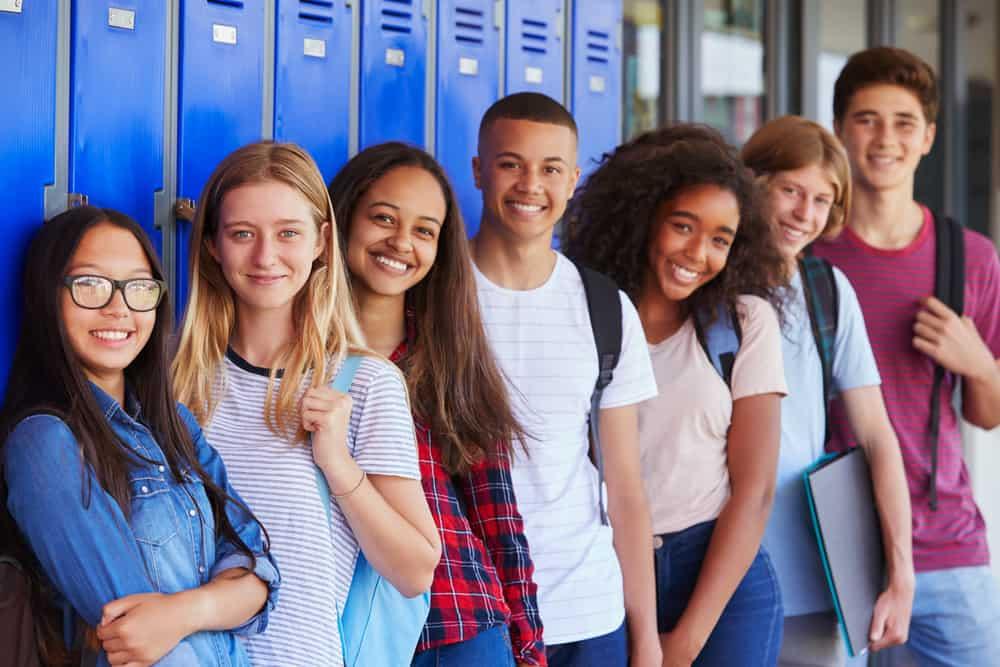
Lessons for College and Grade School students. Grades are very important for students to grasp, but it should never preclude focus on what is important for social interaction, interpersonal and people skills, life skills, teamwork, work ethic, finances. Grades should continue to be top priority, but success in the real world depends on how one interacts with others. Balance should be the key. The best students, the ones that get scholarships and go to Ivy league schools, are the ones that balance grades with personal skills. This involves joining and possibly leading school clubs, student government, band and/or drama, public speaking, leadership, debate, and team-oriented sports. Colleges look for that balance from their applicants. These lessons are not about how to join cliques, applying peer pressure, nor how to be a bully. It is inclusive over exclusive. You will not find outfit of the day, fashion tips, and beauty tips, although we will touch on dealing with these fringe issues. These lessons are targeted at youth but apply into adulthood. You will not find many of these tips taught in schools, so you or your child will gain a step up over the others and be a step ahead when entering the workforce and adulthood.
The Importance of Social Skills and Personal Development for Students: A Comprehensive Guide to Enhancing Popularity and Success in School
1. Introduction
Social skills play a crucial role in the success of students in both their personal and academic lives. These skills include the ability to communicate properly, the knack for expressing themselves well, appreciation of the views of others, respect for everyone, and the ability to behave in different social situations. To achieve success in school, it is desirable that, along with academic knowledge, a student should develop social skills as well. This comprehensive guide aims to help students increase their popularity among peers, help them mingle with others without any hassle, and make them leaders in school who can perform well in the social arena and academically.
It is our hope that this guide will help you in this. Appreciating the importance of social skills, we have devoted seven chapters to the development of different aspects of the personality and social skills of students that will hopefully help improve their networking and communication with others. This guide also introduces the importance of personal grooming and encourages you to take care of your grooming, neatness, and hygiene. There is no fun in life if you do not have a happy and healthy mind; therefore, we are presenting a separate chapter on happiness, mind control, and memory improvement techniques that will help you stay healthy in mind and body. So we wish you the best academically as well as success in developing yourself and becoming more popular in school.
Sections covered are: Communication Skills Presentation of Self Social Meeting Social Skills Functions of Social Relationships Personality Development Happiness, Mind Control, and Memory
1.1. Significance of Social Skills in Academic Success
Social skills can help facilitate academic success. For instance, if a student is able to communicate effectively with a teacher, treat a teacher with respect, and abide by classroom rules, it is likely that their behavior, academic performance, and emotional adjustment are affected. Students with these skills are often more active participants in class and ask and answer more questions than those who are less skilled when it comes to effective interpersonal communication. The better a student is able to form a working relationship characterized by mutual respect, a shared understanding of goals and objectives, and a willingness to work together with the teacher, the more that will help with classroom activities and management. This is something that is likely to aid a student's educational and social development as well as their success in future academic and vocational endeavors. Like it or not, much of what kids do these days is done in groups. Collaborative learning, whether it is cooperative learning in groups or whole class activity, is common and there is growing evidence to suggest that students who possess the necessary social skills to work collaboratively can have catalytic effects in terms of sparking learning among their peers who are not as academically proficient. The fact is that we all need friends in some way, shape, or form, and sometimes we need at least one very special friend - a mentor or guide about whom we feel highly. These are the friends who make their presence felt despite their absence, and through them, their friends often come to a special understanding about who they are and what they stand for. In life, teachers can assume such a role and guide and mentor students who, in turn, can then guide and mentor others. In a way, both the teacher and a highly regarded student act as role models, freely dispensing advice, understanding, and knowledge to others.
2. Chapter 1: Understanding the Concept of Popularity
Chapter 1
Understanding Popularity Most students want to be popular, or at the very least do not want to be the least popular, since it is socially painful to be at the bottom. The science of friendship transactions has followed students in various classrooms, and being popular simply means having more friends than the average person in the classroom. The difference from having the most friends in the entire group is not huge. Popularity is not just being liked; rather, it is having increased social status, which leads to many quantifiable opportunities that are not equally available to everyone. Being high in social status might be considered the "good/popular" kind of popularity compared with "likability."
There is a difference between being well-liked and having many friends. Some students seek what we are calling "shallow popularity," where these concerns relate to an emphasis on "self-scope" popularity. Popularity is unwanted because of the burden of maintaining the status that accompanies this position. But status and likability are two different things, and we can see people as popular and dislikable, "outcast likables," or, as described, a "freak." Being a freak is about a quality of interaction, while unpopularity or unlikability is about a quantity of interaction. Moreover, rejection adds to the feelings of unlikability rather than just having fewer friends. Goals of being a freak, popular, or liked are all pursued by people at the same time. The overfocus on popularity overshadows the emphasis on likability. Characteristics such as appearance or being a cheerleader, although they may result in having more friends, do not qualitatively make all of the extra friends "real friends." If someone does not like someone, they do not like them regardless of appearance. Being low in likability is different from being eroded by envious behaviors.
2.1. Defining Popularity in the School Setting
Popularity can take on a number of dimensions that people seem to generally understand on an intuitive basis. Popularity is the extent to which a child is "liked by others," which would correspond to peer acceptance (i.e., being part of the crowd, fitting in). Popularity can also be related to status such that children view highly popular peers as social referents, outshining the opinions of lesser accepted peers who, consequently, view the highly popular peer as a sub-normative referent. Furthermore, students can be distinguished into two types of popular children: popular-prosocial students who are well-accepted by peers and popular-antisocial children who tend to wield more coercive control over their peer networks.
While we have this intuitive notion of the characteristics of popular and non-popular peers, a review of what children expect from popular and non-popular peers might provide a clearer "profile." Providing some research about what children believe is the basis of popularity should then bring us back to the start of concluding why greater attention should be paid to the variables associated with popularity among children. For girls and boys, popularity is something that almost everyone craves. The memory is still very vivid for Liam: he was in the last year of primary school, 11 years of age, and had assembled with three friends to share some quick and nutritious lunch in the gymnasium, a large indoor-outdoor playground area in the school. A tall girl and the leader of a group that the four felt socially inferior to, sauntered over to Liam, looked down at him with her arms folded across her chest, and spoke. "Why do you two like each other so much? I mean, come on?" Their kind of friendship didn't make any sense to her, judging from her tone and scrunched-up face. Eventually, she looked pleased with them and walked off, slightly grinning. The funny thing is, Liam was left feeling embarrassed, not in front of his friends, but for her, because she really missed the point. Yes, they did like each other very much, but for completely different reasons than she made her friendships for.
3. Chapter 2: The Role of Social Skills in Academic and Personal Development
There are a variety of skills that students should possess in order to be successful in an academic setting. These include the ability to communicate with peers, collaborate as part of a group, negotiate the resolution of contradictory goals and interests, and avoid violence and conflict within schools. The ability to establish and maintain friendships is an important part of personal development, especially for students in the middle grades. As a middle school student develops friendships, they develop a network of communication, information exchange, and support. In their research on the social goals of young adolescents, it was found that participants sought and valued confirmatory, enjoyment, and security goals in their friendships. The confirmation seeks that one’s own qualities as an individual are esteemed highly enough to elicit friendship, enjoyment, relaxation, socializing, and fun are gained from the friendship, and security offers support in the form of a listener and advisor. Participants also had social goals that were detrimental to their friendships. The excitement/severity seeker wishes to shock or thrill their friends, and in some cases, this action can be perceived as hostile. Finally, an information seeker is someone who speaks with friends in part to acquire information.
In educational settings, social skills play a significant role in academic performance. When two or more students are teamed together for an educational assignment, part of their grade may be dependent upon their ability to work as a team. At a minimum, socially skilled students can avoid conflict within a group, thereby facilitating a smoother group process. In other instances, there might be processes in place that require teachers and administrators to probe further when social issues arise within the context of an academic task. Because of this emphasis on students’ social skills, it is imperative that students have the opportunity to develop and practice them. Development, practice, and role plays allow students who are often marginalized in school to possibly develop some social capital, as well as grow in the area of social skills. Bullying in the schoolyard is not the only context where children and youth are mean, nice, and stand by. There is no place in cyberspace where children and youth cannot be mean and nice, cannot reject and include, and cannot be justified and scapegoated.
In conclusion, the importance of friendship and social skills cannot be understated. Life in schools for many students is more about relationships than subject matter. This is not to undermine the importance of intellectual competence, but merely serves as a reminder that education is a holistic experience. Therefore, it is reasonable to expect that students will have a range of attitudes and levels of social skill. There is no need for despair when a student has limited social skills, however. It makes more sense to encourage friendships and relationship-building by teaching poor socializers effective friendship-making strategies. Social skills training may not guarantee popularity or high academic standing, but it will definitely increase the possibility of positive, pro-social interactions. In this capacity, the report serves as an important reminder to all being educated and those whose desire it is to educate that personal and academic development are inexorably intertwined with social skill development. Seven social competencies are also associated with post-secondary success and comprise the skills component of academic and career planning.
3.1. Interpersonal Communication Skills
Interpersonal communication skills are the foundation of any social activity you will undertake, and everyone, whether you realize it or not, engages in interpersonal communication every day. It is impossible not to communicate. For students, interpersonal communication skills not only help in their dealings with their classmates and the teaching staff, but are also an important part of how relationships are created and maintained. Communication is the manner in which we learn about, both cognitively and emotionally, those around us and ourselves. Direct experience with another person is essential for a sense of belonging, acceptance, and understanding.
Interpersonal communication skills involve a number of different components including: articulating effectively and listening skillfully, giving and receiving feedback effectively and assertively, being able to recognize and respond to non-verbal emotional displays and body language. A number of strategies exist that can help improve your ability to communicate effectively with those around you. The most common strategy is practice, including receiving feedback from those you trust. Part of the change will come with increased self-confidence, which can come about through such things as improved knowledge of the language, a reduced tendency to embarrass, and lowered fears about rejection. If you are selecting a strategy to assist in developing your interpersonal communication skills, consider choosing strategies that are either general to most areas of poor or low performance, or strategies that focus on your level of development.
For instance, many students need to develop better verbal articulation skills, including grammar and comprehension of English. Some barriers exist that many students perceive with regard to the development of interpersonal communication skills. "Shyness" is reported as a block, while "fear of danger to self" and "anxiety" generally act as motivators to avoid talking with new people. Some students may have experienced some language-based stigma, and this provides them with a tangible fear to avoid conversation. How well a student is able to develop interpersonal communication skills boils down to their level of performance achievement expectancy, or in other words, their own perceptions of self-efficacy. Certainly, increased skill in basic English language development may decrease individual levels of stress. It is clearly of benefit when we are able to communicate interpersonally, particularly in the social environment of the university. Many educational and social opportunities depend on the development of interpersonal communication skills. In fact, a keen familiarity with the curriculum itself is integrated with highly developed interpersonal communication skills.
4. Chapter 3: Building Strong Relationships and Networks
Building Strong Relationships and Networks
From the first day we get somewhere new, we begin to build a social network. Our social network refers to the collection of people we have growing relationships with. Strong relationships can help lighten our emotional load, guide us when we're uncertain, and provide opportunities for us to team up with really cool people. Some of the socializing we get to do ends up resulting in friendships, where people become really close. Friends may mentor each other in some ways, but mentorships are generally more one-directional than two-sided. In friendships, you'll support and guide each other somewhat equally. Our friendships define a little bit who we are, so have fun with this!
While we generally say that it's "dangerous" to mix work and friendships, there is a growing body of research that suggests that we don't really know what we're talking about on this front, and that maybe "dangerous" is only sometimes, if ever, the case. Good mentors, it turns out, are usually friends. This may be because how good you are at being a mentor usually grows out of being good at having and maintaining personal relationships. Also, it seems that not everyone can be a good mentor—because of differences in, among other things, their emotional intelligence and pro-social empathy towards others. If you feel the need to draw a hard line between mentors and friends, though, it isn't a bad idea to maybe build friendships with some of these lovely people. Choosing to approach new people and communities will open the door—slowly but surely, and with lots of time and energy on your part—to opportunities, resources, wisdom, and support you won't be able to find all by yourself. How good your relationships are will often reflect how much and what kind of help and guidance you can expect as you complete your educational journey. From trying new job opportunities down to what kinds of classes you take and who you study with, there is a strong relationship between the strength of relationships, personal outcome, and future opportunities. Some people are great at finding and accessing resources and growing their ability to be accepted by social networks—and don't need a lot of social support from others.
People who do better during college and achieve work-related opportunities are often also more accepted by social networks and grow their resources. High school is a great testing ground for putting some of this into practice now. There might be more ways to meet new people than you initially thought, and lots of folks probably feel the same way you do. If you're interested in meeting new people and getting involved, maybe take a step back and think of just one new way to approach a new group that you haven't tried before, involving a hobby you like, and then spend time nurturing those relationships.
People who seem to have consistent, strong relationships across the school do better and feel more connected to the college community. Knowing that you have a handful of people to turn to every so often, who can provide for you and support you emotionally, is associated with college satisfaction and emotional well-being. Given that some studies suggest social skills are just as important as technical skills in the world of work, it may be that some of the social interaction boosts you can get in college will translate into future success in the working world too! Hiding out in your room while your awkward 15-year-old body does things on its own won't help, so make some friends, explore new activities, and have a good time—you'll worry less about your future and make it more fun in the meantime.
4.1. Importance of Networking in Academic and Professional Success
No matter where you go to school or for what, networking with other students, faculty members, and professionals has immediate and long-term benefits. The benefits for academic and professional success are endless. On a short-term basis, you can exchange notes with others, get tips from students who took a course before, find study partners, set up study and note-sharing groups, and complete group projects. More importantly, your network of friends could help you land an internship or a job after college. This is especially true if you plan to work locally and know the right people. On a long-term basis, the friends, faculty, and professionals you meet represent potential friends, colleagues, or employers with whom you might work. You may be able to continue working on group or research collaborations with them.
It doesn't make sense to know only students in your major. Knowing people from diverse backgrounds and majors on one of our nation's most diverse campuses makes good sense. Your chances for working with, living with, or dealing with all races, nationalities, and cultures are great. Your friends represent these different cultures as well. Network now because good networks provide access to a wealth of information. By being well connected, you could find out about resources, job openings, businesses, and services that could benefit you. A lot of good things happen because one person has access to information. You never really know who you'll need to know now or in the future... just network. Some practical approaches to networking are through conversation, attending various events, group activities, or using social media. Networking is about developing relationships, so the effort goes beyond just meeting people and making small talk. It is also a good idea to keep business cards or a personal resume, so that you can easily give information about yourself. You may never know when the person you just met may be an advantage to your forward movement. Building a large network of friends can save you time because the answers are a phone call away. Make an effort to keep in touch with people who help you, especially those useful contacts. Networking is the sharing of information, advice, expertise, friendship, etc. Network building is based upon the benefits like personal growth - better self-confidence in social situations would lead to the decrease of anxiety and stress. The partners will feel psychologically supported, resulting in better academic performance. The better the participants get along, the better the projects and exams would develop. Networking helps by giving tips, leads, and references to organizations and project partners. Networking helps open and close the doors to jobs and opportunities.
5. Chapter 4: Enhancing Emotional Intelligence
The term emotional intelligence identifies the ability to recognize, understand, and manage your own emotions, which is important in strongly controlling personal and social interactions. It includes the ability to empathize with others, which means the ability to see life from the perspective of someone else. Just as we can help someone who needs help more effectively if we connect emotionally with helping, we can help two students who are fighting more effectively if we can connect better with their negative emotions. Emotional awareness is the key to having emotional reactions against oneself and not letting them control us or work unconsciously.
How do we teach students to become more empathetic and build emotional intelligence? The first step is giving students the time to truly connect with their emotions by using mindfulness exercises and time to individually reflect on their own emotions before they can further discuss them with an adult. We need to help our students interpret the emotions of their classmates within the group and to help them interpret the dynamics of how their classmates are feeling. This will be easier because students tend to be extremely sensitive to non-verbal emotional states of their peers, leading students to all notice fairly similar emotional states of their peers. Some questions about alternative outcomes then follow. The group is then “debuddled” in order to avoid confirming any unhealthy outcomes and to resuscitate the conversation with the underlying point about how we can react to the full range of emotions we’ve classified. We are quite skill-based depending on what we must have gathered about linking our thoughts to the mood of our peers. We also put together some typical roles and then briefly explain how experts need collective emotional intelligence to effectively collaborate or manage competing advice.
Therefore, in many ways, there are strong positive reasons to develop our emotional intelligence. Networking skills—emotional and practical—assist in creating strategic alliances. Relationships and collaborations with experts link up to create intense relationships of resources for us. We all have our emotional strengths, which can be best fashioned for the team for the sake of commitment, goal orientation, and job satisfaction. Moreover, if a decision-making group has greater emotional intelligence, it would be better at resolving conflict. Emotional intelligence conveys compatibility among partners. Emotional intelligence can help us learn better ways to organize. Finally, emotional and mental abilities both decide how we behave and the habits we convey in our lives.
Enhancing emotional intelligence therefore requires a number of salient practical social skills. Some of these skills and activities are more appropriate for small group workshops, but many can be adapted to larger groups using group role plays. Despite these doubts about the clarity of the signs of action, a number of children pose particular concerns. Enhancing emotional intelligence in context for children will rely on thoroughly familiarizing oneself with the ability of emotional intelligence architecture and current knowledge about the importance of emotional development in the first years of a child's schooling. A new schedule is being constructed for emotional intelligence. When they looked at how children were growing, the system was also studied. Emotional social learning from substance rule responses. Emotional literacy—purpose of instruction: is possibly the current most popular emotional literacy brand. Emotional literacy has the clear objective of instructing all students in the context of effective emotional and environmental development.
5.1. Self-Awareness and Self-Regulation
Goleman's model of emotional intelligence encompasses five components. Over the next two posts, we will expound on the first two: self-awareness and self-regulation.
5.1. Self-Awareness 1. An individual's ability to recognize his or her own emotions is the first and most foundational of emotional intelligence skills. This extends to identifying both the strengths and weaknesses of one's inner landscape. The effective management of emotions and responses relies heavily on this aspect. The more self-insight one can develop, the better able one will be to respond to a situation in accordance with one's best interests as well as anyone else affected by the behavior.
5.2. What Does Self-Regulation Entail? 1. Self-regulation relies on one's ability to differentiate between emotions and reactions. For example, instead of being overtaken and dominated by one's anger, one must be able to feel the emotion without acting it out, allowing it to pass and thus maintain interpersonal relations. Additionally, the group will benefit from an individual's avoidance of impulsive, categorical decision-making. 2. The overall result is a greater sense of well-being and emotional stability as a direct result of having one's emotional responses under control. 3. Five strategies that teachers can use to assist students in their development of self-regulation: - Teach time management, both in terms of short-term allocations daily and long-term goals. Students must be taught to manage their time by breaking their goals and tasks into distinct steps with a timeframe for achievement; - Use a "stop and think" method. Students may be encouraged to weigh their options and recognize the likely consequences of every choice they make when confronted with a difficult decision; - As part of activities or as an additional task, let students engage in journaling. They should be asked to write about the worries and concerns that keep them up at night, and how they anticipate responding; - Peer input could be used. Students may be asked to answer questions regarding the advantages and disadvantages of a particular course of action. In so doing, they benefit from hearing other perspectives. Allowing feedback from peers and sending signals of acceptance may also help develop self-esteem; - Students should be encouraged to find a constructive way to solve their feelings. For instance, by learning a few relaxation techniques, participating in physical exercise, dancing, or taking deep breaths while counting, they may motivate students to use these techniques to manage their feelings and develop their emotional regulation skills.
6. Chapter 5: Developing Effective Teamwork Skills
Teamwork is the ability to work effectively with others to reach common goals. It is a collaborative work effort among a group of people, the members of the team. Just as studying enhances a person’s academic performance and test scores, learning about teamwork processes and the essential skills required for effective teamwork can help members improve their team productivity, their popularity, and their happiness. Because most of our academic and professional work requires us to work with others in groups and teams, as with hard work, a GPA, and a good application essay, effective teamwork is a major boon in the college admissions process. Furthermore, employers value teamwork as highly as they do leadership and the ability to communicate. Therefore, as you develop skills to foster your own popularity soaring and your group study sessions bustling, be aware that teamwork can help set you on the path toward college acceptances and successful job interviews and experiences.
Working with a group means that anyone’s voice can raise a legitimate question, critique, or argument that another team member may never consider. When it’s functioning well, a team can be propelled to excel and outshine an expert’s recommendations. Successful teams rarely operate without occasional or regular conflict. When handled effectively, challenge and disagreement can lead to better and more innovative solutions. A regularly occurring, highly positive trait of a team means that the members trust and count on one another to accomplish joint and individual tasks. Successful teams usually reflect on the processes they used to work together during a task. When all members of a team are multi-skilled, they collectively result in a symbiosis of energy and intelligence far from the sum of the individual parts.
6.1. Collaboration and Cooperation
6.1. Collaboration
Even though this book originally introduced teamwork, collaboration is a vital piece of the puzzle. The extent to which people work together reflects the success of the group. So what is the difference between each one of these strategies? Working together involves two elements: working together and working in a shared fashion. In this sense, the primary difference in cooperation is that each participant is allowed to have an individual aspect in the task, process, or outcome that they are all associated with. Collaboration, on the other hand, is described by greater activity and energy, where so-called supermassive collaboration in attempting to achieve shared objectives is considered as the action and participation in the process of working with others to get things done or accomplish a shared task. The spirit of collaboration demonstrates a team of individuals' willingness to work with one another with respect and integrity. The value of this statement is that collaboration may be inherent within teamwork. Trust and respect should be part of either cooperation or collaboration. In addition, collaboration is considered superior here because working with rather than next to a group of individuals contributes to the enhancement of group productivity by attempting to achieve a shared aim. Quite often, collaborative work enhances outcomes rather than merely cooperative engagement. Positive experiences, greater enjoyment in the learning process, rewards, and outcomes from the learning experience are more likely to occur with effective communication, enriched outcomes, enhanced creativity, full engagement, and increased inputs.
Effective communication is vital in developing an atmosphere of partnership, which involves a process of negotiation, in which participants enter into a mutual agreement for the purpose of enriching classroom outcomes. Useful strategies for the development of rapport with the partner or collaborator can be found in your education, industry, and community group contacts. Dialogue is an excellent way of promoting understanding and trust, as all participants have an opportunity to express their opinions and have a common understanding of a particular subject. The use of dialogue may enrich teaching and learning after the development of that trust. Successful and effective interactions between people are critical for successful group outcomes. Successful collaborations create a multitude of scenarios, but again, results are the real test. Where assessment measures mainly of individual contributions are in place, the benefits of working with the team to get the job done are often seen. When this occurs, it is highly likely that the individual components will follow the positive trend for the productivity of the task or project. This mutual effort contributes to friendships that can last over years, for it is a normal response to look back and say, Look what we've done together.
6.2. Cooperation
The use of effective time-limited creative problem-solving negotiation skills, teamwork behaviors, and critical thinking processes are characterized by cooperation. Cooperation needs a substantial level of mutual trust and respect among group members. In the classroom context, this generally refers to smaller groups of four or more and sometimes a class-based partnership. Conducting case scenarios, role-play exercises, and strategies builds trust among members. Ensuring that all group participants' input is valued and heard is important for non-negotiation-based problem-solving creativity. In class, the use of role-based exercises is to develop analytical outcomes. These role-based activities encourage the growth of cooperative skills, enriching the overall group performance, environments, and an appreciation of teamwork concepts. Concentration and respect for the contributions of all group members in the sharing of ideas is essential, as is the requirement to be accommodating and collegial in times of disagreement for relations to be positive.
7. Chapter 6: Cultivating a Strong Work Ethic
Chapter 6
Cultivating a Strong Work Ethic
The ability to cultivate a strong work ethic can greatly increase your ability to succeed, academically and professionally. While it may be simple to just "coast" through your school years, developing a strong work ethic can help with time management, communication, leadership, and other skills, preparing you for the work world you plan to enter after graduation. A strong work ethic can lead to respect from teachers, peers, and potential employers, and can assist with your career development. But what does a strong work ethic really entail, and how does one develop it? Many different sources will claim there are different, seemingly endless dimensions of work ethic, but in reality, many of the core values behind it are the same. A few of the most popular values found behind creating and maintaining a good work ethic include:
• Responsibility • Diligence • Consistency • Integrity • Dedication
Cultivating a Strong Work Ethic: Practical Tips
There are, of course, many ways in which one can begin to cultivate a strong work ethic. Goal setting can help motivate you by giving you something to work towards, as well as helping keep you on track. However, setting realistic goals gives you a constant sense of achievement that has the potential to boost your morale. Prioritize your time and set limits, especially when it may be hard for you to refuse requests or deadlines. Learn time management skills and invest in the little things, changing daily habits that foster procrastination or a lackadaisical attitude. A strong work ethic can also be developed by learning to adopt a growth mindset. People with a growth mindset are said to build on their skills and become smarter by persevering through challenging assignments, while those with a fixed mindset give up easily and lose enthusiasm for learning new things when faced with difficulty. A practical manifestation of a growth mindset is to portray work as an opportunity, not an event.
Taking initiative and seizing the moment could be construed as signs of having a strong work ethic. In fact, time management is often the difference between those who "just get by" and those who "move up," academically or in the professional world. In conjunction with time management, learning to value time and controlling time is essential towards adopting a good work ethic. Many people are motivated by performing the best tasks first, knowing that crucial elements of a job are out of the way. Projects tailored for success need key elements to be completed in a specific sequence to guarantee the outcome will be successful. The confident student is driven by their understanding of the priority to ensure success. A commitment to your work will also bear a strong work ethic; your willingness to go the extra mile can indicate to others, students and instructors alike, that you care about your performance and the end result. In jobs, this is also another big payoff if you cannot show up for work. A significant percentage of the students who skip class out of laziness will not have the drive and tenacity to keep a steady job, making this visual proof to the class. If you remember the penalties of ditching class and lying about it, perhaps this information will serve as a crutch when defeat looms near. Engaging yourself in your school work shows a commitment to the service you are seeking. It is difficult to develop strong skills in your field of endeavor when you do not have respect for the education that guides them. Whether it proves to be the reason or the result of your career success, forming a strong work ethic requires time, motivation, and commitment. Perhaps the most overlooked element is accountability – holding yourself accountable to the responsibility of finishing your work in a timely, correct manner, and refusing to make excuses when you do not fulfill these responsibilities. However, the commitment could pay off with a sense of accomplishment. Bottom line, if you form a strong work ethic, it could be your ticket to success.
7.1. Time Management and Goal Setting
There are many effective skills involved in developing a highly sought-after work ethic. After all, no matter how hard you work or how talented you are, if your organizational skills are lacking or you aren't promoting yourself, you're going to have a harder time finding success. Time management is vital because you are able to plan ahead and figure out what needs to be done first, second, last, etc. By allocating energy to each prioritized task properly, you will avoid having to rush at the last minute to complete it, which would then increase overall stress. Deadlines will feel less daunting if you are able to meet the goals accomplished through proper management and planning in advance. Additionally, setting goals articulated in the SMART format is highly effective. SMART stands for Specific, Measurable, Attainable, Relevant, and Time-bound. These types of goals give you direction and motivation, guiding your focus and actions in order to meet that objective. You can track your progress when the goals are measurable and realistic, and being held within a timeframe can provide the necessary sense of urgency. Ultimately, planning ahead and setting SMART goals will pay off when you're ahead of the game and motivated to do your best.
Our career goal, or what we are planning to achieve, can be related to school or work, or just general ideas about what we want in life. There are many factors that can affect our goals, and it is important that we know how to prioritize them. Generally, people have different factors that may influence their goals, such as family, work, age, or religion. To begin to plan our goals, it is important to know the balance of these factors because it can help us in the first step toward meeting our goals. In order to meet the goals, we need to know what is important and what is not. Someone who has a fairly severe health issue might prioritize looking for help and support from the people closest to them rather than someone who has a mild condition. As for someone who is very old and hardly able to work, they might state that they would love to spend more time with their family, while someone young will probably prioritize their work in everything they do. Finally, a goal must include a date, such as when we can achieve our goal; it may be in 10 years, within 1 year, or next week. Just plan it well in advance, and every time you reach your goal, make new ones to maintain your success. It's better to write everything down in your schedule or planner if you're using it. Make sure you update everything by referring to your planner regularly to avoid impromptu planning. If you sincerely fall in love with your goal, you don't need anyone to see it. All you need are actions and belief in your success.
8. Chapter 7: Financial Literacy for Students
One more aspect of personal competence is financial literacy. Financial literacy is the ability to understand how money works in the world: how someone manages to earn or make it, how that person manages it, and how he or she invests it into a more valuable product. It covers a range of concepts, but one of the main issues is the difference between needs and wants, including purchasing a commodity to increase one's social capital. Finance gives students an opportunity to show acquisition of knowledge, understanding, and transferable skills underpinning the world of business. Topics included are business planning, raising finance, starting and running a business, as well as marketing and promoting services of a very personal nature. It also provides opportunities for students to demonstrate how they apply finance as research skills. This ultimately gives students the confidence to build on finance topics for the Level 3 qualification.
Budgeting is an essential part of financial literacy. The chapter will allow students to understand where they are in their lives financially. They will do this by creating a budget and then tracking their money by looking at their expenses and how they are using it. They will also be introduced to the concept of saving money, the three types of saving, and what to do with their paychecks. The chapter discusses what contributes to personal financial success. Although everyone is at different places in their lives, there are a few key issues that will lead students to financial success regardless of their personal goals. The standards for being financially successful that are discussed include budgeting and tracking one's money. We also explore managing one's credit in this chapter, why credit is important, and what happens when one does not have good credit. Finally, the chapter provides information for students on planning for the future by showing them the value of an emergency fund and education. The hope is that every student who starts college will be able to start out debt-free by having learned the skills discussed throughout the book.
8.1. Budgeting and Saving
Having enough money to take care of your basic needs is essential to being successful when living on your own. While it is important to become financially independent, creating a budget to control your spending will allow you to save money for things that are important to you. Budgeting is the process of creating a plan to spend and save money. Set up your budget to achieve financial stability while taking into consideration your basic expenses and lifestyle. When creating your budget, it is important to know and distinguish between your wants and needs. Distinguishing between wants and needs may be difficult at times, but it will help you control your spending. The best way to see the difference between your wants and needs is to track your spending. Most budgets are successful when you limit your wants while maintaining your needs. It may be necessary to cut back or eliminate things that are more of a want. Review your budget periodically to determine if the plan is working for you. Your budget is based on your income and expenses. Tracking your income and expenses will give you a clear picture of your financial situation. If you are spending more money than you are making, it is time to make changes in your spending habits. Once you have created your budget, stick to it. The benefit of budgeting is being able to save money for the things you want to reach your goals. Budgeting can help manage your personal finances successfully. Overall, budgeting is a means of becoming responsible with money. Once you have established a budget, put some money aside for savings. This will help you prepare for unexpected things that come up, or for things that you will need in the future. For example, an emergency fund contains money to be used in an emergency situation. In the case that you were to lose your job, it could take several months to find another one. You can use money from your emergency fund to pay for essential items such as housing, food, or medicine. You can also use your savings to buy something you want and would normally put on a credit card like a TV, computer, or vacation. However, using your savings to buy something should only be used for something you want and cannot afford; things you want such as clothes or shoes are obtained through your spending plan. Most people need a savings account to help manage their money. Setting money aside out of your paycheck can accumulate to a large savings over time. Motivate yourself to work toward a new saving goal. For example, you may decide to save money each week to go on a spring break trip. You should review and, if necessary, adjust your savings plan periodically to meet your personal goals. Be sure to save money on a regular basis; setting yourself up for a successful saving plan will address your future financial needs. Using the savings plan you have created will help you pay for large ticket items that you plan for in the future. Through this process, you can accumulate money by starting to save for a small item all the way through retirement. Everything should be planned for in advance. Your savings plan will provide you with permanent control and security. Saving control increases as you save more money. Whether you are saving or a year, in most situations, the more money you save, the more you’ll earn. If you start planning for the future now, the less frightening it really is.
9. Conclusion
In conclusion, we have examined in detail the innovative ways students can enhance their popularity and personal success in school. This has included a large focus on the importance of enhancing students' social skills, which is a vital part of success in every area of their life. In doing so, we have integrated other social skills concepts that have been relatively under-examined in students compared to other areas of personal development. These have included self-help concepts such as assertiveness, as well as more mainstream areas of molding habits and career development. One common theme throughout these areas has been a focus on soft skills, which includes emotional intelligence, the ability to work well in a team, and dealing with the business aspects related to a person going their own way. In part, we have reinforced the point that many students are already reaping the benefits of our guide. Simply by following the forums we have provided over the last few years, we would expect a large number of people to have subconsciously built a lot of these skills into their development. This should, in turn, help many hoping to better themselves to network with those who have been focused on personal development throughout their academic years. One of the key tricks we focus on is the need for even greater self-reflection and self-refinement. Ultimately, it is up to the individual student to decide which advice approach they feel is best for them. A 'pick and mix' approach will probably serve people best, and remember a lot of these social skills can be developed particularly well by being in a real-life situation and putting the standard theory of practice into use.
9.1. Key Takeaways and Recommendations for Students
Takeaways. Checklist for students: • Communicate your thoughts and feelings to your peers and teachers. • Network with students and professors so you can form study groups. • Study and learn how to become a more emotionally mature person. • Learn to work well with other people. • Begin to develop a work ethic that will help sustain you through the rest of your life. • Save money so that when you are ready to begin your job search, you have a good professional wardrobe and money for transportation. • Learn to budget and begin saving because someone will be depending on you one day. • Embrace self-improvement and lifelong learning; you are here at college to improve who you are and to learn some skills in a field that will support you. • Finally, ask someone you trust if you have developed positive "soft skills." They can provide you with feedback for your "how to succeed in school and life" toolkit.
The greatest asset a person can possess is to hold strong interpersonal skills that have been discovered, developed, and honed to an unconscious instinctual ability. Social skills become invaluable and a critical factor in determining whether an individual, group, organization, or even an entire nation is successful or not. A large part of personal development involves social skills. No matter how you define success, if you don’t have healthy, happy interactions with other people, you will most certainly not enjoy much success.