
The Persistent “Open Borders” Myth: How the Far Right Keeps Repeating a Narrative That Contradicts Reality
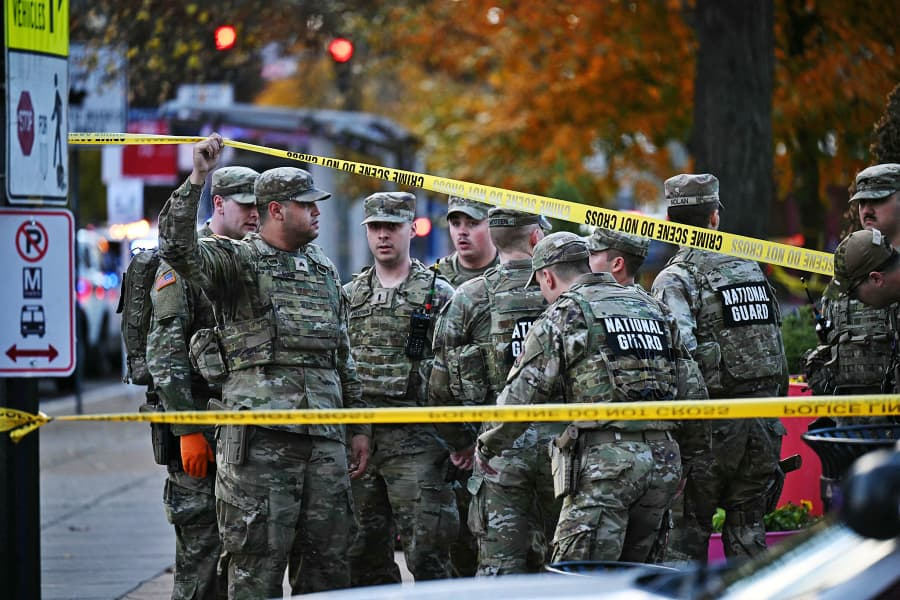
The recent tragedy in Washington, D.C., where National Guard members opened fire during a chaotic incident, has already become political ammunition for the MAGA movement. Instead of treating the event as the complex and heartbreaking situation it is, far-right figures immediately rushed to blame President Biden—folding the shooting into their long-running “open borders” narrative. It’s a pattern that repeats itself with every national crisis: exploit the moment, inflame fear, and point the finger at Biden regardless of the facts. This reflexive politicization sets the stage for yet another misleading claim that has taken hold on the far right—the insistence that Biden has created “open borders.”
For years, far-right media outlets and MAGA-aligned politicians have repeated a single, potent talking point: that President Joe Biden has created “open borders.” It’s a line designed to evoke chaos, lawlessness, and intentional neglect. But like many emotionally charged political claims, it simply does not match the facts on the ground.
A Political Slogan, Not a Policy
There is no “open borders” policy in the United States—under Biden or under any modern president. The U.S. border remains governed by federal law, staffed by tens of thousands of Border Patrol and CBP officers, and supported by billions in enforcement funding. Even during the highest periods of migration, people are legally required to present themselves for processing, asylum screening, or removal. The claim that anyone can simply “walk in” is demonstrably false.
Record Enforcement Under Biden
Despite accusations of laxity, Biden’s administration has overseen historically high numbers of deportations and removals. CBP has reported record levels of encounters, but those numbers reflect global migration patterns rather than U.S. policy permissiveness. At the same time, immigration courts have accelerated proceedings, and DHS has expanded technological systems for monitoring, processing, and vetting migrants.
In fact, some of the same politicians shouting “open borders” routinely vote against bipartisan immigration reform packages that include increased staffing, expanded detention capacity, and updated asylum procedures—proposals that would strengthen border enforcement. These bills often collapse because they do not politically benefit those who rely on the chaos narrative.
A Manufactured Crisis for Political Leverage
The “open borders” claim persists because it’s politically useful. It unifies a base, simplifies complex global migration dynamics into a blame-oriented soundbite, and positions opponents as unserious or reckless. It also sidesteps the responsibility Congress has in shaping immigration law—which hasn’t been substantively updated since the 1990s.
Rather than engage with the real causes of increased migration—economic instability, climate displacement, violence, and global post-pandemic pressures—far-right commentators repackage the issue as an intentional Democratic strategy. It’s an argument built not on data, but on fear and repetition.
The Reality: A Strained System, Not an Open One
The U.S. immigration system is overloaded, understaffed, and outdated. It faces unprecedented global migration trends that no administration—Republican or Democrat—has been fully equipped to handle under existing statutes. The system needs modernization, resources, staffing, and clear congressional action.
But none of that resembles “open borders.” The phrase is a political fiction, not a description of policy.
Why the Myth Endures
The durability of the “open borders” narrative reflects a broader pattern in contemporary politics: complex issues are often ignored in favor of easy slogans. Fear is an effective mobilizer, and mischaracterizing immigration policy continues to serve the far-right’s political strategy.
In the end, the real obstacles to effective border management aren’t intentional openness—they are legislative stagnation, misinformation, and the refusal by some political actors to address the problem with seriousness rather than slogans.
If you want, I can also create a shorter version, a more editorial version, a version that includes historical context, or a fact-check style breakdown.