

Election Power and Executive Authority: Examining the Road to the Election Assistance Commission Firings
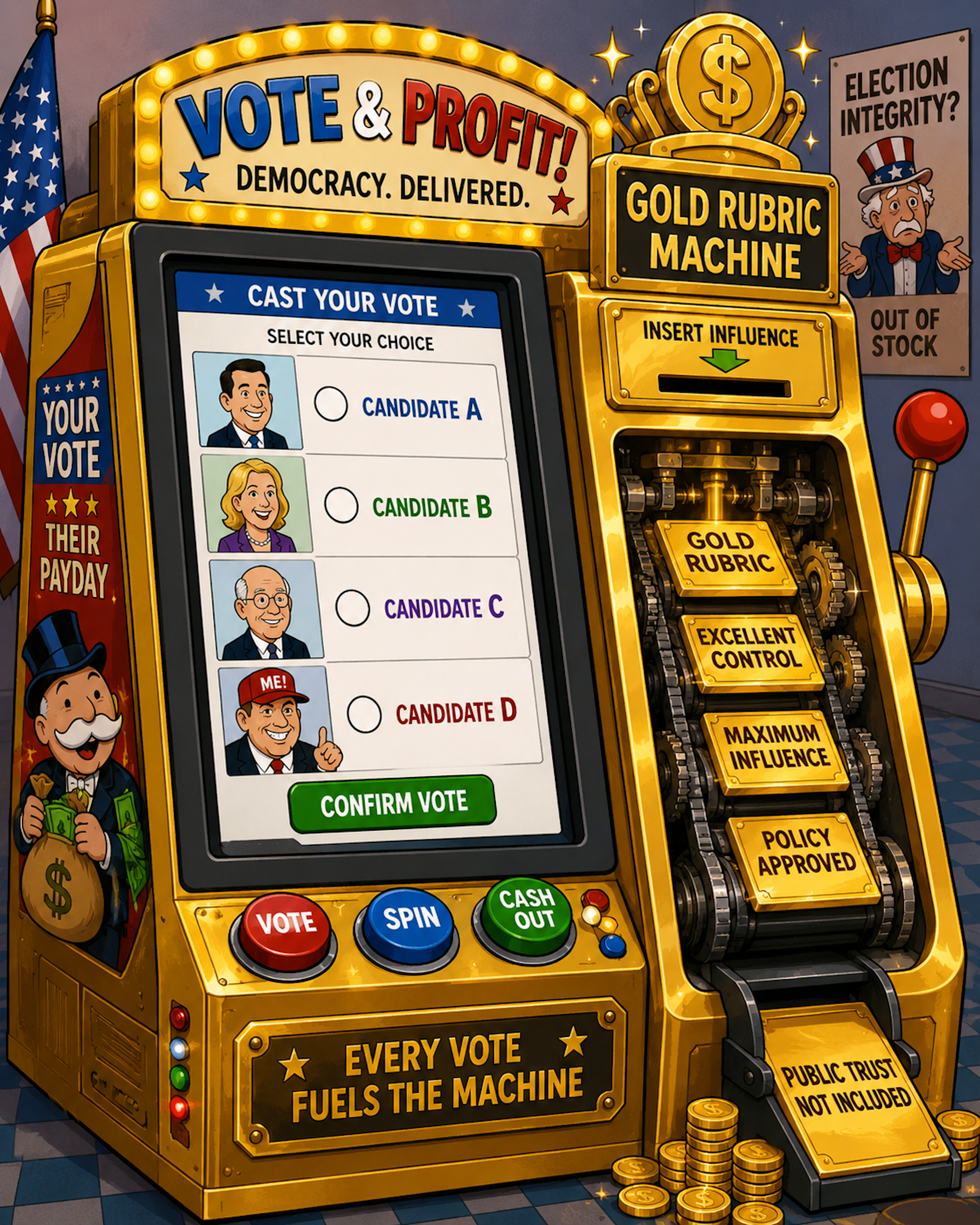
The dismissal of three commissioners from the U.S. Election Assistance Commission (EAC) has intensified an already heated national debate over who should wield influence over America's election system. According to Reuters, White House officials spent months exploring ways to bypass the independent agency—including considering the use of emergency authorities—to pursue changes to voting-machine guidance and the federal mail voter registration form before President Donald Trump ultimately removed the commissioners.
Reuters reported that administration officials were frustrated with what they viewed as the EAC's slow pace in updating voting-machine guidance and in considering a proof-of-citizenship requirement for the national voter registration form. With the Commission now lacking a quorum, it remains operational but cannot approve new policies or major changes until new commissioners are confirmed.
The firings did not occur in a political vacuum. They came against the backdrop of a series of legal victories, policy initiatives, and political disputes that have steadily expanded the debate over presidential authority and election administration.
A Midterm Election with High Stakes
The timing is significant. The 2026 midterm elections will determine control of Congress and shape the remainder of President Trump's second term. Historically, midterms serve as a referendum on the sitting president, and control of the House or Senate often shifts between parties.
In this environment, nearly every discussion involving election administration has taken on heightened political significance. Changes to voting procedures, voter registration, and election oversight are no longer viewed as merely administrative questions; they have become central political issues.
Expanding Presidential Authority
Recent Supreme Court decisions have reshaped the balance of power between the executive branch and independent agencies.
One ruling reinforced the President's authority to remove leaders of certain independent executive agencies, signaling a broader interpretation of presidential control over officials who exercise executive functions. Supporters argue that agencies carrying out executive responsibilities should ultimately be accountable to an elected President. Critics contend that greater insulation from political influence was precisely why Congress structured many agencies as bipartisan and independent.
Another landmark decision established that presidents enjoy substantial immunity from criminal prosecution for official acts performed while in office. Supporters viewed the decision as preserving the independence of the presidency from politically motivated prosecutions. Critics argued that it significantly expanded executive power by limiting judicial oversight of presidential conduct.
Together, these decisions have become part of a larger national conversation about the proper limits of presidential authority.
The SAVE Act Debate
The administration has repeatedly emphasized the importance of the SAVE Act, legislation that would require documentary proof of U.S. citizenship when registering to vote in federal elections.
Supporters argue that citizenship verification strengthens public confidence and helps ensure that only eligible citizens participate in federal elections.
Opponents respond that documented instances of non-citizen voting are exceedingly rare and warn that documentation requirements could make registration more difficult for eligible voters who lack immediate access to the required records.
Reuters reported that administration officials also wanted the Election Assistance Commission to incorporate proof-of-citizenship requirements into the federal mail voter registration process, placing the Commission squarely within this broader policy debate.
The Continuing Election Fraud Narrative
Since the 2020 election, President Trump and many of his allies have continued to argue that American elections contain significant vulnerabilities.
Numerous courts—including judges appointed by both Republican and Democratic presidents—rejected lawsuits challenging the outcome of the 2020 election after finding insufficient evidence that alleged irregularities would have altered the results. Likewise, state election officials from both parties consistently reported that they found no evidence of widespread fraud capable of changing the election outcome.
Even so, concerns about election security have remained a central priority for the administration, influencing efforts to strengthen voter identification requirements, modify registration procedures, and revisit federal election guidance.
Conflict with Blue States
The administration has also engaged in repeated legal and political conflicts with Democratic-led states over immigration, environmental regulation, education policy, transgender rights, and election administration.
These disputes frequently raise constitutional questions regarding federal authority versus state autonomy. Election administration has become one of the latest battlegrounds, despite the Constitution assigning primary responsibility for conducting elections to the states while allowing Congress to regulate federal elections in certain respects.
Critics argue that increased federal involvement risks politicizing election administration. Supporters counter that national standards are appropriate where federal elections are concerned.
Attention to Competitive States
Like every modern presidential administration, political attention has focused heavily on competitive swing states where election outcomes are often decided by narrow margins.
Because relatively small shifts in turnout or voter registration can determine statewide outcomes, debates over election rules often become especially intense in these jurisdictions. Changes affecting registration procedures, voting technology, or election guidance can therefore carry heightened political consequences even when applied nationally.
The Judiciary as a Political Target
Throughout both terms, President Trump has frequently criticized judges whose rulings have blocked administration policies, often describing some as activist or politically motivated.
Supporters argue that judges should not substitute their policy preferences for those of elected officials. Critics respond that judicial review serves as an essential constitutional check on executive power and that public attacks on judges risk undermining confidence in an independent judiciary.
This tension has become a recurring feature of litigation over immigration, executive orders, federal spending, and election-related policies.
Changes Within the Justice Department
At the beginning of President Trump's second term, several senior Justice Department officials were replaced or dismissed as the new administration reorganized leadership.
Administrations commonly appoint new political leadership following elections. However, critics argued that the breadth of personnel changes reflected a desire for greater ideological alignment within the Department. Administration officials maintained that the President is entitled to assemble leadership that supports his policy agenda and faithfully executes executive priorities.
The Election Assistance Commission Comes Into Focus
Against this backdrop, Reuters reported that White House officials explored methods to move around the Election Assistance Commission after becoming frustrated with its pace on election-related priorities.
When those efforts proved unsuccessful, the Commission's leadership was removed. Without a quorum, the bipartisan agency cannot approve new guidance, revise federal voting standards, or alter the national voter registration form until new commissioners are confirmed.
Democratic lawmakers immediately characterized the move as an effort to increase executive influence over election administration ahead of the midterms. Administration officials have emphasized the need to modernize election procedures, improve voting-machine standards, and strengthen citizenship verification requirements.
A Continuing Constitutional Debate
The controversy surrounding the Election Assistance Commission reflects broader constitutional questions that have defined the current administration: How much authority should the President exercise over independent agencies? How should election integrity be balanced against voter access? And where should the line be drawn between federal oversight and state responsibility?
The answers remain politically and legally contested. What is clear is that election administration has become one of the central arenas in the ongoing debate over executive power, federalism, and democratic governance. As the nation approaches another consequential midterm election, decisions about who controls the mechanisms of election administration—and how those decisions are made—are likely to remain under intense public scrutiny.