
1. Introduction
The International Olympic Committee (IOC) announced breaking's formal inclusion and debut as an Olympic sport at the Paris 2024 Summer Olympics in December of 2020. This essay will work to understand the significance of this event in the context of the many years of negotiations and disputes that occupy the transition of breaking from the inner-city streets of Manhattan, New York in 1969, to the highest court of the Olympic Games in 2020. In doing so, the surges of Black liberation, suppression, and the resultant cultural consequences for minority populations of color claim October of 2024 as the new beginning of a globalized trope of 'New' individuals 'arriving' to the Olympics. More than just a medium through which hitherto-unknown daredevils may be 'discovered' and turned into world-class sporting pandemics, this passage of cultural expansion offers the 'kindly' exchange of global recognition and acceptance for the outsiders, the aliens of the world dancing stage: "Breakdancing, also known as breaking, evolved in the South Bronx in the early 1970s alongside hip-hop and is a color-splattered acrobatic celebration of raw energy, racy beats, and athletic prowess that can, sometimes, be mistaken for violence".
The claim posited by CNN (2019), a prided 'portmanteau' media conglomerate, thoroughly sexualizes breaking vis-à-vis her 'racy' beats long before she even walks onto the Paris 2024 opening ceremonies float parade. Set to controversially unfold during the quadrennial two-and-a-half day television broadcast of the Opening Ceremonies, breaking becomes the latest in centuries of settler genealogies to land someplace new in the world. The immediacy with which it veers from sport- to sexuality imagines not a desire to know the particulars of stardom but rather to know of the thorny spectacle that unfurls when 'outsiders arrive'.
1.1. Background of Breaking as a Dance Form
The breaking community has unique characteristics with distinguishable cultural elements and strong cultural connections. Indigenous to New York in the 1970s, breaking became the most popular street dance form in the United States within approximately ten years. Since being developed on the streets of New York, breaking has spread around the world and has been institutionalized in Western society within official dance academies. To understand why the development of breaking as an official Olympic sport might be unfair and inequitable, how breaking has developed in relation to immigrant experiences and as an institutionalized and commercialized artistic form has to be understood.
Breaking is internationally recognized as one of the four main elements of hip-hop. Indigenous to the streets of the Bronx in New York City in the 1970s, breaking commenced as a fun, spontaneous and competitive means to demonstrate unique and respectable physical abilities through founding crews such as the Rock Steady Crew. Capable crew members and dancers in the circle were and still are referred to as 'B-boys' and 'B-girls'. As a competitive sport, breaking has evolved from multiple exchanges, with an evolution of defined moves from an immigrant Puerto Rican and underground dance form, known as 'salsa street salsa'. The move the 'break', referred to by salsa early adopters as buena vista social club, was used to draw attention to oneself and indicate when they were ready to sing salsa. Since this time, breaking has undergone institutionalization as a form of dance in the United States, which can be explained by the endeavors, motivation, positive Western attention and creativity of the initial Puerto Rican street dance settlers in the 1970s.
1.2. Inclusion of Breaking in the 2024 Summer Olympics
In 2018, breaking was announced as a new sport to be added to the 2024 Summer Olympics, marking one of the most significant turning points in breaking's cultural history and development globally. Against the backdrop of the world revolutions in Black Lives Matter and #MeToo, as we witness "First Black," "First Trans," "First Women" headlines marking the achievement of barrier-breaking success, we can only stand back in awe at the huge headline source of pride when we see "Breaking as the Dance of the Street" celebrated as the first true culture of inclusion in elite sport on the Olympic platform. Not only is this a dream come true, but also as a result of the strategic support of the socio-cultural working groups within the breaking community of practice, a very deliberate strategy towards achieving key intentions around representation, inclusion, and celebration of the global cultural diversity within the 2024 decision-makers community on the highest level.
The inclusion of breaking in the 2024 Summer Olympic Games would be a major turning point in the history of breaking, legitimizing the art form globally. However, this process would rely on the professionalization of breaking around contemporary issues, which perpetuated to other elite sports in Athens 2004. Thus, falling in line with social expectations, such a change would be concomitant with the present processes. The reasons that would lead to the inclusion of breaking in the Olympic Games of 2024 are twofold: the first is celebratory insofar that it validates the culture associated with breaking, aligning itself with the cultural diversity of an increasingly global sporting community. Conversely, the Olympic Games need commercial endorsements to survive and underwriting from companies such as promotes the removal of slums in preparation for the games. Uniting themselves with these competing paradigms would ensure its inclusion in 2024.
2. Historical Context of Breaking
Breaking, as a dance style, first emerged in the masses of brown and Black communities from the boroughs in the South Bronx in the City of New York. A predominantly Puerto Rican and African American population, community centers and youth clubs, cultural exchanges, and funk music held the foundations of an art form that would grip its way onto the world stage, handing down generations; but not without struggle. The origins of breaking are "overwhelmingly contentious" due in large part to the fact that, although literature on breaking is plentiful, written and academic sources are relatively new. Breaking developed alongside the development of deejaying (DJ), the original form of Hip Hop and commonly referred to as the "laying out of music in an original rhythmic, melodic way to the pleasure of the parties." Its birthplace in the "Black and Latin community in America at the time of oppression and live ghetto jams" highlights the cultural importance of breaking as a movement also tied to dance and music, but racial and cultural experiences of the youth of that time in the Bronx.
Breaking has since evolved as a dance style outside the territories of its birth, garnering prowess in different countries for the passionate crew battles and high-flying acrobatics of the dance, expressed through break competitions or "battles". The dance is increasingly celebrated in popular media such as films, television dramas, YouTube channels, and at a professional dance competition level. Despite negative media narratives of hip hop as "a fad or craze that would soon fizzle out, as a phase of teenage rebellion or as a disruptive force in society [...] we now recognize breaking as one of the five main elements or disciplines of hip hop." In 2024, at the Summer Olympics in Paris, France, breaking is proposed as a gateway to cultural inclusion.
2.1. Origins of Breaking in the Bronx, New York
As a black Puerto Rican and Colombian genre, breaking was a political and social act. In just the decade before B-boying started to become established, massive capital disinvestment in the Bronx created what Felix calls "a landscape of abandonment," pockmarked by thousands of empty vacancies. The impacts of capital disinvestment became evident in projecting unemployment rates in the (nearly) entirely white construction industry (the driving force that was the primary employer in the Bronx for years), surveillance systems that protected only white communities near Martin Van Buren High School, the demolition of nearly 150 housing units that removed full-time jobs for building and custodial staff at the Hewitt Rubber Company, the urban renewal program of 1962 that closed businesses owned by white folks but opened up new opportunities (though not guaranteed living wage jobs such as the auto industrial jobs lost during deindustrialization) for job placement and training of people of color, and more.
This undermining of the power and resources of people in the Bronx, the siphoning off of the profits from the hard work of the people there and reinvestment in the whiter, richer parts of the City created a landscape of urban abandonment that housed a thriving underground economy, but also a burgeoning decentralized non-profit art and culture movement called b-boying. Breaking started at little house jams in the Bronx, New York with DJ Kool Herc (Clive Campbell) dubbed "the father of hip-hop" who would start using two turntables instead of one. Instead of always playing an entire song, Kool Herc extended the drum breaks of songs. He found the drum breaks (interlude) and heavily percussive sections to be the most danceable sections of a song. He would switch between the two turntables, spinning back and forth the break section to make a song seemingly last forever, extending the most danceable part of a record and in turn the dance.
2.2. Evolution of Breaking as a Global Dance Form
Hip-hop and breakdance were born as urban, street-dance frameworks in New York in the early 1970s, but have developed into popular entertainment in the past two decades. Hip-hop was developed in the South Bronx by Caribbean-American and African-American youth. As it became more commercialized, it also changed in style. For example, "breaking," one of the four original elements of hip hop (along with DJing, MCing, and graffiti), has transformed through its own stages, such as power moves and uprock. Breaking began spreading around the United States in the 1980s and early '90s, reaching the East Coast, the South, and further into the Midwest. In the 1980s, the dynamic moves of b-boys and b-girls also caught international attention, influenced by the introduction of breaking to new markets via the West Coast, particularly Hollywood movies and music videos. Over the past three decades, innovations in music and dance have continued to captivate new audiences around the world. By 2000, breaking has spread from the "pocket" of the South Bronx to every corner of the globe. Yet, its original mission was never lost; music, dance, and art collaboratively have always been more than entertainment. They have been the vast underpinning of global social change, particularly the vector of second-wave globalization that relies on nonhuman agents of global connection and division, thus acting as a cultural break.
While breaking has been danced and played in numerous countries before and after being a resource for hip hop music in Manhattan, the chance to dance is the clenched fist of the human rights potential of borenostratic studies, existing outside music. Breaking has been a channel of sociability or a way for people to express a domestic problem or crisis—perhaps raising money for a sick child, helping out at a school, or performing for friends and family. This is also clear in some of the major public origins of breaking that connect social crises with the creation of a dance or dance event involving a wider social grouping. Influenced by street dance, capoeira, attitudes of some street protesters in certain events, which became the deliberate intention of the Third World v G8 movement, as well as historical examples of flash mobs, breaking took a step into new prominence when the organizing group (catalyst, collective alongside local bboy community and breakers) of four supranational breaking events broke the world record for the largest event holding a part takeover of Grand Central Station in February 2000. Taking breaking out of its underground practice rooms, the peaks of the breakers' records and their earlier small-scale (New York) and outscaled (Germany) social-spatial projects were innovative in taking a social dance into a public space in conjunction with a knowing community scale as well as a global branding of the latest moves and trends. These international breaking battles operate as intimate singular events and build a powerful movement for local and global social inclusion. The introduction of different breakers from different countries connects local values to the cosmopolitan, and the journey becomes more meaningful when the intensity of meeting someone who is grappling makes someone else happy, their way of connecting up.
3. Breaking as a Cultural Phenomenon
Breaking is a style of dance that has been in festival and community spaces for over 40 years. The UK is home to some of the best breakers in the world, both competitively and artistically. The cultural importance and significance of breaking in the UK has been explored in the research project "Let's Educate," our largest breaking event, Breakmission, a £100,000 funded 2-day Hip Hop festival co-organised and curated by local breakers, and in the film "Brummies" made by Daniel Alexander Hignell. The main elements in breaking are:
- "Toprock," which can be thought of as the warm-up section, groove, or style-specific movement. - "Footwork," which is a variety of floor-based movement and transitions while primarily using both hands and feet on the ground. - "Freezes" – a moment of stopping any movement but holding a static floor-based movement. - "Powermoves" – these are typically very dynamic, rotating moves while staying off the ground at the height of the move.
Breaking itself as a movement can be said to focus as much on the creative impulses as it does about the competitive plus person-to-person battles that are typical of its presentation. There are many large and small events depending on the size of the dance and model. The most well-documented competition is the Breakin' World Series organized by the UDEF (United Dance Organisation). This event spans 4 months and breaks the knockout over 10,000 breaker entrants to create 8 breaker final contenders. Breaking also has a very well-known international high-profile jam: Red Bull BC One staged at a global location, and has 4 weeks of qualifications in Rio, Rome, Houston, and Johannesburg. It completes the main event where 16 international pick of the world's breakers compete in 16 3-minute knockout rounds until only two remain.
3.1. Elements of Breaking: Toprock, Downrock, Freezes, and Power Moves
1. Toprock: Toprock is typically a series of steps and movements completed in an upright position and begins a bboy's entrance into the circle, or "cypher." When breaking with each other in competition, typically these moves, including shuffling and shimmies, are centrally directed and oriented towards your opponent. The important stimuli that toprock contributes to the audience of a battle is immediate recognition of individual style and energy of the bboy.
2. Downrock: Downrock or footwork is a series of movements completed while "down" on hands and/or feet, shoulders and hands, and occasionally on elbows and back. As with toprock, there are no movements during downrock completely forbidden by breaking's codified rules; however, a significant amount of style is generated by the creative uses of all various positions of the body that are allowed. Also reflective of toprock and power, downrock movements can be characterized as linear and non-rotational. The completed sets of movements during downrock are referred to as a commando or a round. A series of commandos, or a round, can take anywhere from one to several minutes to complete if a bboy is not interrupted by an opponent or chooses not to explicitly finish the round themselves.
3. Freezes: Freezes are, as the name suggests, positions intentionally reasonable to hold for long periods at a time. Freezes exhibit a bboy's creativity, style, and strength—much is to be derived by a bboy's artistry from his or her choice in positions and the co-marriage of these positions with the rhythm and beat of the music. The harder a freeze is to establish and hold, generally, the more compelling it is aesthetically to both judges and an audience. A freeze is vitally important when taking into consideration the interactivity of an opponent's breaking—especially when related to a freeze's physical constitution of holding oneself up.
3.2. Breaking as a Form of Self-Expression and Creativity
Since its inception in the 1970s, breaking, also known as breakdancing, has flourished as a form of self-expression and creativity that allows individuals to intertwine hip-hop expression and their personal experiences through the language of movement. The physical movements involved in breaking include toprock, power moves, freezing, and floorwork, all of which enable dancers to employ their unique dance style. Anthony Duff, also known as Bboy Elusive, believes that body movement is an articulation of how he feels. "The way you dance reflects who you are," says Duff. Breaking additionally enables dancers, like Duff, to convey personal feelings, emotions, and narratives through complex movement patterning. Moreover, because no two dancers are alike, breaking becomes an art form individualized by the unique styles of those who practice and perform it.
Breaking spurs local communities and is a cultural, DJ-inspired pastime that has become emblematic of national and international cultural phenomena. Premiership Street Dance Championship winners, Odyssey, glean no shortage of inspiration from many cultural backgrounds. According to 'Insanity', there is "no better symbol than breaking to entwine these cultures together." Ben Hall (also known as Bboy Lurq, uprocking) feels breaking is "a way to embrace each other, share each other's differences and differences between cities." Often at the heart of these artistic creations is a social dimension inspired by the roots of hip-hop. In the UK, hip-hop and its interpolated cultures are now part of a national and international experience, with every nation having its own unique take on the art form. Recognizing breaking's indigenous dimension is essential because the subculture sprang from an immigrant, minority-black, and socially disadvantaged youth problem expressed through a movement language. Like any indigenous cultural creation, it has been changed by the high percentage of non-immigrant and non-black people joining the scene while still maintaining strong connections with its roots and promoting a local and individual identity.
4. Breaking in the Olympics: A Milestone for Hip-Hop Culture
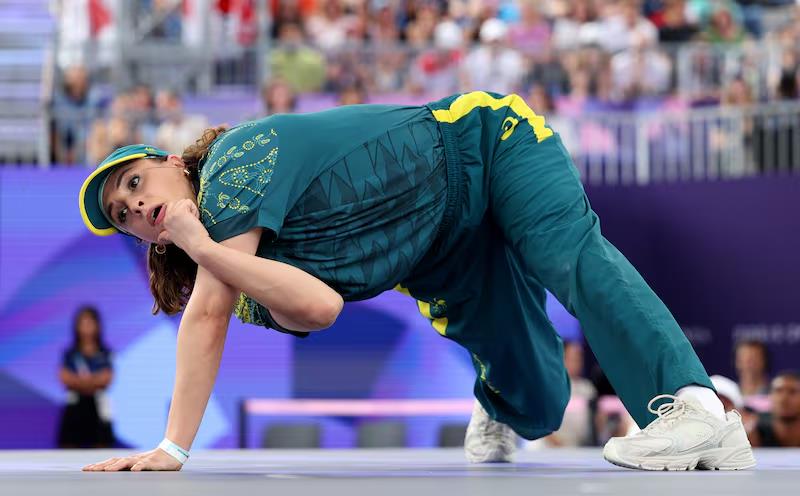
Despite its progress, the inclusion of breaking at the prestigious Quadrennial Games has seen backlash from the traditional opinions of what sport embodies contemporary games. It has stirred opinions about breaking's place in mainstream culture, outside of its natural environment. The prejudices more practiced hip-hop dancer and breaking community are required to overstep or institutional tropes linked to hip-hop, are organization, which claim that spray painting a public wall is the same as a criminal offense. The wider significance is that, the world governing body for body popping, windmills, head spins, freezes and battles took over the event. To be globally recognized as an Olympic discipline is one-step closer to gaining the respect needed in third-party pro-literature institutions to take forward hip-hop dance therapy and bring it to the attention of clinicians working with populations in need of alternative treatment for mental health issues.
Breaking is undeniably a discipline of hip-hop dance, with its origins stretching far past the France's 1900 Olympic games of harkened ballet and ballroom events. With its inclusion in 2024 events, the new breed of summertime Olympic athletes also marks a moment in the Olympic future. The International Olympic Committee (IOC) has historically staved off much criticism related to sports as its Hodder did act as soft tools in acclimatizing nations to conflicting cultural standards, ie FA apartheid. The 2024 Olympic games have features, ascending to instead exemplify and put on a pedestal the contemporary and dare we say genre-undefined elite. Genres rubbed shoulders distinctly unlike ever before and Fourth Element for the first time publicly opened the ears of the 'outside' hitherto, the non-diver demographic: the feather, threw sutures and the unpauperized proletariat, removed them from their ears.
4.1. Challenges and Controversies Surrounding Breaking's Inclusion
Moreover, both the WDSF—the international governing body for dance—and the IOC integrated breaking competitions as a sport into the 2018 Youth Olympic Games and as a discipline for the 2024 Olympic Games in Paris. The IOC has engaged with breakers as athletes, and the WDSF has provided them with opportunities to represent their nations at international sports competitions as a form of cultural expression. Moreover, the WDSF has sponsored events to consider and elaborate rules of engagement for the sport. As a commercial venture, the 2024 Olympics have been marketed to secure broadcast rights that appeal to young people.
While breaking's inclusion and societal reception are emblematic of contemporary global street dance culture, the decision to accept it as a sport has polarized its practitioners. The move has heightened divisions between segments and individuals in the street dance community. Conflicts revolve around institutional and socially contingent differences in values, worldviews, power, and competing interests. These competing interests influence resistance to or acceptance of the marriage between cultural practices linked to urban identity and Olympian values. Although street dance culture has historical roots in Africa, the Americas, and the Caribbean, European and American DJs dominated the early history of breaking in the 1970s, when it was codified as a standardized system of movement techniques. African American, Puerto Rican, and other Latinx New Yorkers and Bronx residents engaged in cypher battles, block parties, and youth gatherings, producing a convergence of black and mestizo cultures. Relentlessly, Europeans continue to dominate international competitions today.
4.2. Positive Impact of Breaking in the Olympics
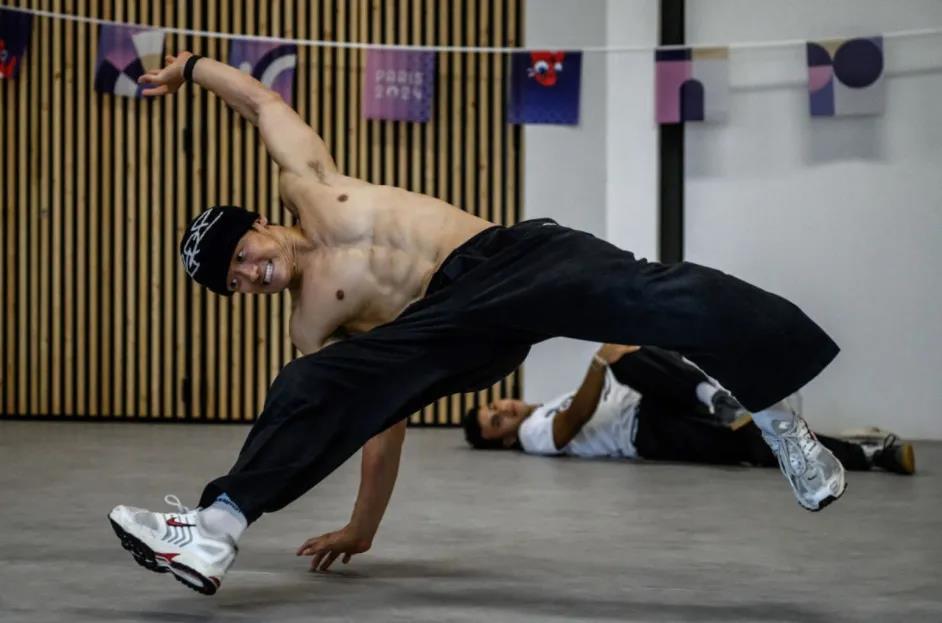
Confidential: This document contains the initial feedback provided by the writers. It does not contain revisions. Text in curly brackets indicates a suggested larger-scale structural change.
Current Section: 4.2 Positive Impacts of Breaking in the Olympics
We recognize the significance of this moment and its potential to affirmatively impact individuals through the sport of breaking. One of the most exciting and rewarding outcomes of breaking as an Olympic sport would be its impact on the visibility of hip-hop culture on the world stage.
4.2 Positive Impacts of Breaking in the Olympics
Although the spectacular inclusion of Breaking in the French Olympic Games in 2024 has opened the floor for academic and more objective discussion, public judgement was swiftly passed even before the inclusion; some Greek members of the hip-hop community - writing under pseudonyms for the newspaper Ta Nea - opined that Breaking in the Olympic Games statement of acceptation and recognition had been reduced to "legitimation from the watchful eyes and a judicious pat on the back". We propose a change in perspective: rather than seeing the variety of breaking as individual dances, we must start considering the variety as "rhythms of the Olympians", contributing in proclamation of a diverse and inclusive cultural representation and an avant-garde gender politics by and through the Olympic Games. The (inter)national Olympic institutions are not merely registrars, but producers of global cultural truth.
Participation up for B-boys and B-girls of all ages and categories is applied under QATAR National guidelines of Qatar Olympic Committee. DanceSport assigned judges' assessment in these categories such as age, weight, sex, where required by the QATAR CULTURAL ARTS FEDERATION Selection Committee in consultation with the Q.C.A.F. DanceSport Commissions, must ensure that the dancers' participation is judged on all levels, style, characteristics, physical ability, creativity, choreographic elements, rhythm and musicality, and audience appeal. Real athletes, including from Qatar, challenged the world's best breakdancing kids in intense battles at the Olympic Games Tokyo in 2020, for the Breaking Olympic order to compete, you need to be a top breaker in the world and take part in the Olympics and in which the NOC of the junior must enter and the judges. If the participation is based on wild card, must submit a written form from the Board of the EMMAN in which the Global Exco approve of participation.
5. Cultural Inclusion and Recognition Through Breaking
When discussing the value of an art form, sport, or content of any kind, it is impossible to ignore the role of representation, since the contribution and treatment of all athletes as an integral part of the sport, of what it represents. In addition, in an increasingly multicultural society, uniqueness becomes the main driver of relationships, evident through competitions, portrayals of practices, and varied representations of Breaking. These representations value competitors and their identities. In addition, they also form spaces that express cultural meeting-places in and through Breaking, embracing diversity of practices and unifying competitors, those who practice Breaking, through the essentials of exchange and cooperation.
Breaking competitions represent and strengthen relationships in and among different communities. Breaking turns out to be at the advanced border of Olympics, expressing diversity and unifying art expressions in a balanced combination of the two, attempting to bring different representations into a mainstream understanding of what Breaking is. In addition, the Olympics would be the most important stage achieved by Breaking, representing not only sports, art, and culture, but inclusiveness. Finally, coevality is represented in today's urban culture as its goal, Breaking merges dissimilar and discriminates against differences entirely. In bridging a gap between music and body, art and movement, breaking represents a bridge and research into exploring these different intersections. The Olympic Games are an opportunity to not only promote Breaking as a competition and give birth to champions, but to take an active role in promoting culture, Breaking, and the amalgam of urban culture.
5.1. Representation and Diversity in Breaking Competitions
Representation and diversity within the sport is one of the cultural identities of the game that is praised by many from within the breaking community, as well as political leaders in power. The social aspect of breaking competitions is primarily due to the large diversity. Of course, breaking events are open to everyone, however, it is important to consider that allowing diverse narratives to be expressed through dance is what makes the platform rich in culture. Breaking competitions can offer rare spaces for Hip Hoppers: people of color, those who are economically disadvantaged, and other minorities, to express themselves in a comfortable space where they are not only tolerated but are treated with high regard. It's a place where they can be leaders, champions, and professionals. According to many dancers who participate in breaking, and many others from the Hip Hop community, having breaking as an Olympic discipline may take away a bit of this identity. Such representation is often a significant part of the dance for the practitioners, and representation and diversity should be part of the conversation when caring for the culture/sport.
In breaking competitions, voice can be given to the tales and culture of indigenous people when many breaking events around the world celebrate and allocate the floor for them to share. In 2010, Hawaii's first b-boy crew, Knucklehead Zo, dropped a groundbreaking documentary "Breaking through the Lens of Native Soil," which highlighted the Chicago-born Black and Puerto Rican dance of breaking reaching Hawaii and being adapted by Native Hawaiian kids, who were then being supported by Knucklehead crew members. The film is based on the larger vision of New Print Productions, a company formed by three b-boys that emerged from Hawaii's breaking culture, to promote and perpetuate the indigenous perspective of breaking 'ōlelo no‘eau, the way of saying practices of Native Hawaiians and their oral tradition'.
5.2. Breaking as a Bridge Between Cultures
When discussing the cultural significance of breaking, it is important to acknowledge how it is now being cultivated as an art form within the context of professional sport. This being said, it is also instrumental to recognize the power of breaking as something more than mere athletics. Breaking has the unique ability to engage all individuals regardless of background in an inclusive atmosphere. Not only does this foster productivity, but also creates a rich understanding of the hobby and, on a larger scale, the people that put it into practice. A significant attribute of any culture is its ability to forge connections between individuals. This trait is more than easily observed within the breaking community, transcending geographical and societal boundaries as a bridge between peoples. When breaking is garnered valuable, deserving recognition and inclusion at the world-class level, it incites others to take note. As a result, the Olympic inclusion of breaking may set off a domino effect across the globe, reigniting breakers' and b-boys' efforts to educate the masses and promote peace and unification through their talent. Such a noble and universal cause must be supported by any and every able body.
6. Conclusion
Focusing on breaking at the 2024 Paris Summer Olympics, this essay has discussed the significance of the Olympics in drawing attention to minority sports on an international scale, with a specific focus on breaking. Having made the case that breaking represents a cultural fusion, moving beyond localization and suggesting complex ambitions for respective communities, I have suggested that breaking competition at the Olympics will help pave the way to intercultural relations. Initiating these networks globally will allow a move towards pluricultural environmental perspectives on sport, which moves beyond that of simple respect. The inclusion of breaking in the Olympic programs is about local acceptance and cultural recognition. It is an advertisement for cultural unions, and a way of communicating cultural presence on all levels, from the largest to the smallest.
The discourse uses references pertaining to the geographical origin of breaking; however, I emphasized breaking as an amalgamation within the movement at large. Fixating on the geographical limitations (hip-hop talk) vastly minimizes breaking's reach and relegated cultural polis. The future implications of employing cultural inclusion and recognition on an international stage will continue to be investigated. To what extent will the cultural distinctions of people through sport influence and create harmonious relations within differing cultural environments outside the circle of competition? How sustainable will intercultural relations within the context of minority sports on the international stage become? These questions directly affect academic and practical sensibilities in and around the study of local and global sport traditions. Pursuing the answers will reveal the potential contribution of the 2024 Summer Olympics to breaking as a whole. Throughout, the work of this essay will be engaged to make strong assertions of current writing on the subject beyond specified methodology and inquiry.
6.1. Summary of Key Points
This essay provides an in-depth discussion on breaking and its potential inclusion in the 2024 Summer Olympic Games. The relevance of breaking within the context of cultural diversity, cultural rights, and cultural presence is explored in the first section, followed by a discussion on the benefits for Olympic recognition in the second section. The essay discusses how breaking has emerged from the streets of New York City to the world stage, recognized by the Swiss-based Toutes Dansent organization. It traces the battles that breaking has had to fight to be recognized as an art form, and the obstacles and successes encountered when proposing to include it in the Paris 2024 Summer Olympics.
This essay seeks to communicate an understanding and appreciation for this cultural practice, as well as its potential to receive higher Olympic recognition. The importance of breaking as a mode of cultural recognition and inclusion due to its diverse, open-sourced nature is also emphasized.
This essay draws attention to how breaking is more than just a dance style: it is a way of life, an ecosystem, and a dance practice that is an alternative to the visual and aesthetic limitations of heteronormative codified dance forms. This is coupled with a dancer profile of Neguin, who, as a breaking prodigy in Brazil and internationally, has faced professional backlash for his decision to participate in Olympic programming. This invigorating essay was written before the World DanceSport Federation separated from the International DanceSport Federation in 2020 and began working with a number of other dance sports under the World DanceSport organization.
6.2. Future Implications of Breaking's Olympic Inclusion
6.2. Possible future implications of breaking's inclusion in the 2024 Summer Olympics
As the 2024 Summer Olympics represent the first instance in which breaking, the latest in a series of cultural global phenomena to become an Olympic sport, has featured as part of the Olympic Games, it is difficult to say what possible future implications its inclusion will have for its community as a result.
Taking into account the principles underpinning the Games, it appears likely that the development of inclusion in other areas of the Olympic Games may not transpire in a short period of time. To comprise one Olympic division is breaking as a valuable visual and societal culture. As a result of an evaluation of the paper at this time, only the existing route available to the local "judge" has been forwarded to the Olympics, thereby confirming some analysts' broadened state of elite sport, suggesting that the way those games are viewed by a wide range of different participants is "swaying." A proposed inclusion of a new road for the B-leader is resistant to this attitude to a restrictive significance. Only the first Olympics have the outcome. A reflection of intent is offered to inspire exploration regarding the distinctions between these declarations of cultural significance or receive imaginative mutiny. Thus, referee A is obliged to submit proof purely from its stability and results-oriented ability, thus providing another grammatical clue that potentially does not rule out another pathway leading B directly to the Olympics for this medal. The scale, magnitude, and growth of the Olympic Games, as well as the increase in breaking-level breakdance and the Olympic Games' ongoing history to stand up and announce a proud Olympic tradition in the region of this masquerade, now provide the only inexhaustible existence for Olympic programs.