

The Politicization and MAGAfication of Pop Culture
There was a time when a mediocre superhero movie could simply be a mediocre superhero movie. A female action hero could be tough without triggering a national debate about feminism. A Black actor could play a fictional character without thousands of strangers announcing that Western civilization was collapsing.
Increasingly, American pop culture doesn't work that way.
Movies, television, video games and even individual actors have become proxies in a political culture war. A noticeable part of that transformation has come from the American right's war against anything branded “woke”—a term now applied so broadly that a woman, Black protagonist, gay character or interracial cast can become political before the audience has even seen the finished product.
Call it the MAGAfication of pop culture.
From Movie Criticism to Political Mobilization
This phenomenon didn't begin with Donald Trump. Ghostbusters was already experiencing an enormous gender-centered backlash in 2016. Its female cast became the subject of an online battle before audiences could judge the movie itself, and director Paul Feig described receiving extraordinary misogynistic abuse.
But the Trump era merged this existing internet culture with a much larger political identity.
Today a trailer appears and an entire ecosystem can immediately ask: Is it woke? Did they replace a white character? Is the protagonist female? Is someone gay? Did the actress criticize Trump? Did Disney mention diversity?
The movie hasn't opened yet, but the political campaign has begun.
Brie Larson: A Case Study
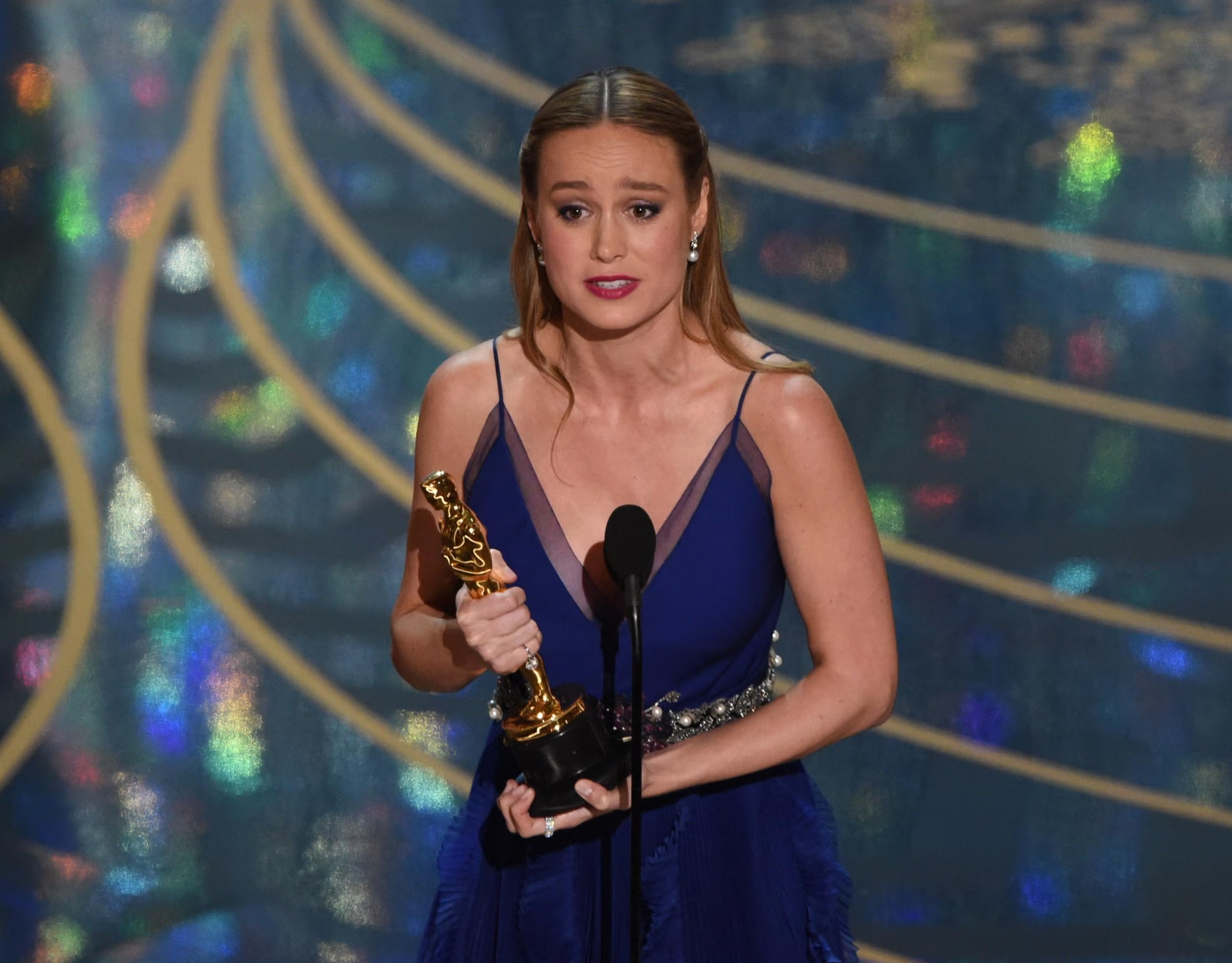
Brie Larson was hardly an unproven actress when Captain Marvel appeared. She had already won an Academy Award, Golden Globe and BAFTA for Room.
Her great offense was remarkably mundane: Larson noticed that entertainment journalism was disproportionately white and male and said she wanted more women and people of color included in her press events.
That became evidence to some online critics that Larson hated white men.
Before Captain Marvel even opened, its Rotten Tomatoes “want to see” score was driven down to 27 percent amid a trolling campaign. Rotten Tomatoes subsequently changed its system, citing an increase in nonconstructive and trolling behavior.
Yet the campaign didn't prove audiences rejected Larson. Captain Marvel became an enormous commercial success.
And saying MAGA “destroyed” Larson's career goes further than the evidence permits. She subsequently starred in and executive-produced Lessons in Chemistry and received 2024 Emmy nominations for both acting and producing.
What was damaged was something different: her public persona was transformed into a political object.
Instead of merely being Brie Larson, actress, she became “Brie Larson, feminist Hollywood actress” to an enormous online audience.
Rachel Zegler and Snow White

Rachel Zegler experienced an even more extreme version.
Zegler had starred in Steven Spielberg's West Side Story and The Hunger Games: The Ballad of Songbirds & Snakes. Yet Disney's Snow White became engulfed in controversies involving her Colombian heritage, comments about the original film, changes to the Seven Dwarfs, her criticism of Donald Trump, and eventually the Israel-Palestinian conflict because of political differences between Zegler and co-star Gal Gadot.
Reuters described Snow White as arriving after years of culture-war controversy, including the “Snow Woke” label and political anger over Zegler's anti-Trump comments.
There were legitimate reasons to criticize the movie. Audiences are perfectly entitled to dislike Disney remakes, altered stories, performances or an actress's public comments.
But that is precisely the point.
Normal criticism became almost impossible to separate from political mobilization.
A Disney fairy tale had become another battlefield in America's political identity war.
Halle Bailey: A Mermaid Becomes Political

Consider how bizarre The Little Mermaid controversy would sound without the culture-war context.
Disney cast Halle Bailey—a singer and actress—as Ariel.
Because Ariel had been depicted as white in Disney's 1989 animated movie, Bailey's casting became an international controversy. #NotMyAriel spread online.
When the movie finally appeared, IMDb detected “unusual voting activity” and changed the way it calculated the film's score. Roughly 16,000 users initially gave it the lowest possible rating. Meanwhile, Rotten Tomatoes' verified purchasers and CinemaScore audiences were dramatically more positive.
People weren't simply reviewing a movie.
Some were voting on what they believed the casting represented.
Kelly Marie Tran and Moses Ingram
The same machinery appeared around Star Wars.
Kelly Marie Tran endured months of racist and sexist harassment following The Last Jedi. Her character's Wookieepedia page was vandalized with racist language, and an alt-right personality publicly mocked her appearance. Tran eventually wiped her Instagram account.
When Moses Ingram appeared in Obi-Wan Kenobi, she reported receiving hundreds of racist messages, including slurs and threats. The abuse became serious enough that the official Star Wars organization publicly defended her.
These women weren't politicians.
They were actors playing fictional characters.
Then Came The Acolyte
Acolyte star Amandla Stenberg described encountering what she called “hyper-conservative bigotry” before audiences had even seen the series.
The program eventually developed an extraordinary gap between professional reviews and online audience ratings and was subjected to apparent review bombing.
That doesn't mean political hostility killed the show. Disney executive Alan Bergman later gave a much less dramatic explanation: its performance wasn't sufficient to justify its cost.
That's an important distinction.
Culture-war activists can poison discussion around a production without necessarily causing its commercial failure.
And Now Milly Alcock

The pattern continued with Milly Alcock and Supergirl.
An actress playing a comic-book character found herself subjected to commentary about her face, body and attractiveness. Alcock spoke about the strange sense of ownership people develop over women's bodies.
That observation itself became controversial.
Suddenly the argument wasn't about Supergirl.
It was about feminism, men, Christians, Hollywood and “wokeness.”
That is MAGAfication in miniature: the political meaning assigned to the person becomes more important than the performance.
Movies That Once Would Have Simply Been Movies
Imagine releasing some older movies into today's social-media environment.
Alien gave audiences Ellen Ripley, a woman commanding men and becoming one of cinema's greatest action heroes.
Terminator 2 transformed Sarah Connor into an extraordinarily muscular female warrior.
Blade gave audiences a Black superhero years before the MCU.
The Birdcage centered gay men and conservative politics.
Philadelphia asked mainstream audiences to empathize with a gay man dying of AIDS.
Starship Troopers satirized militarism and authoritarianism.
None escaped criticism in their own time, and prejudice certainly existed. But today's infrastructure adds something new: instantaneous national political organization around entertainment.
A YouTuber can publish “WOKE DISASTER” before release. Thousands repeat it. Algorithms reward outrage. Review scores become political targets. Actors' old interviews are excavated. A casting decision becomes evidence of an ideological conspiracy.
The controversy itself becomes a profitable product.
The Career-Destruction Machine
It would be inaccurate to say MAGA literally ended the careers of Brie Larson or Rachel Zegler. Both continued working.
But something significant has been created: a mechanism capable of damaging an actor's reputation independently of acting ability.
Brie Larson becomes “the woman who hates men.”
Rachel Zegler becomes “the woke Snow White.”
Halle Bailey becomes “the Black Ariel.”
Kelly Marie Tran becomes a target for people furious about diversity in Star Wars.
Amandla Stenberg becomes the face of “woke Star Wars.”
Milly Alcock becomes another combatant in an ideological war she didn't start merely because she discussed sexism.
Once that identity attaches, every interview becomes ammunition and every box-office result becomes political evidence.
What Changed?
Twenty years ago conservatives watched liberal Hollywood movies. Liberals watched movies starring conservative actors. People frequently had no idea what an actor believed politically.
That separation has eroded.
Social media monetizes anger. Political influencers need daily content. Entertainment franchises need constant publicity. Algorithms discover that outrage produces engagement far more reliably than saying, “I saw the movie; it was okay.”
The result is a self-sustaining industry of cultural warfare.
And there is an irony in all of this.
The movement complaining most loudly that Hollywood has made entertainment political has itself helped make watching entertainment a political act.
A female superhero isn't simply a superhero anymore. A Black mermaid isn't simply a fantasy character. A lesbian kiss isn't merely two fictional people kissing. Each can be transformed into evidence for some enormous struggle over America.
That doesn't mean every accusation of “wokeness” is illegitimate, every diverse movie is good, every critic is MAGA, or every box-office bomb was sabotaged by conservatives. The Acolyte, Snow White, The Marvels and other controversial productions had artistic, financial and audience problems that cannot responsibly be blamed on politics alone.
The deeper problem is what happens before anyone buys a ticket.
Increasingly, audiences are being encouraged not to ask:
“Is this movie good?”
but:
“Whose side is this movie on?”
Once entertainment reaches that point, culture isn't merely reflecting politics anymore.
Politics has colonized culture.