
I've worked for major organizations, sat on boards, worked on corporate governance policies, contracted with big companies, and I understand the organizational leadership required to run a smooth business. All of these big companies, even some in the South, have DEI programs, celebrate and raise Pride flags, have training programs to improve professionality, and focus on synergy within the company, essentially promoting the idea of “celebrate differences and get along”. I wish everyone had the opportunity to work for major corporations because the support for their employees is top notch. I've also worked for sole proprietorships and do not experience the same level of enthusiam for internal support. So I gauge how effective leaders are based on the principles I've learned. Anger, hate, racism, sexism and you are fired immediately, or go through a painful review and evaluation! I haven't been on the receiving side, but I've had to build cases against those that have worked for me to get them out.
Looking at Trump and his leadership style, and all these MAGA fools, they would be fired or quarantined, either by executives, or being C-level executives, by the board of directors or investors. Trump violates just about every HR or corporate governance policy there is.
The events that have recently unfolded, including the Biden debate, the Trump rally shooting and the religious nutjob interpretations, the new propaganda campaigns on social media, the Supreme Court rulings, the re-election of Lauren Boebert, all lead me to believe that another Trump administration is now closer than ever.
I forget person I saw in an interview, think a Democrat senator, said he was not worried if Trump gets re-elected because he believes that Trump does not have the leadership ability to pull of a coup or anything of substantial evil design.
– Laveda Jones
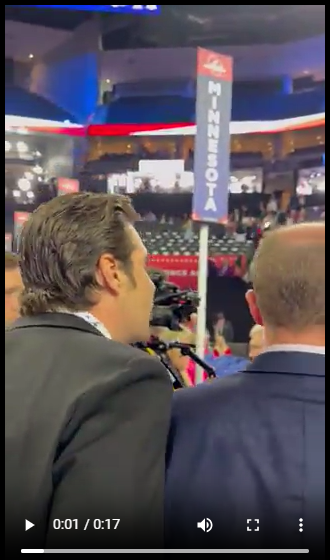
Here is an example, already unfolding, of collapse from within:
https://lavedajonesrapstorage.blob.core.windows.net/$web/MattGaetzBeingAnAssAtRNC.mp4
Analyzing Dysfunction Within the MAGA Party: A Comprehensive Examination
1. Introduction
This essay provides a comprehensive analysis of dysfunction within the MAGA Party. In Part 1, I examine the social and policy preferences the party appeals to and how recent events have affected the MAGA Party. In doing so, I provide a qualitative profile of the organizational dynamics of the party. Next, I proceed to evaluate the governance of the party, including its clientelistic structures and communications. At the level of the base, I analyze the social base of the MAGA Party. Part 2 contains an analysis of the professional and financial dynamics of the party. Part 3 brings these elements together to evaluate the party overall. Writing this necessarily involves some subjective judgment and interpretation based on both qualitative and quantitative indicators. The present analysis concludes that the MAGA Party has real and ongoing governance dysfunction and that present priorities within the party are almost certain to make this both more acute and more long-standing than previously. No serious operations with even a tiny fraction of the resources of the state would rely on the mix of personnel the MAGA Party now depends on, and no serious operation would only add even more unaccredited "loyalists" to its midst.
1.1. Background of the MAGA Party
The MAGA party is a populist, single-issue political party. It was formed less than six months ago in response to the bipartisan passage of an infrastructure bill, after which a few dozen Republicans voted for its passage. The leader of the party is the most recent Republican president, and in its first election, the party spent half its assets and saw one of its two candidates win. The party's platform is only the first five planks of the Republican Party's platform, with no mention of either infrastructure or the 2021 election. Elites were mute on the formation of the party, in some cases expressing public disbelief. For the tens of millions of organizers who make up the faction (about 40-45% of all Republicans and a bit more than 30% of the entire electorate), it just doesn't matter what words are used or parties are involved. As long as a political actor organizes to win for their shared issue, the specific party or spelling of the actor's name is inessential. A successful party, in turn, has further spillover effects on the remaining electoral dynamic between the major parties, with the margin of victory likely to increase as strategic voters feel more freedom to cast ballots that are not effectively wasted.
The MAGA party arose in response to obvious credibility concerns between officeholders (and candidates) and the team players who seek to defeat Democrats and elect fellow partisans who support President Donald Trump. The requirement for party actors to "support President Kennedy," in Richard Fenno's famous words, captures the outlier situation facing the "Movement" today, a group that includes powerful and well-run both intra-party and in-party audits. The most prominent MAGA member in Congress is easily Congressman Jim Jordan. What follows, therefore, are high stakes—and high tensions—between these factions when cost-benefit analyses suggest that a president's endorsement is associated with electoral victory.
2. The 'Do Nothing Congress' Phenomenon
One of the typically supportive statements for one party is that the opposing party has nothing to offer. The Do Nothing Congress is deemed by people in various camps of the MAGA party, usually those closer to the far-right, who tout it as proof that Congress needs to be 'shot to hell'--Bannon's words. Congress is already generally unpopular, even though the approval has risen post-Trump. It peaked at 23.7% approval in mid-2020 and has since been declining back to sub-20%. Chuck Grassley, a respected Republican senator from Iowa, said it was the worst Congress he had been a part of, and he has been a member since 1959. There were many criticisms of the Do Nothing Congress, some of which included inactivity, debt accumulation, over-funding of many federal agencies, deadlocked Supreme Court nominations, excessive partisanship, impracticality, and perhaps the most prominent: being tied to special interests and multinationals. This is the area I see as hurting the MAGA Party in 2024.
Since my primary research tentatively suggests the new MAGA party will resemble the old one we see today, in order for the U.S. to solve many of its problems currently, we need to explore, and - in my view - solve existing congressional problems. This will then carry over into electoral reform--this is a very serious thesis statement in its design. The Do Nothing Congresses in the 20th century happened at a time when one party usually controlled two of the three branches of government: the executive and legislative. With divided government existing today and usually deadlock spurred from it, this paper theorizes that it is not so much special interests as it should be corporate interests, but rather a lack of leadership wanting to stir any boat--front and center politicians want to avoid souring the favor of the populace.
2.1. Origins and Criticisms
IV. Dysfunctions of the MAGA Party
2.1. Origins and Criticisms
In what follows, we undertake a comprehensive examination of the origins and critiques that comprise the "Do Nothing Congress" phenomenon that are widely accepted within political circles and bring about the first reality—or public—check on Congressional dysfunctionality, not to mention should inform public perceptions of the professional politicians representing them in the U.S. House of Representatives and U.S. Senate.
The myth of the "Do Nothing Congress" has its roots in the attempt by the Democrats to oust President Harry Truman and find easy passage to the White House. "The Republicans attempted to harness the public mood of impatience, promising voters a 'blast against the White House,'" U.S. President Apr. 1945-Jan 1953 (Truman, Harry (Mrs.) as Elizabeth Stevens, "This Child and This Father," PT, Inc., p 30, Apr. 5, 1940), Michigan State University Libraries, Archives of Public Affairs and Policy, "Women's history, public policy, & political change."
There are severe criticisms that form the physical and visible evidence that political representatives are dysfunctional when tribulations are assigned the title "Do Nothings," stating to the Democrats as soon as they took control of the Congress, those elected as their representatives effectively shut the U.S. government down by passing a mere 6 laws, thus succeeding in sealing the label of "Do Nothings" permanently to their foreseeable future as a political party and as a domestic policy leader.
Presently, as then, this vote on termination, based solely on the numerical count of the laws passed by the Democrats in the U.S. House of Representatives and U.S. Senate, have failed to provide any other requisite information including: What the number of laws passed per Hopper cycle tells us about the functioning of the American political system is unknown, as is whether a dysfunctional legislative pipeline process producing few laws that systematically imperil our government performance, threaten our security and sink our political economy is perceived by the public or caused it, is an unknown, as is the significance or insignificance of the resumptive "title of Do Nothings" applied by the Republicans to the Democrats on Jan 1, 2015.
3. Trump's Turn Against Cabinet Members
When the history of the Trump era is written, one of the mysteries that historians will have to grapple with is Donald Trump’s astonishing willingness to turn on and against members of his senior leadership team. He is not the first president to retune his relationship with various senior leaders who served in his Cabinet. After a rocky start, for instance, Theodore Roosevelt fell in love with his "White House gang," as they came to be known, including figures such as Secretary of Interior James R. Garfield and Attorney General Philander C. Knox. He periodically demonstrated disdain for Taft administration Secretary of the Navy George Meyer. William Howard Taft, who was chosen by Roosevelt to continue his legacy, dismissed his military appointees and tussled with others, including future president Franklin D. Roosevelt. Harry S. Truman turned on his secretary of state for being more aligned with John F. Kennedy and later campaigned against his handpicked successor, Alben Barkley.
Case studies have their limit, but scholars have yet to take a serious look at the phenomenon of presidents attacking their former Cabinet members. Excluding wartime, it is exceedingly rare for presidents to attack their own former appointees. When Trump trashes his former aides repeatedly, it simply goes way beyond what we might expect from the institutional norms and constrictions of the presidency. As far as I know, there is no precedent for this kind of sustained vituperation of members of the Cabinet. This increasingly common behavior indicates one of two things: either former President Donald Trump was an exceedingly poor judge of character, or he is trying to draw attention away from his own political culpability for the events of January 6 by blaming others and throwing them under the proverbial bus.
3.1. Case Studies
In this section, we illustrate some examples of President Trump turning against cabinet members prior to the 25th Amendment crises in January 2021. We consider this to be a general question – we are not arguing here that these examples provide evidence of changes over time. Our aim is not to generate clear theories, testable hypotheses or quantitative predictions about time series data. Instead, we use case studies to show the causal mechanisms by which Presidential shaming affects the risks of cabinet members who are aligned with the incumbent President and to discuss the implications for the party's internal cohesion and for governance.
We discuss the criticisms of the following cabinet members: Mark Esper, Jeff Sessions, William Barr, Christopher Wray, Wilbur Ross, Alexander Acosta, Mike Pence, and Jerome Powell. These cases show that leading up to the events of January 6, 2021, President Trump publicly criticized several cabinet members. Some of the administration's members criticized by President Trump have a short history with him, such as former cabinet members Mark Esper, Secretary of Defense from July 23, 2019, to November 9, 2020, and William Barr, who worked as Attorney General from February 14, 2019, to February 14, 2020. Others have a longer history as members of the administration, such as Christopher Wray, the Director of the FBI (from August 2, 2017), and the Secretary of Commerce Wilbur Ross (from February 28, 2017). Another group of criticized cabinet members have a particularly personal history with the President. Attorney General Jeff Sessions was among President Trump's first high-profile endorsements and served in his administration until his resignation. This makes these profiles particularly relevant for our analysis. Gans-Morse et al. show that shaming is very effective to cause retaliation by receiving the public. In our illustrative cases, there is no clear evidence of retaliation on those cabinet members that Presidents criticized.
4. Legal Issues Among Trump's Allies
Although the former president himself has only been charged with two cases by New York, his allies face several legal problems. Some of the failed legal cases discussed in the prior blog are civil, while the others are criminal. It gets confusing because these court cases are usually all grouped together, and it's difficult to know which charges could be the most damaging in the long run. Each legal category will have different outcomes, ranging from financial consequences to incarceration. It is reasonably safe to assume that this variety of legal challenges has a major psychological toll on party members.
Civil cases to overturn votes might not carry any jail time, but courts have ordered and plaintiffs have spent millions on improper lawsuits, making Trump World look even stranger and more extravagant. One of the lawyers, Lin Wood, is facing consequences, with licensing and extortion investigations ongoing. His legal conflicts even attracted the attention of prominent Q influencers, while many Q people agencies involved in election cases have lost their jobs in little time. Many, if not all, of the election-related lawsuits were reported by the press, and the overwhelming majority of them were dismissed fairly quickly. Despite this, even throughout late 2021 and early 2022, the rumors persisted. One of the lawyers who was laughing throughout the situation was Lin Wood, and a second lawyer, Paul Davis, successfully overturned the Pennsylvania state court. The judge then demanded that the Democrat's official registration be revoked. This order was later nullified, but the damage has been done, and Davis now faces disciplinary action.
4.1. Overview of Key Cases
Therefore, in the following section, we will provide a comprehensive case-by-case examination of each substantial legal persecution or lawsuit against the President of the United States and his closest allies. The goal of this section is to offer as much information as possible on these cases, allowing us to illustrate the legal difficulties that the MAGA party has encountered and provide a more comprehensive overview of the dysfunction facing the party.
1. D.C. v. Trump – Summer Zervos: In this case, we will examine the President of the United States, Donald Trump's, successful attempt to stall a defamation lawsuit against him until he has left office—based on the Department of Justice under the Trump Administration arguing that the Supremacy Clause in the US Constitution should pave the way for an impeachment process over a lawsuit of this nature.
2. McDonnell v. United States: Attorney General William Barr in 2020 motioned to drop charges against two Russian shell companies accused of financing a 2016 interference campaign in the United States. The specific charges were for campaign-finance violations, sanctions, and visa-related charges and related directly to a referral from Special Counsel Robert Mueller's investigation over Russian intervention in the election. In response, Anthony Blinken, the current Secretary of State under President Biden, and Elliott Abrams launched a lawsuit to challenge the dismissal, accusing Barr of intervention to "protect the personal and political interests of President Donald J. Trump by attempting to prevent a full airing of the Russian government's attack on the 2016 election."
5. Revolving Door: Former Trump Allies Turning Against Him
This week, MSNBC's Steve Schmidt and the New York Times’ Bret Stephens both agonized over the corners Republicans have painted themselves into. For most of the last 5 years, the two men have been constant companions in blaming Republicans for Donald Trump – and in blaming Trump for the sad state of the Republican Party. They might not have relented, but they've become less insistent. Meantime, Michael Gerson has stopped trying to pin the Party's sickness to Trump. Having worked in Republican politics one way or another for almost 4 decades, he's now more likely to say the disease is the man and dump him.
It’s a phenomenon noticed by Dana Millbank, Frank Bruni, and George Will, among others, and it clearly counts as one of the bigger surprises of the presidential campaign. Call it “I Used To Work For Trump, But No More.” For Chavez, Milloy, Salter, and the rest are seldom driven by a sense of principle. They don’t really believe Trump was personally responsible for January 6. No, they’re sticking up for a point of view, a way of looking at the relationships inside and structure of the MAGA-Party. Theirs is usually an appeal from below (the ground of what’s happening outside in the “folk”). Since the Georgia run-offs, the scores of “Fallen Protectors” have been mostly installments in that genre. Most of these power-holders are now committed to getting “Trump” out of the descriptive elements of their politics – which entails then getting him out of the political party he rebuilt and controls.
5.1. Patterns and Reasons
Patterns and reasons. At this point, we might observe that this is a tightly interconnected topic. We have attempted to identify the underlying reasons for the shift of some loyal followers and to suggest that the patterns we observe might already be embedded in loyal follower profiles. They are less 'reasoned shifts' of passive acceptance of Donald Trump as leader to 'reasoned reticence' and mere acceptance of him, and more a function of already existing patterns within the MAGA Party or 'attitudes' of those who support him. This has implications for how the Trumpian struggle and civil war within the MAGA Party plays out. When contrasting reasons and patterns, a 'reasoned subsequential analysis' would look at the importance of these patterns and reasons for the cohesion of the MAGA Party and its durability.
Let's list the facts that we need to explain: As the list indicates, quite a few reasons and patterns come to mind when thinking about the shifts. Several elements have been suggested as jointly explaining the shifts. But it is not only the 'hafting'-logic presented above that rezones the potential importance of these patterns. More fundamentally, due to the above reasons, these dynamics allow us to suggest that we might be on the brink of a new political regime. To show why, let me proceed by briefly considering a number of reasons why these patterns might such importance and links to weakness of the MAGA Party as an institution/unit.
6. Conclusion
The evidence in this article indicates that the MAGA Party, as it currently exists within the American political system, is dysfunctional in numerous ways. With a destructive and ineffective populist leader, a radical and unreliable mass base, and a party establishment that believes it can control the negative aspects of both, this analysis has revealed that the Democratic Party enjoys an incredibly advantageous position. Voters clearly understand that the Biden administration – with the narrowest of possible majorities and no margin for error whatsoever – is the only party equipped to govern. This scenario creates the potential for a midterm election and presidency to be known for legislative accomplishments and efficiency rather than blame and chaos. The MAGA Party is working exceptionally hard to achieve the latter and the former party of governance is free to function on behalf of the American electorate.
The MAGA Party is made up and made for chaos. The presidency moves from one decree to another, the legislative campaign is shock and hucksterism, and the electoral strategy is hell-bent on gutting Kingship altogether. This haphazard, internally inconsistent electoral platform alone is enough to vote against the MAGA Party to give governing power to the Democratic Party. This intuition is supplemented with MR engineers in a 2022 Senate battleground study that found the home attitude even further within solidly Republican states. For example, in Missouri, voters feel the federal government should function less by a margin of 77-22. This instinctual belief that one of the parties believes in governing helps reveal the battleground advantage Democrats have in the Senate.
6.1. Implications and Future Outlook
In sum, while former President Donald J. Trump played an integral role in uniting disparate factions and forcing a vastly splintered GOP to coalesce around his personality and combat the populist issue constraints systematically embedded within the Republican brand, a further fragmentation has led to a period of dysfunction within the newly-minted MAGA Party. Over the past two decades, grand ideological realignments have occurred in both mainline parties; now, the 'new GOP' is heavily reliant on personality-based leadership, while the remains of the Democrats are more issue-focused due to their broad programmatic compatibility. As such, looking to the future, the MAGA Party faces two main challenges. The first is that its focus on Trump himself – instead of the issues that he championed, which could win new resisters over – restricts the sorts of opportunities that it can pursue for now and in the future. The second challenge is that an anti-Trump GOP or a post-Trump anti-populist conservative wing are competing for access to resources, making either goal harder to achieve.
At present, there are numerous implications to be drawn from this development. Most notably, ideological traps like Trump's brand of constitutional conservative populism cause less fervent followers to back away, making the party only even more subservient to the leader that poses such a risk of reputational damage. As Trump-loyal MAGA voters are only about 30% of the American electorate along with the so-called resistance voters who take exception with his stances not out of any love for illegal immigrants and the like but rather because they feel government to be ineffective and corrupt and that their own wages and benefits ought to be a priority – over and against those of non-Americans – and as there are a host of reasons why non-populists may not feel comfortable currently voting Republican – especially after the January 6th events – there are no doubt electoral risks inherent to the loyalty to Trump that every Republican and conservative politician must now submit to. The planned social media platform seems more strategic than ideological, an attempt to make the #1 and #3 challenges more manageable through bypassing the media and monopolies completely, and further data will be needed before coming to any final conclusions in this regard.