

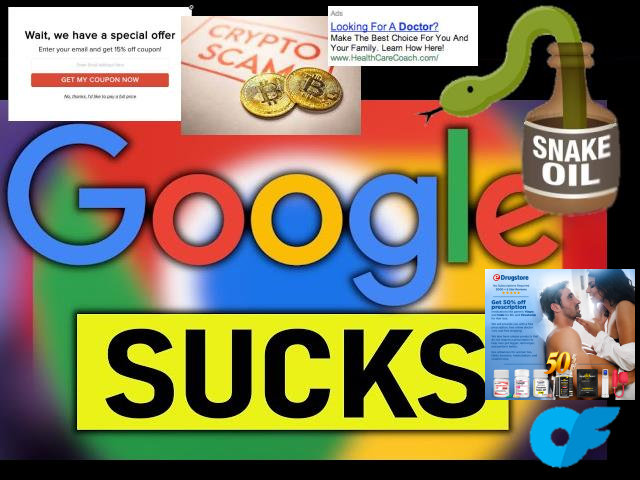
I've spent many years learning SEO techniques, studying Googles algorithms, and learning how to play nicely within Google's quality-driven search friendly criteria. I was around when search came onto the scene fresh out of the 90's and its approach to search shed the black hat, ad-ware scammers, porn-pushing popups, and virus laden download links. Their model was the pioneer that leveled the playing field at the same time putting focus on the quality of the search results for the end user. Now times have changed in the Trump and post-COVID years, back to the wild, wild west of the Internet, but favoring the gold-digging prospectors with the highest bid. What was once a quality based playing field is now a grifting, ad-pushing, and low quality mess. OnlyFans courtesans, bitcoin scammers, and snake oil corporate peddlers once again dominate the Internet scene.
The Decline of Google's Search Quality: From User Intent to Advertiser Incentives
For over two decades, Google’s dominance in the world of search was built on a simple but powerful principle: show users the most relevant, high-quality information in response to their queries. Its early algorithms revolutionized the internet, using PageRank and other sophisticated signals to interpret what people were actually looking for—even when their queries were vague or poorly worded.
In the 2000s and early 2010s, Google earned a reputation for putting user experience first. Its algorithms prioritized authoritative sources, valued original content, and consistently surfaced useful, accurate information. Search results felt like magic: whether you were asking a basic question or researching a complex topic, Google usually nailed it.
But in recent years, that magic has faded.
The Rise of Sponsored Noise
Today, Google's search results often feel like a cluttered mess. Sponsored links dominate the top of the page, pushing organic results farther down—sometimes below the fold entirely. While ads were always a part of Google’s revenue model, the balance has shifted dramatically. Search has become less about answering questions and more about monetizing them.
In many cases, the top search results are not the most relevant—they’re simply the most optimized or most willing to pay. Low-quality sites with thin content, SEO manipulation, or clickbait headlines increasingly crowd out thoughtful, authoritative sources. The once-rigorous efforts to match search intent with high-value information now appear secondary to maximizing ad revenue.
A Step Back in Time
The result is a user experience that feels more like the pre-Google internet of the 1990s: frustrating, filled with noise, and requiring extra effort to separate substance from spam. Queries that once would have delivered helpful answers now often return affiliate blogs, content farms, or company landing pages masquerading as advice.
Even power users—those who know how to use advanced search operators or sift through multiple results—find it harder to locate trusted information. Meanwhile, tools like Reddit, niche forums, and even AI chat interfaces are being used more frequently as search alternatives by users frustrated with Google’s decline.
The Shift in Incentives
What changed? Google’s incentives did. With increasing pressure to deliver quarterly profits and maintain ad revenue dominance, the company's focus shifted from delighting users to monetizing them. While AI, personalization, and other innovations were introduced, they often served to deepen Google's walled garden rather than broaden access to the open web.
This pivot has broader implications. When the most powerful search engine in the world de-prioritizes truth and relevance in favor of profit, the quality of public knowledge suffers. Discoverability becomes a pay-to-play system, and independent voices are drowned out by commercial ones.
Conclusion
Google once earned its place as the internet’s gatekeeper by fiercely championing user intent and delivering unmatched search quality. That legacy is fading. As the company prioritizes advertisers over users, search results feel increasingly hollow—less like answers and more like advertisements.
If this trend continues, the door is wide open for new challengers who are willing to make relevance—not revenue—their guiding principle once again.
Let me know if you'd like a version tailored for blog publication, social media, or a comparison with alternatives.