

Donald Trump’s second term has stripped away any lingering illusion that his presidency is about governance, improvement of daily life, or national unity. What remains is a project driven almost entirely by political motivation: consolidate power, punish perceived enemies, and keep his base in a constant state of emotional mobilization. Policy outcomes, material benefits, and institutional stability appear secondary—if they matter at all.
Measured against the basic standard of governance—making people’s lives better—Trump’s record is strikingly thin. There is no coherent economic vision aimed at reducing costs for working families, no serious expansion of healthcare access, no meaningful investment in education, infrastructure, or public welfare. Instead, the administration’s energy has been channeled into symbolic fights, loyalty tests, and culture-war crusades designed to dominate headlines and inflame passions rather than solve problems.
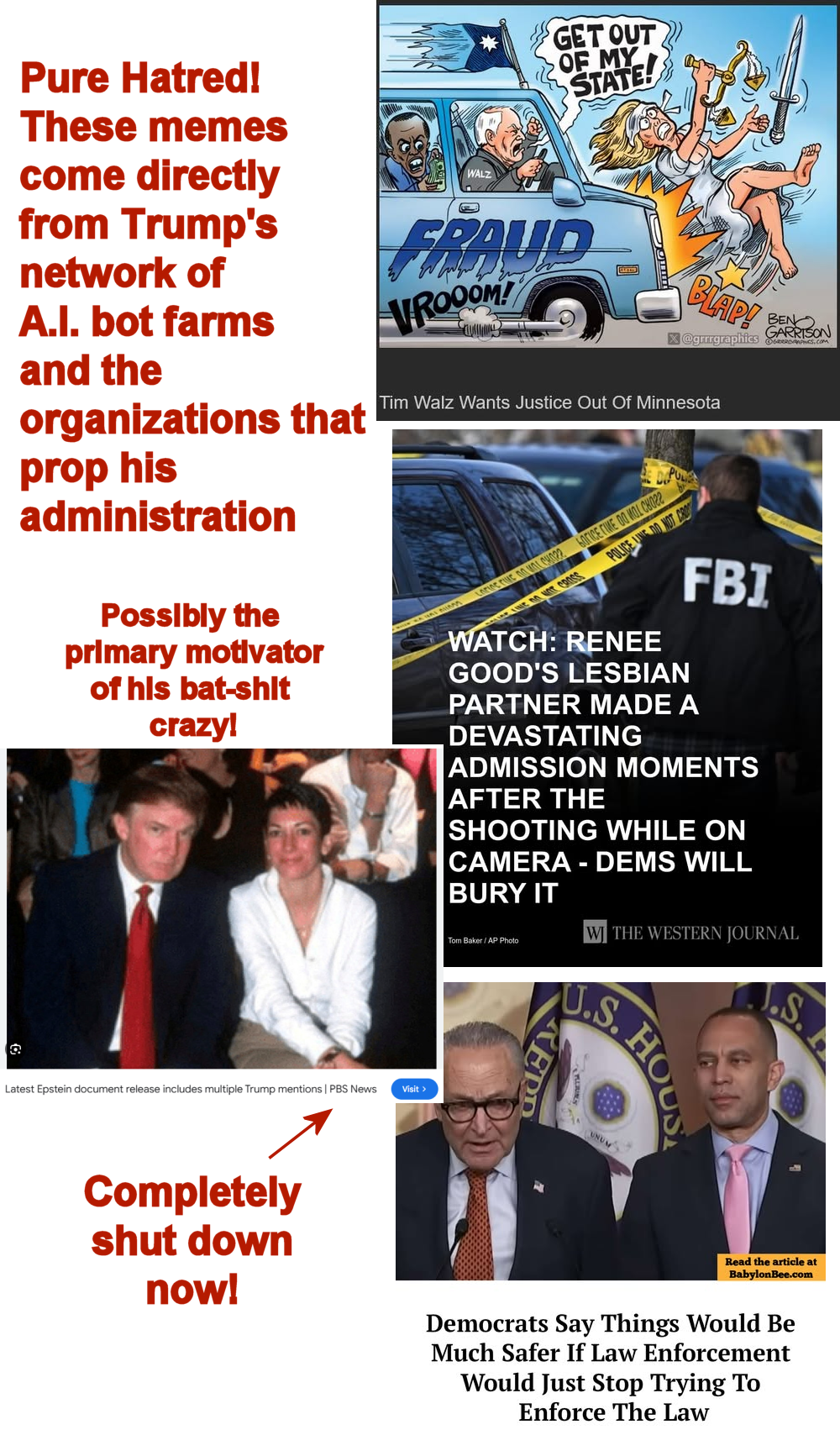
At the center of this approach is a deliberate strategy of demonization. Trump has consistently framed liberals—not just Democratic politicians, but ordinary citizens, journalists, academics, activists, and even allied governments—as enemies of the nation. The language is intentionally degrading and absolutist. Opponents are not wrong; they are corrupt. Not misguided; they are traitorous. Not fellow Americans; they are something to be crushed, expelled, or humiliated.
This is not incidental rhetoric. It is the core of the strategy.
By targeting “liberals” as a broad, amorphous enemy category, Trump creates a permanent external threat that justifies his own excesses. Every failure becomes someone else’s sabotage. Every criticism becomes proof of persecution. Every institutional constraint becomes evidence of a rigged system. Governing becomes less about delivering results and more about maintaining a siege mentality, where loyalty to Trump replaces loyalty to democratic norms.
Internationally, the same logic applies. Democratic governments, multilateral institutions, and human-rights frameworks are treated with contempt because they reflect values—pluralism, accountability, rule of law—that challenge Trump’s personalized, grievance-driven model of power. By portraying the world as hostile and decadent, Trump reinforces the idea that only his aggressive posture can protect the nation.
So why does this work with his base?
Because the appeal is emotional, not rational. Trump offers validation to people who feel disrespected, disoriented, or left behind—not by addressing the structural causes of those feelings, but by giving them someone to blame. He transforms personal frustration into political identity. Anger becomes belonging. Cruelty becomes strength. The more outrageous the behavior, the more it signals authenticity to supporters who equate restraint with weakness and compromise with betrayal.
This feedback loop rewards escalation. Each “batshit crazy” action—whether attacking institutions, threatening political opponents, or embracing conspiratorial thinking—tightens the bond between Trump and his most devoted followers. Outrage from critics is not a liability; it is fuel. Division is not a side effect; it is the point.
The cost of this approach is profound. A nation cannot function when a large portion of its population is systematically dehumanized by its own government. Democracy erodes when disagreement is treated as treason. Social trust collapses when politics becomes a zero-sum battle between “real” Americans and everyone else.
Trump is not governing to heal, build, or uplift. He is governing to dominate, to retaliate, and to remain indispensable to a base that has been taught to see politics as war. The tragedy is not just that this divides the country—it is that it leaves millions of Americans with a government more interested in fighting them than serving them.