

I met a dear friend today, through my posts. She is a spit-fire 94 year old grandmother from Montana, fan of Kamala Harris, and has a passion for dogs. She now runs a non-profit organization in Tepotzlán Mexico. Being a dog lover myself, I can identify and identify with rock stars who share the same concerns about the exploitation of animals.
Please visit her site and support her admirable cause:potzlán
https://www.nochichihuan.org/leMexicoTepotzlán MexicoTepotzlán Mexico
– Laveda Jones
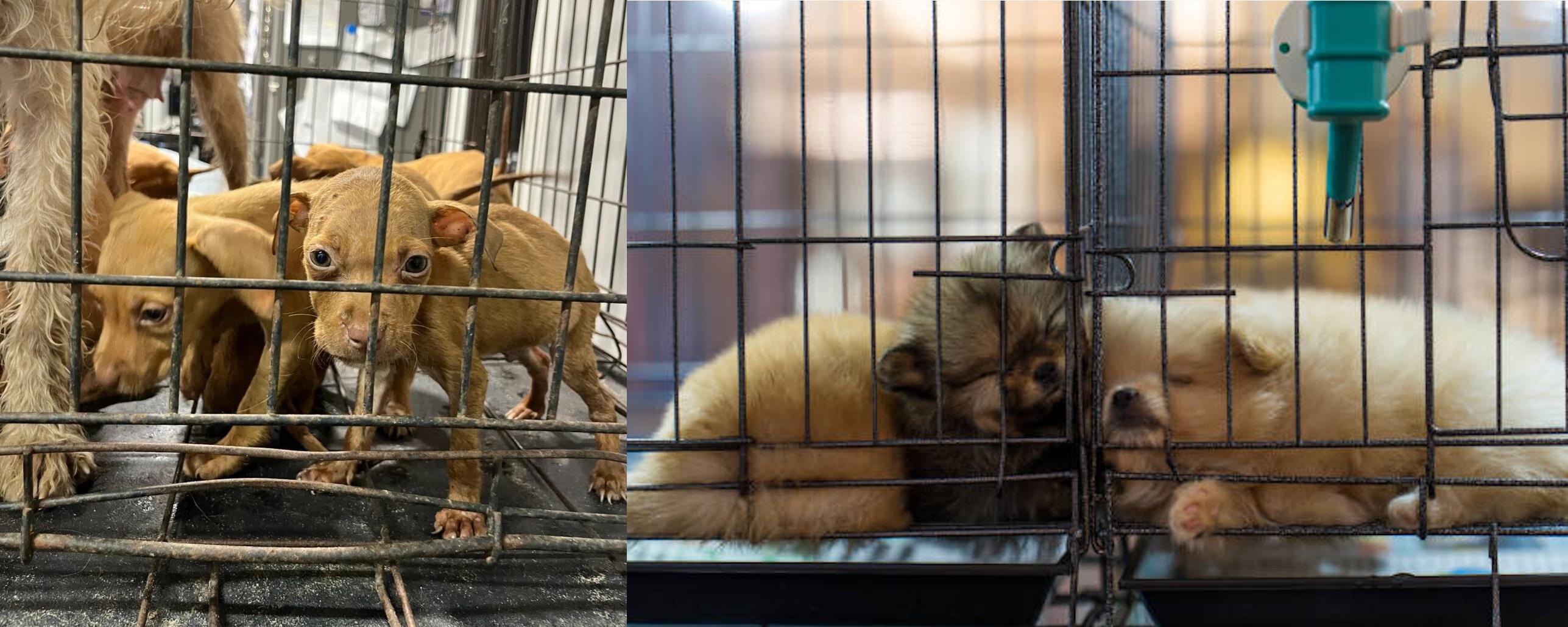
Puppy Mills as an Exploitative Symptom of Capitalism
1. Introduction
Puppy mills as an exploitative symptom of capitalism
Emma Dee Smith-Profit* '10 Undergraduate Research Fellow
Introduction
Puppy mills are the epitome of animal abuse. These commercial "factories" supply pet shops with dogs in large quantities, without paying attention to the basic needs of the dog. Often found in remote areas of the country, puppies are produced in large numbers to be the next cute addition to a pet lover's home. You may think that the "cute" puppy you bought at the pet store has been the product of years of careful breeding. The eyes look into your soul. That puffy, wet little nose nudges against your hand. The cute little bark makes you fall in love. Pet shops capitalize on people's love for animals.
The pet industry promotes an image of caring, love, and concern, but the care that pet shop puppies actually receive is far from adequate. The sick puppies come from wholesale commercial breeders that consistently skimp on food, water, shelter, health care, and human interaction. Breeders that supply pet shops accept low profit margins and combine mass production with slipping quality. Although these wholesale breeders have been cited for horrific violations in some cases, they remain in business and continue to supply pet shops that may owe their livelihood to puppy mills. These businesses employ humans at or below minimum wage and seek to gain profit with high output at no cost. These businesses' ethics are unquestionably corrupt. The demand for "cuteness" of puppies is not the problem. Drawing on Marxist and Ecofeminist thought, puppy mills are revealed as an exploitative intersection of capitalism and patriarchy.
1.1. Overview of Puppy Mills
Puppy mills are a way of capitalizing on the demand for dogs, selling puppies as one would sell wholesale goods in an attempt to make a profit. However, in recent years, puppy mills have gained attention as cruel institutions, and it is their exploitative use of dogs that has led lawmakers to take measures to ban them. The Animal Legal Defense Fund (ALDF) calculates that a dog is offered for sale every time eighteen seconds passes. These farms keep the breeding animals in poor living conditions, looking at them merely as production units. In addition, the Law and Business Review of the Americas reports that "the majority of puppies sold in the United States come from mills where profit is the primary goal, so the well-being of the breeding animals is typically not a consideration."
Ailments are often passed down from the parent animals to the puppies, such as skeletal and organ problems, deafness, and eye diseases. Therefore, the breeding of animals with health problems is profitable for these agribusinesses: they can advertise these dogs as “rare”, and at a premium price, as potential customers are attracted to dogs that are different from the norm. Furthermore, "the mills also sell adult dogs in order to make room for more breeding animals while selling puppies to brokers, who then act as middlemen for pet stores by buying a large number of puppies for resale to the public". However, all of the aforementioned exploitative strategies necessitate the exploitation of the parent animals, who are, "indeed, purebred dogs, but with a twist: they are normally undernourished, sleep under filthy conditions, share living quarters with several other dogs, and live in small, wire cages without human contact and little comfort, sunlight, air, or exercise benefits of any type".
2. Historical Context
It becomes clear that the industrial revolution brought changing ideas about trade, factory work, and the treatment of animals. Shafiee and Panting mention the change in size and locations of farmlands and the need for working animals as an aid to these farmers. They also mention how the perception of animals had shifted from aid to the farmer, and therefore his well-being, to the value as an individual organism. As discussion of animal welfare increased, however, animals such as livestock and working dogs were often overshadowed by more domesticated creatures. There was a population in the economy segment of animals used for production purposes (as pets or as a source for food) who got caught up in this move, but who were often left out. One such example was the surplus of breeding dogs from pilot programs for family pets kept at zoos and breeding kennels established by Mrs. Luke.
The idea to follow mass production principles as a symbol of careful planning and value, proposed by the mass production movement during the interwar period, was rooted in other capitalist principles that we encounter with and are a consequence of puppy mills. Relating the automobile paradoxes of standards and consumer needs to a societal problem of both managers and factory workers, Maier postulated that mass production principles were proposed prior to the objectives of operationalisation and as a result these twelve solutions frequently obscured stated objectives. He also mentioned a figure who is present in the foundation of both mass production and puppy mills.
2.1. Origins of Puppy Mills
From the mid-16th century to mid-20th century, puppies were bred primarily by those who wanted a particular type of bird dog, toy dog, or working dog, and they did not profit from it. Puppy mills came into existence when residential living became somewhat separate from working. Then, competitive capitalism took hold on a large scale. This occurred in the late 19th and early 20th centuries, respectively. Super-capitalism grew sizeably following World War II. These economic systems involved two primary classes: those who owned factories or operations and those who worked at them. The more efficient the process, the cheaper the product to consumers, and the greater profits for factory managers or farm owners. In essence, labor costs were minimized as much as possible.
It is hard to determine precisely when and why puppy mills emerged. The earliest mention of a puppy mill out of over six billion web pages is from a January 1939 issue of Cosmopolitan. However, a 1918 St. Louis Star-Times describes several Columbia, Missouri, pet dealer-based puppy mills. The reason why it is so hard to pinpoint the origin of puppy mills is that these were large-scale, profit-driven breeding operations. Yet, animal breeders have created sources for purebreds of various species for centuries. It is unknown whether the society's recreationally-minded veterinarians and animal breeders of these particular regions initiated these large-scale puppy booming businesses. The economic forces of super-capitalism of the time seem to have created the climate to promote more of them.
3. Capitalism and Exploitation
The capitalist system, in the structural sense, is based on class stratification and the existence of an owning class and a working class. The accumulation of wealth at the top class level of this hierarchy necessitates the exploitation of classes at lower strata. These classes are compelled to sell their labor power to the owning class, creating surplus value which is appropriated by the capitalist class. For Marx, "Capital is…value", a commodity that does nothing without labor to use it - the essence of exploitation. "The capitalist buys labor-power, using this commodity - power that creates more value than it has - exploiting". When class struggle is largely unapparent, this exploitation is relatively straightforward. This dynamic occurs where workers, who generally do not have control over what they produce or its value, are paid wages that are routinely less than what the products sell for. For K. David M. Smith, the logic of this system "…suggests the possibility that capitalism is intrinsically exploitative".
Of the theory that surplus value persisted into contemporary capitalism, i.e. the capitalism of two centuries later, it would have to come at least from the increase in the rate of profit, or the irrational reduction of capital expenses or production costs, or perhaps the rationalization, devaluation, or demoralization of labor costs in production. Since the development of the capitalist mode of production continues to increase the technical competence of the producers, this surplus should theoretically pass without the need for coercion. Marx predicted that the continued development of the productive powers of humanity under the capitalist system would spell the end of the era.
3.1. Relationship Between Capitalism and Exploitation
While not an explicit goal of his original arguments, we assert that Marx’s theory of exploitation provides insight into a broader discussion of the operation of capitalism. In a capitalistic society, we note that animals are often also an exploited class of beings. As Marx saw the problems in his social world as the result of exploitation via the mechanisms of capitalism, the animal world has its own backdrop of exploitation. Pet ownership can provide solace from the alienation and loneliness of the otherwise profit-driven relationships with which many people are confronted each day, as well as the hardship and social isolation so often faced by the visibly poor and embodied exploitation discarded by capitalism. Yet, when the love of animals becomes an industry that does not respect the natural order or integrity of animals, the relationship between humans and animals—and the relationship among individuals in the human society—takes on the mantle of violence and exploitation. These pet relationships broaden out from high-end customization to bulk sales. In particular, the present case discusses a substantial gap in the quality of life across pet owners, breeders, and the animals themselves. In particular, we focus on the issue of 'puppy mills.'
4. Economic Incentives
The profit margin posed by these breeders causes several issues, one of the least being the ability to outcompete locally owned animal shelters who intend to find homes for animals. When it comes to euthanizing animals, these breeders hold the government contracts, meaning shelters are often financially disincentivized against getting new dogs in expectation that the number of new dogs outweighs the amount of money received from the contract. Because many of the shelters which are failing are locally owned and run shelters, the fact that owners cannot adequately take care of their dogs for economic reasons often means that dogs do not have access to local care, meaning they have to be passed off to for-profit breeders like celebrity pups. The local economic downfall in rural communities caused by animal shelters can often be linked directly to the financial incentives posed by them. Animal Control Officers can also run into their own sort of "puppy mills" in the form of hoarders.
Hoarders are overwhelmed by their intake of animals, many of which are usually neglected, while breeding is usually done, even intentionally, and essentially all costs are passed onto local governments when the animals suffer in some way. The hoarder makes money off of the animal by selling them, but ultimately takes the money and runs; they do not see profits come from naming them. Although these breeders can help economic development by expanding their operations, many propose that this bring more prosperity to the local or state economy. However, state governments often spend a substantial amount to assist shelters and try to alleviate the high number of dogs coming from them. The amount is expected to increase because in situations, panoramic bias between shelter and vet locate surgical operations does not bring in nearly as much money as the agreement held by an animal shelter. It is hard to know for sure that there is not enough money and that the people who participate in these markets are made never planned to have a fully functioning bulldog.
4.1. Profit-Driven Nature of Puppy Mills
Puppy mills are just one exploitative symptom of a profit-driven capitalist society. Animals are seen as a source of profit: bred, abused, and killed for their marketable body parts. When they don't sell, they are considered useless and disposable. Shootings, animal hoarding, and numerous other animal abuse cases occur and are handled with the same fascist ideologies that guide every system under capitalism. Big puppy corporations are legalized and considered profitable, while the small competition is forced to struggle to exist.
Puppy mills are not an issue discussed as often as it should be. Animals are bred in order to be sold for large profits to the final consumer. The well-being of the animal is generally disregarded, as their burnout rate is very high. Mother dogs are overbred every heat cycle to the point that their bodies eventually just give out. Through this, the alleged breeders continue to exploit their bodies and often just kill them when they can no longer breed. Puppies that are not considered 'cute' or 'pureblood' are disregarded by the breeder and killed off. Thus, the clear focus is profit over the lives of these animals.
5. Ethical Concerns
Puppy mills are a heart-wrenching reality of our society. Exposing the world behind the adorable puppies at the pet store is a fear-inducing task. Audiences are bombarded with images of dirty and dying dogs that draw the desire of walking away from the problem rather than considering a new puppy, to give love and safety instead. Beyond the more obvious problem of animal cruelty, the mills thrive as an exploitation of both the dogs and the workers that tend to the breeding of these dogs. The ethical question raised by many animal welfare groups and fellow travelers on the left concerns the nature in which these animals are kept and slaughtered for human interest; society voices such questions about the exploitative nature of workers in many sectors of industry. Thus, are puppy mills exploitative, purely capitalistic, or both? The paper will show that puppy mills are entirely exploitative and perpetuated by capitalism, as the industry involves numerous different moral and ethical violations.
There are numerous ethical issues with puppy mills concerning animal cruelty. Reputable breeders who care about the quality of dogs they breed, as well as their well-being, will screen for potential hereditary conditions that correspond with breed and breed lineage. Although licensing and inspections are mandated by the USDA, the inspections rarely yield any sort of care for the mothers and fathers of the puppies that are peddled by mills. These inspections are known to be significantly lacking and are sporadic at best. Because of the massive volume of breeding stock in comparison to the low number of inspectors, there are also minimal anomalies spotted, and the harshest reprimand is usually a fine. What is interesting about these fines is they are relatively small. In 2010, only twenty-dollar fines were issued because the violations were numerous and were not issued in a timely manner. How can one mandate the proper care and humane treatment of animals with negligence as low a price as twenty dollars? Overall, the dogs live their entire lives in cages or enclosures designed to minimize personal contact, activity, and exercise; meanwhile, the brunt of the financial burden passes directly to consumers, through higher expenses associated with veterinary care for animals with limited intellectual and physical enrichment.
5.1. Animal Welfare Issues in Puppy Mills
Puppy mills not only cause animal suffering, but they perpetuate a culture of accepting animals as commodities instead of sentient beings with rights and emotions. The majority of puppies raised in these mass-production factories (or "farms") are sold in pet stores or directly over the Internet or through newspaper ads. Their lineage is often intentionally documented and well-bred dog standards are labeled while hidden from view of the adult dogs that live in the same facility - sick, malnourished, and without human interaction. To get a good dog from a reputable source, start by looking for a reputable source and visit the breeder to physically see the living conditions of the dogs. However, it is not as easy to come by as simply buying it.
If breeders know that they have so many animals that it will be difficult to find homes for their litters, they may also be more likely to address medical issues such as hereditary health problems before they breed and reduce the number of litters that are actually born in order to decrease overpopulation and the resulting euthanasia. Before breeding a litter, a decent breeder will place more importance on finding a good home for the puppies and care for the puppies if their health is at risk. The following is a list of animal welfare concerns to consider before asking your veterinarian to perform any type of breeding or related services on your pet: Are there any major health problems in my pet that I should be concerned about? What would happen if I permitted my pet to breed? What supplies do I require to breed my pet?
6. Regulatory Framework
There does exist a regulatory framework that attempts to eliminate animal abuse in puppy mills. In 1966, a federal statute was enacted called the Animal Welfare Act (AWA). The intention of the AWA is to eliminate pain and suffering in animals. It is administered by the United States Department of Agriculture (USDA). Most puppy mills, or at least the larger-scale ones, are regulated under the AWA. Those dealers and breeders affecting a large number of animals are required to be regulated. Such regulation requires licensing and inspection. Regulations promulgated pursuant to the AWA mandate at least yearly unannounced inspections of regulated establishments. However, as previously mentioned, the USDA and its regulatory operations are not evaluated on a regular basis. It could, therefore, be the case that the implementation is not effective. Additionally, the regulations at 9 CFR only address the minimum standards for animal welfare. There has been much discussion describing 9 CFR as seemingly only concerned with the health and physical environment of animals.
The puppy mill industry has been compared to human trafficking, and it is not a bad comparison to make given that both industries exploit and capitalize on a population that cannot readily speak out and defend themselves. "Public records show that more than half of Ohio's 235 high-volume breeders committed at least one violation of the federal Animal Welfare Act since 2015," with the federal agencies doing little to address these violations. This study indicates that the Animal Health Division only has made two referrals to USDA in the past six years. Given the documented abuse that Ohio's puppy mills both willfully enforce and create through lack of regulation or enforcement, it is clear that the AWA is not effective and the USDA is not adequately enforcing its regulations for the puppy mills. Nor can it really be expected to be. The existing political economy base only is interested in one thing – profits. With Trump's gutting of the entire federal government, it is even more unlikely that the USDA ever will actually be efficient at anything.
6.1. Lack of Adequate Regulations
The combination of limited resources, weak federal and state laws, and scant inspection means that the people who operate puppy mills are virtually guaranteed of being able to maximize their income at the expense of their animals. These businesses exploit the fact that people are willing to pay a lot to take home a cute dog or cat, and they do nothing to stop a continuous stream of puppies from being born to meet consumer demand. The risk of even a sizeable fine is simply a cost of doing business. Building a humane, high-quality animal production system from the current situation is a complex and potentially very costly task. The determination of society to take on that problem as important should be explained by dog-rescue industry professionals, broadcasters, and print journalists, as well as humane societies and lawmakers.
In the matter of adopting animals out of shelters, there is an unintentional trade-off between large and small animals. The price that someone pays in the form of a donation to an animal shelter to adopt a puppy or a kitten is much less than the cost that it takes a shelter or breed reseller to acquire, house, and care for an animal up to that age. Animal-product supply also includes very old animals, animals with physical defects, and animals that have behavioral problems. Providing for these animals is sometimes a huge commitment. There is little reason to give, either free or at a low price, a small puppy or kitten to a shelter, as the high demand for those animals guarantees them a good home and a caring guardian if they are priced at their true cost.
7. Consumer Awareness
To advocate for legislative reform in the hopes of abolishing commercial operations like puppy mills is a noble ambition (and a necessary one). This author especially is glad that groups such as the HSUS and countless other shelters, rescue operations, and individual activists continue to work toward that end. Nonetheless, there is a more generalized mindset the average (at least in the United States) consumer should come to possess when it comes to an entire category of consumer-enabled activities. This author believes it reflects poorly on our capitalist democracy to claim we prize our pets as "members of the family" on the one hand, while in the same breath, blindly support the commercial breeding of animals that promotes homogenized, assembly-line gestation, and early maternal separation. Accordingly, while this task indeed requires the direct involvement of moral agents working in furtherance of social justice, a shift in consumer awareness, the normative economic structure that shapes consumer choice for all commercial entities, must come to fruition.
As this essay has tried to (somewhat exhaustively) elucidate, we live in a society still rife with contradictions concerning the nature of what we wear and, more importantly for this essay, use as pets. This is not even claiming that most everyone will automatically just cease shopping; the point instead is to simply become more aware of the arc of the things that we buy on a regular basis. To proceed through the marketplace with a reflexive mindset, which holds a consciousness that appreciates all the effects - psychological and emotional, as well as economic and material - of particular items for sale. This, in turn, will lead to a more ethical existence with regard to one's consumer-related actions, and by extension, an easier time finding satisfaction in the markets one participates.
7.1. Role of Consumers in Combating Puppy Mills
The best way to discourage the market for puppy mills is to boycott puppy mill puppies. This approach does place breeders concerned about the dogs over the quality of life of the dogs with mixed feelings. If puppy mills were to be shut down but the demand for puppies remained, animals could face the very real fear of being replaced by other animals that would take advantage of the same system that puppy mill dogs were forced into. Society cannot be expected to boycott any and all puppies forever, and so middle ground options need to be explored in conjunction with boycotts to alleviate and discourage puppy mill production. These options could include more federal restrictions on puppy mill conditions, support for reputable, high animal welfare breeders, reserving the made-to-order option for service animals, rescue shelters designating a space for puppies and retired brood stock, and the pet food industry joining forces with the AHA and ASPCA to market dogs from legitimate USDA breeders. What cannot be allowed to happen is turning a blind eye to the conditions of these puppy mills and providing monetary incentives to the exploiter by giving them a profit.
Consumers purchase substances from corporations, but their buying dollar also encompasses a greater selection of products offered from different groups in society. By honoring the living conditions of all those who are profiting from their trade through our consumer choices, we strengthen our ability to live our family moral codes. As a consumer, the choice I make to buy my puppy and where I buy it from is an ethical judgment which conveys how I would like my answer to be received within my community's personal belief system.
8. Social Justice Implications
Many have recognized the social injustice dimensions of puppy mills and other commercial breeding facilities, particularly the exploitation of female animals forced to bear litters every heat cycle over their entire reproductive lifespan. Regulation may provide some increment of benefit to these once free-ranging populations. However, it also contributes to the central aim of exploiting the reproductive capabilities of these animals. Research into the welfare of animals produced in puppy mills reflects this essential focus on breeding, with less attention directed toward the animals who spend much of their lives in these facilities as breeding animals and even pet overpopulation. Regulation also does not call into question the legitimacy of these operations as a function of its purpose. New approaches reflecting a social justice concern are critical to use this opportunity to provide positive changes. Ideological shifts in some cases have led to preference changes so people have begun to take what they can get instead of refusing to take it at all.
Using price signals to communicate social values can be a reason to regulate pet sales. This can be done directly, through taxes; or indirectly, through expenditures on regulatory enforcement or food safety standards. The same spending power that opponents of such regulation object to being used to promote positive changes in pet breeding may be redirected to a preferred outcome. For example, concern about puppy mills may motivate opposition to spending any money at regulated pet stores, which would drive business away. These preferences have resulted in the willingness of wealthy spending pet buyers to purchase dogs from other places, like breeders or private sellers for full price, and to invest in the related expenses of the animals. Few people want to contribute to the cruel conditions at such facilities; most mistakenly believe their pet is purebred or specialized, healthy and with the mandatory documents justifying their trust. The excellent philosophy of local, responsibly licensed, and educated breeders does not automatically equate to responsible, perfectly healthy animals. Cognitive dissonance is present in every pride of possession for most of the owners of these animals.
8.1. Intersection of Animal Rights and Social Justice
By examining issues related to nonhuman animals beyond their personal lives, we can explore connections with broader social injustices. While the academic separation of the concept of animal rights and human rights could make sense, as each topic deals with different species groups, politically structurally it makes no sense. The real connections between the two are found in the capitalist political structure that acts for the consolidation of differences. But the fight against racial, sexual, labor, and all other kinds of inequality must extend to beings who have no role in interpersonal violence. And this cooperation needs to be made on a common policy challenge, which is the practice of the wrong system related to animals. The philosophy of the animal rights movement, in its political aspect, needs to release its message immediately without context in the course of our ethical actions for new political world dynamics.
More evidence of the link between social problems also appears when we seek to understand or even measure violence against those who are most defenseless. In this context, the relationships between human violence, sexual abuse, domestic violence, and the so-called dog fighters seem to be the most interesting fields of sociopolitical participation of the vast groups that seek the interests of other beings different from us. The disadvantage of human groups that complacency causes harm is firmly found in the political structure. Hence, openness with other social causes directly linked to other animals is expected and urgent. Antispeciesism needs to follow political demands. We cannot confine the victims in rightist humanitarian settings, as this does not always strengthen good initiatives that go to the general public. There is no chance of success in defending the interests of other beings while we persist in defending economic systems used to exploit them.
9. Environmental Impact
Owners often use large quantities of water, and the waste their facilities generate - excrement, urine and outdated or unused supplies - leach these compounds into water supplies. Ammonia and fecal dust particles from puppy mills harm respiratory systems, and strains of E. coli evolve in response to seriously unpleasant kennel conditions. Even after the multitude of puppies have been sold to create an enormous profit, the leftover fact of the puppy mill may continue to harm animals. According to the USDA, the life of a lonely, unloved breeding dog lasts for five years. Legally, they may be killed upon this birthday. Some facilities never bring this day on, and the breeding females in these facilities live longer, dying only after the commercial demand for puppy production reaches its end.
At the least effective, the methods of disposal of unwanted, aging breeding animals can be cruel and can be as horrifying as the life the dogs have already endured. Puppy mills sell dogs to institutions for research and to other breeders as breeding dogs, perpetuating physical traits and psychological damage that invite an animal protectionist perspective. Innocent, uncomprehending dogs experience pain and fear during the rigid testing protocols of research. These tests may include burning, poisoning, and infection. Humane Society of the United States publications cite heartbreaking examples of the aging, worn-out females being forsaken when they are no longer commercially productive. Brake's case study tells the story of a sweet, aging female rescued from life at a puppy mill, who has many emotional and physical scars from several years of abuse borne from a lifetime of forced breeding for profit.
9.1. Resource Intensiveness of Puppy Mills
Given the lack of legislation and regulation, there is very little need for any type of record keeping and little is known as to the exact number of dogs kept in and bred by puppy mills. In the United States alone, however, it is estimated that there are about 10,000 licensed and about 3,000 unlicensed puppy mills. To further drive out the condition of puppy mills, let’s put in simple numbers what is necessary to keep one operational. Let’s assume that each year a breeder will have to offer 20 animals for sale and that only about 50 percent of dogs are females and can be used for breeding. This would mean that a breeder of puppies for sale would have to keep around 40 females. These female animals, however, would be used for breeding for about 5 years, after which they would most probably be culled. These adult dogs therefore have to be fed and cared for, plus the animals about to be sold would have to be socialized and require veterinary care. In the meantime, there have been only about 20 animals sold and something has to be done with an additional 20 to 40 adult dogs. Some of the animals may be sold for being used in breeding, but even if this is done, a breeder will most likely have to keep around 30-40 adult dogs and will actually be looking for treatment of another 10. Where are the breeders to turn?
One way puppy farms get rid of dogs they cannot, or rather do not wish to, sell is by taking full advantage of the animal adoption market. As previously stated, it has become popular to own dogs that come from animal shelters and even though the puppies regarded are their commodities often come from places that create nothing short of concentration camp-like conditions, purchasers seem to overlook the source of their puppies. In order for some puppy mills to rid themselves of dogs they no longer wish to care for, it is the common practice of placing the animals in animal shelters where they can be adopted by people who are generally unaware of the original source of their adopted family pets. Even if you feel protected from this in your state because you bought a legally licensed puppy, this is still a problem. There are only so many families willing to pay upwards of $1,000 a puppy. What happens to the ones that are left?
When a puppy is not sold at 5 or 6 weeks of age, the distributor is thinking about his bottom line. The breeders must now invest more resources because at 6 to 7 weeks old the animals need to be wormed, have their first inoculation, micro-chipping, and veterinary records made. All of this is usually part of the cost of sustaining these animals. With unsold puppies, whatever money has already been invested greatly reduces the profit margins. Even though pet retailers may carry puppies up towards 6 months of age before theorizing that they may never command desired high-dollar price, it doesn’t mean that the breeders and dealers are not losing money on unsold pups. It may make more economic sense to sell the animals quickly in bulk. Selling them at auction for $50 to $100 a pair can sometimes offset some of the financial losses incurred. Otherwise, these unsold and aging puppies would have to be loved up, wormed, inoculated, and housed for another month wherein they may still be unsold. Additionally, maintaining the animals in good health over the course of an additional month requires logistics and increased financial performance at a time when the profit margins tend to decrease. It is easier to regulate, maintain, and provide examples of how the dogs should be cared for if we limit the number of dogs that a breeding facility can carry given the small percentages they actually manage in the six-month period.
10. Alternatives to Puppy Mills
It is essential to offer both legislative reforms and extra-legal alternatives to puppy mills. The ultimate solution to the inhumane treatment of animals in society is to abolish British inhumane treatment towards animals, and to re-normalize animals as ends in themselves. Until this goal is achieved (which admittedly could be a much longer road), policies that significantly limit the creation and operation of puppy mills must be sought. There are a number of policies that can be implemented to reduce the suffering from puppy mills.
The first potential policy for pricing puppy mills can be done locally. By implementing laws limiting the number of dogs that individual breeders can own or the number of litters that can be passed through an individual's dwelling, the government can turn the police into the most arbitrary acts of disregard for animal interests represented by the puppy mill. It is important when writing these kinds of laws, however, to ensure that loopholes in the law are not excessively exploited by puppy mill owners in an attempt to circumvent these laws. An example of this would be creating separate accounts to allow a large number of dogs to be grouped together solely for breeding.
10.1. Promoting Adoption and Rescue
Recognize that often-cited studies that claim as many as 25% of shelter dogs are purebreds have been debunked. The best data available still indicate that the majority of shelter dogs are unmixed and 25% are purebred. This in no way justifies puppy mills, and it certainly doesn't justify the continued production, by any means, of purebred dogs at the expense of homeless pets. Shelters that have no or almost no pet shops selling dogs, such as those in New Hampshire, Vermont, the San Francisco SPCA, and the American Humane Association, stupendously point out that if controversy over pet shops somehow prevented the sale of pet shop puppies, then their thoroughly punished dogs would leave easily. The San Francisco SPCA states that simply adopting from shelters is not enough to solve shelter pet problems. They urge everyone to also work to find preventative measures that also reduce shelter pet numbers.
Promote against TNR efforts to stop the overpopulation of feral cats and look at new studies explaining how these kinds of efforts attract more feral cats to a particular area, whose total numbers are therefore not diminished. The feral cat breeding situation exists as a situation of unwanted pet births in many communities. The only other category of animals who breed in such uncontrolled numbers are feed animals. However, their unwanted sexual reproduction only occurs when they are artificially inseminated by animal agriculture workers. One of the most convincing arguments to support TNR efforts is the idea that wild and violent birth control methods would never be accepted in human population controls. However, in human population control situations where an individual is unwanted, such as an auto accident or a near-drowning, the utmost in emergency care is showered in order to try to save that individual's life. Would a similar philosophy apply to an animal situation that involved real control if the cost, in animal lives, was that cheap?
11. Conclusion
This paper aimed to elucidate puppy mills as one symptom of how capitalism is a system of exploitation. The concept of a system of exploitation analyzes social conditions and events based on the fact that both exploitation- and non-exploitation-based interaction types are relatively stable equilibria at the micro level of interactions. This explains why we see exploitation in systems of exploitation. If exploitation were counterintuitively stable, we would need another explanation as to why slavery, for example, has existed for such a long time or why we do not constantly observe wage-labor relations with hourly wages of zero. A system of exploitation facilitates us in understanding how interactions that only promote the self-interest of one party were replaced with sharing interactions and interactions that are mutually voluntary. In addition, this concept helps to analyze a universal basic conflict in society or asymmetries between agents. Since systemic and more subtle forms of exploitation are associated with harm, it will help to find ways to make a positive difference in the world.
By understanding how power asymmetries manifest through exploitation in multiple forms under the inherent pressures of capitalism, we will be in a better, more informed situation in order to understand and counteract behavior and processes related to puppy mills that we don’t like. Without this understanding, our paradigms for why exploitation happens remain woeful, and our attitudes and responses are blighted by this ignorance. If we mistakenly identify the cause of harm, alternative solutions may be focused on addressing other, identical conflicts. This paper is summarized by the thinking that if we keep telling ourselves that competition is natural in the world due to learning from reports on findings from the province of spelling bees, societal changes spurred by these misimpressions will obviously not be implemented.
11.1. Summary of Key Points
This study is a qualitative examination of the economic terrain of puppy mills. It explores the relationship between puppy mills and land, pet, and capitalism. I argue that puppy mills are a capitalist structured site with the primary goal of making money. The overarching structures of capitalism and people's desire to maximize profits lead to exploitative treatment of nonhuman "capital." The wealthy elite use workers to produce and maintain their pet capital, while they occupy their leisure time in their homes managed by "home labor."
The data were collected through in-depth interviews conducted with 32 kennel operators during two separate field studies. The focus of this article is the structural practices of kennel colony permanencies, keeper capital, and home government. These are three of the nine "practices of being" that emerged from the research. The overall research project is quite comprehensive and covers multiple interspecies relationships and anthropological and sociological theory that has implications for understanding hierarchies of privilege.
There are a number of key points that inform this work and contribute to the discussion that kennel practices related to canine entities are exploitative. In order to fully appreciate the complex human-dog relationship and the pervasive roles capitalism plays, I have categorized sections of these discussions into nine specific practices. The concept of being as it relates to puppy mills has meaning both as a verb and a noun. As has been illuminated by other critics of social injustice and theorists, the nine practices of being (kennel capitalism, kennel colony permanencies, keeper capital, puppy pedagogy, single identity, home government, and house labor) produce and maintain oppressive pet power regimes.
Overall, the main argument to be made is that the practices of being, as they concern public and private institutionalized anthroparchy and capital configurations, provide the social structure needed for elite keeping, labor managing, and making more money. They also mediate the security-symbol leisure time at home with beloved pet capital.
11.2. Call to Action
When considering what can be done to stop animal exploitation, it bears repeating that unlike humans, these animals are without voices. They are unable to let us know of the cruel ways in which they are exploited to benefit us. We must use our voice to ask for an end to this cruelty. We must keep our voice at the forefront and continually repeat the plea for kindness for these creatures who are being systematically abused. Please use the information provided in this paper to let your kind and caring voices be heard.
People can utilize several strategies to help save countless animals from pain and suffering. The first and foremost action we can take is by refusing to purchase a puppy that was bred commercially. If no market exists for the dogs produced, the industry producing them will cease to exist.
Because dog auctions provide a marketplace for puppy mills, they too must be stopped. Anyone who has an opportunity to do so should become involved in enacting or enforcing laws that protect animals. Many animal protection groups exist with open arms willing to accept the kindness of people such as those reading this educational paper. Donate money. Donate time. Many duties performed by employees of these groups are in fact performed by unpaid volunteers. Offer money. Offer time.
Additionally, if found being represented with false claims, refrain from supporting or voting for them again. Beware of candidates who claim to have animal interests as a priority, yet have a poor voting record. Super PACs that are intent upon passing Amendment 13, or any amendment that would do the same, represent a good place to begin. Watch for LCA in any literature or messages. They, along with politicians such as John Goodwin, the Humane Society, and others who have played a major role in supporting Hayhurst's activists.