

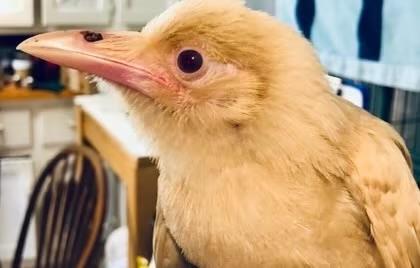
Don't give me no garbage about racism not existing in this country. It is alive an well, and the beast has risen its ugly head thanks to Trump. Racism and prejudice tendencies are natural within the animal kingdom. Homosexuality exists as well. Read on.
https://www.washingtonpost.com/lifestyle/2024/07/18/white-crow-attacked-virginia-sevcenko/
The Natural Occurrence of Prejudice and Homosexuality in the Animal Kingdom
1. Introduction
Prejudice, defined as "an adverse judgment or opinion formed beforehand or without knowledge or examination of the facts," is a notably prevalent and damning aspect of our world. While common wisdom teaches us that prejudice is exclusive to humans, ethology reveals the reality that neither homophobia nor racism is exclusive to the species Homo sapiens. Indeed, many forms of discrimination, including the social exclusion of individuals based on irrelevant characteristics such as sex, age, sexual orientation, social status, or physical appearance, are well-documented in the animal kingdom. Of course, prejudice can also manifest on the basis of "relevant characteristics," such as an animal's perceived fighting ability in the case of heterachy. These instances of "natural" prejudice give impetus to the view that qualities like "good" and "bad" are ultimately human inventions which may have arisen in response to the selfish gene.
The commentary will center around two sets of research conducted by Rosvall and Bergvall, which each revealed the natural occurrence of homosexuality and prejudice amongst the sighting of birds. A discussion on equity theory, a greatly influential theory that argues animals are not driven by sheer genetic selfishness, shall follow. That research proved beyond a shadow of a doubt that diverse non-primate taxa from horseshoe crabs to hens are neither robotically led by their homozygotic desires nor, as life scientists rushed to critique an "old," "anthrocentric" reconciliatory model of nature, are they just ceaselessly and hectically accosting each other out of a senseless, relentless intrinsic selfishness—which, although more contemporary than the former presumption of blanket vicairean egoism, is just as hopelessly outdated.
1.1. Defining Prejudice and Homosexuality
If a chimpanzee killed another in cold blood for the reason that the killed had a different color from the killer, such behavior might be considered as a sample of prejudice. Prejudice is a hostile or negative feeling toward a member of a group simply because of his or her membership in the group, disregarding any personal characteristics of particular persons, elements, or even facts. One example of prejudice lies in homophobia, which is against some forms of behavior violating norms of a given society. Homophobia appears to be open to personal attitudes. In contrast, homosexuality is a matter related to sexual contacts or attractions between members of the same sex and also between those of the opposite sex. When these contacts are ephemeral and generate no partner commitment or require an investment of time or self-finding, the contacts are called promiscuous. Otherwise, when contacts lack only in a promiscuous effect, the association in the form of bilateral contact between the "two" is called homosexuality.
Prejudice and homosexuality appear in species populations and are not restricted to human behavior. Both appearing behaviors have the consequences of promoting, in nature, the partial selection of genes they are carrying. All forms of contact can be replaced by combinations and sequences of them, including cases of copulation with such gene exchange. In females, ovum preferences apparently do not exist, presumably because ultimate testosterone is extremely diluted so higher levels of sex determination control in their own steroid precursors are insufficient or neutral producing stringent. Homophobia could not exist if such empathy limit was not uprooted; it directly mitigates the prejudice against homosexuals.
2. The Evolutionary Perspective
Exploring prejudice, especially prejudice toward sexual minorities, has important theoretical and social implications. Researchers in social and cognitive sciences, as well as public intellectuals, have been tantalized by work conducted in non-human animal behavior and are now delving into the natural occurrence of prejudice, including homophobia and homosexuality, within the animal kingdom. An evolutionary perspective of prejudice can lay the groundwork for how prejudice may have arisen, as insight and aggression have practical implications, and we discuss when prejudice arises through competition for resources. However, prejudice extends beyond mere favoritism and includes the behavior of parasitism. Humorously, it may also 'infiltrate' a different group: of course, we refer to prejudices regarding sexual orientation. Indeed, while some would like to believe ideas about sexuality and the origin of sexual attitudes are strictly a feature of humanity, they likely have their roots situated within evolutionary forces most pronounced among our non-human cousins.
We begin with the non-human animal literature, especially that which approaches homophilic behavior with a critical evolutionary lens. Next, we introduce a precise definition of prejudice, as these biases are expected to emerge when individuals of the same sex compete for critical resources. The ability to hierarchically structure a population - and effectively, the establishment of "us" versus "them"-type relationships within society - is the source of prejudice, irrespective of the original contest. We expect, too, that these biases are mutable and based upon enhancement of resource competition. More recently, theoretical and experimental work has progressed into directly addressing homosexuality.
2.1. Social Hierarchies and In-Group Bias
Evolutionary Perspective: Prejudice and Homosexuality in Social Hierarchies and In-Group Bias
In what lies the causal basis of these two phenomena? The answer is closely related to the study of the evolutionary processes that underlie both of them. There are a number of factors present in the animal kingdom that enable the formation of these behaviors: namely social hierarchies together with in-group bias.
Social Hierarchies
If interpersonal interactions were always based on unconditional acts of cooperation, individuals could reach a goal in collaboration with conspecifics by simply imposing workloads upon them, without having to help or share gains or benefits. However, the hierarchical organization of animal groups splits both cooperative and social costs that come with it, thus permitting the establishment of 'intermediate ranks'. Therefore, because of the spread of disagreements and conflicts among the various subjects, only one subject can be defined as the dominant, or leader, capable of exercising power and control within the group according to his higher hierarchical rank.
Little by little, as stated by Donelson and Kimberly, the presence of a hierarchical structure also relates to greater efficiency and leads to the division of labor among members of the group. Since the first structuring phenomena of the social fabric, a 'simpler' society was born; it was made up of a small number of basic elements that referred to five main levels - peonage, which was the most numerous, the slave, the vassal, the sovereign and the Franks (now the business man) in power, where cohabitating populations conformed an essentially craft economy.
In-Group Bias
In early work exploring the occurrence of "prejudice" in the animal kingdom, it was often stated in the scientific community that non-human primates, birds or mammals in general do not hold discriminatory attitudes by refusing to exploit heterospecifics in favor of conspecifics. However, as pointed out in an exchange of letters in Animal Behaviour in March 2014, in-group bias is widespread in nature and is evolutionarily ancient, existing in many animal species.
For example, in a vast array of taxonomic groups from insects to vertebrates, animals are likely to display an in-group bias, preferring to form alliances with their own rather than outsiders, in order to offer mutual aid and optimize their fitness. Moreover, this principle was already accepted by Richard D. Alexander in 1979 who, in his book "Darwinism and Human Affairs" stated that a basis for alliances was often interaction with young, thus resulting in reproductive and affiliative advantages for the cooperating adult animals.
The more the new members are welcomed, the fewer possibilities there are that they develop hostile beliefs toward the in-group. The social group will therefore be able to contain socially ubiquitous behavior.
3. Examples of Prejudice in Animals
Territoriality is widely seen in butterflies and birds. Rival males will defend "their" territories by patrolling their perimeter, seeking intruders, and giving raucous challenges to outsiders, using a variety of display behavior. Where species of animals such as these have distinct territories that are too good to share, they cannot even recognize all members of their own race. Individuals who look different from familiar local members tend to be attacked on sight. Similar behavior is seen in newly captured meerkats, which follow any man as if he were a king but are unfriendly to other meerkats and also appear to ignore each other. Another parallel may be found in the blindness to different races found in various fish, kinds of lizards, and at least some types of monkeys and horses.
Herding mammals may be nervous and react to strange sounds or movements. They do not necessarily attack but may flee or starve to death because they dare not move to other feeding grounds. Social behavior among fishes has opened my eyes to the fact that there may be conscious prejudice, making scapegoats who are ignored or attacked for no apparent reason. In Britain, prejudice against rats may have given way for it to be officially persecuted where public health was concerned. In contrast, vultures associated with the transmission of diseases in Africa are killed after the novel trade described above. Thus we see the scapegoat word used for the rat in Britain and in another human sector. Prejudice in many forms has been seen in mammals. More obvious is the behavior of monkeys at a feeding station where a new arrival may be driven away by some who are apparently friendly to him. Rejection does not "pay."
3.1. Territoriality and Aggression
Territoriality and aggression. Prejudice is a multifaceted concept, and aggression and territoriality would seem to be a 'natural occurrence' because of instinctive drives for expression by animals. This section focuses on the, if stereotypical, and sometimes extreme, nature of territoriality and aggression, presenting some specific examples. The first question arising is why territoriality often includes aggression within it. A territory is usually an area that an animal defends against other members of the same species (or at least, specific strangers of the same species): however, it is reasonable to suggest that territories could be defended through more passive means, for example, by simply scent marking certain areas. The animals could then recognize these scents and move on.
Moreover, bitter opponents often sustain injuries. During fights, animals might lower their resistance to disease, as they can suffer serious damage to the skin, or become internally injured. It is hardly surprising, therefore, that a natural selection pressure for animals that can best assess where potential dangers might arise has reduced their spheres of acceptable stimuli, elevating their wariness when they encounter any ambiguity. It finally suggests that prejudice is an inherent attribute of, or phenotype in, the animal kingdom. Taken in a different context, it suggests a purpose or causative function to some things that interest human beings from prejudiced cognitions (as has been described in Chapter 1).
4. Examples of Homosexuality in Animals
Humans are not the only animals that exhibit homosexuality in their natural behaviors. The animal kingdom contains various examples of homosexuality among different species. Female termites reproduce sexually, but these female-dominant colonies rely on the concept of "losing" used to help colonies reproduce. Stingless bees are a more familiar example of homosexuality in the animal kingdom. Nearly half of these bees remain in their home colony and mate with their sisters rather than leave the hive, where only the highest ranked employees in terms of sex and strength are allowed to produce offspring. Homosexuality is believed to control termites and bees, promoting cooperation between workers and reinforcing bonds within female-dominated colonies. More recently, researchers have reported changes in the behavior of wild turkeys, although males are also known to hover in wild bird species such as flamingos and some gulls. Some large mammals also display homosexual affiliative behaviors. In more and more animal species, homosexual behaviors are reported in the natural environment.
In the relatively recent past, researchers were so hesitant to look for homosexual behaviors in the wild because they thought these behaviors were shameful for animals. It is also possible that the search for the same behaviors among birds has been hindered because males have a challenging appearance and females work hidden in the nest. Most of the examples above are of male birds that practice homosexuality. A possible reason for this phenomenon is that it is believed that males are less influential than females because females invest more in their offspring than males. As a result, homosexual behaviors in male animals may be more likely.
4.1. Mating Strategies and Social Bonds
Not only in social animals but also in solitary animals, homosexual acts have been reported. The most common social factors that possibly cause homosexual acts include status discrimination, intrusion, discipline, release of stress, and sexual discrimination. There is greater flexibility among social animals than among solitary animals with respect to social interaction. Therefore, there are many more reports of homosexual behavior. For instance, social activities of primates include alliance, agitation, reconciliation, playing, and cooperation. Although social interactions such as alliances and cooperation are also known for canids, sexual and emotional solidarity between male groups, pairs, or individuals have been reported for dolphins, impalas, common langurs, orcas, and humans. In the cases of studies of the latter three species, heterosexual and homosexual partners are frequently exchanged.
Mating among animals takes various strategies such as polygamy, harem keeping with one or a few interrelated, different, or interchangeable females, pair-bonding, intermediate systems, and single-male, multi-female groups, as outlined by Clutton-Brock and Harvey. Not only in social animals but also in other animals, homosexual acts have been observed. Harem keeping may be one of the reasons why homosexual acts are rarely reported in animals. Herein, such mating types as scoring, the preference of the female sex for homosexual sex, and the willingness or eagerness to mate also with the male partner might be of relevance in avoiding the detrimental consequences of types of genetic incompatibility. In birds and reptiles, the mere sperm transportation may be involved. Given our ignorance of sexually differentiated stimuli, these are not finally resolvable. Homosexuality seems to be known for many species of the order Cetacea such as bottlenose and j-flipper delphinids. More cases of heterosexual interactions were observed in affiliation with mothering and breeding. Homosexual male and female relationships are found in rhesus macaques and Japanese macaques. In Japanese macaques, homosexual encounters are twice as frequent as heterosexual copulations. Homosexual mountings occur in several great ape species with a wide variety of erogenous zones. In one study, bees exhibited intriguingly frequent homosexual acts that might have increased their reproductive success rate. However, whether this occurs in other insects is not known. Diard males also copulate with other adult males. When Hoofer males start licking each other, they will always end by copulating, whereas lying posture commonly is observed in gonadially active males. In Australian superb fairy-wrens, males force their male subordinates to perform homosexual post-copulatory activities in order to enhance their sperm rival advantage. Since 1993, several scientists have studied the homosexual behavior of zebra finch. This practice is inferred as a realistic way to produce offspring in a population with an over-abundance of males. In many species, animals, especially males, have to face strong competition. Males are known to eliminate rival male reproductive strategies by performing homosexual behavior. This can be achieved by three different ways: 1) partner preference, 2) encouraging the rival males to focus more on homosexual than on heterosexual behavior, and 3) "allo-mating". In each case, these possibilities refer to an intrinsic feature of most individuals. Victors in the competition for sexual partners are also known to show increased homosexual activities. Males have been found to challenge and victimize brother coalitions more than other solitary males. The ability to form these co-adapted traits allows Blaustein's hypothesis to be formulated. For example, coucals breed in owl. Hel-serious steppe-rocks including male whooping cranes have been reported and various species in which brown skuas are involved. The following part of this subsection presents some examples of animal mating strategies and social bonds in relation to homosexuality.
5. Neurobiological and Genetic Factors
Prejudice and Homosexuality in Animals
Neurobiological Factors
Prejudice: Based on the studies demonstrating that hemispheric lateralization in birds determines sex biases of social behavior, it has been suggested that prejudiced behavior such as fear and social avoidance of exotic individuals may also be the result of hemispheric specialization, and thus be a sex-dependent trait.
Homosexuality: There is increasing evidence that sexual preference and copulatory position are determined by early organizational and later activational hormonal effects, as well as by genetic factors and maternal immunization. Classically, the sexual orientation of males is determined pre- and perinatally because of the high aromatase activity in the developing male avian and mammalian brain, which brings about an increase in local estradiol concentrations and subsequent demasculinization and feminization of the developing brain. In contrast, females, because of the low amount of aromatase in their brain, would develop a male brain.
As with prejudice, there is now considerable evidence that the development of behaviors related to homosexuality is also influenced by hormonal factors. The hormonal regulation of sexual orientation is seen throughout a wide range of species in vertebrates. Based on the above, one can hypothesize about a series of neurobiological and genetic factors determining both social behaviors implicated in prejudice against individuals of one’s own species and homosexuality. Due to the nature of the environmental polluting substances, it might be highly probable that prenatal maternal stress and former germline messenger RNAs from mother to her fetus play a role in the familiar clustering of prejudiced behavior and homosexuality. Solving the exact background of prejudiced behavior might be highly important in psychological insemination: to what extent can this quite common phenomenon lead fortunately to interpersonal violence.
5.1. Hormonal Influences
5.1. Hormonal Influences. In males, both the dominance syndrome and intermale comfort behavior are strongly influenced by androgen levels. Low testosterone leads to reduced aggression and prevalence of female-typical behavior in several marsupials, laboratory rodents, and many avian species, with the effect being reversible by androgen treatment. For instance, in male brown anoles, exposure to increased testosterone led to an increase in aggression and their willingness to express aggression compared to males receiving a placebo. Among female rats, as well as many species of fish and birds, exposure to anabolic androgens leads to mounting behavior, pace-of-play slowing, and disinterest in infant caring behaviors. In humans, male-to-female [MtF] transgender individuals show a significant decrease in sexual desire according to the Sexual Desire Inventory sub-scale for men (15), upon hormone administration, while in females it goes in the opposite direction, i.e., increasing transgender woman’s interest in women.
In humans, higher levels of androgens correlate with pro-inclusion prejudices reflected by the degree of rejection of homosexuality in men and have also been related to more negative attitudes towards immigrants in both sexes. Similarly, androgen concentrations correlate with a more negative attitude towards homosexual behavior, both across local national regions and within regions. Also, both men and women who endorse traditional gender roles have lower 2D:4D values in both hands, which corresponds to higher androgen levels, than those who endorse nontraditional gender roles. Higher testosterone levels also correlate with a lower change in the explicit system-level contact-based prejudice after the intervention in close-fit transgender individuals assigned male that received testosterone in their biological male scale of physical sex characteristics contrary to their gender identity.
6. Ethical and Societal Implications
Ethical and Societal Implications
Acknowledging the natural occurrence of prejudice and homosexuality in the animal kingdom can prompt challenging of common but often anthropocentric ways of reasoning from nature. Recognizing animal behaviour might support specific ethical perspectives (e.g., acceptance of homosexuality as 'normal and natural') or conversely raise ambivalent reactions by reinforcing common prejudices about the so-called 'homosexual wildlife' (especially when animal studies are used to normalize homosexuality). It may also be used to reflect on the place of humans within the diversity of life, the treatment of peculiarities in diversity, inclusion, and exclusion; to question cultural assumptions about the expression of sexuality or biological evolution; and to reflect on peculiarities in judgements on 'normal' or 'natural' behaviours.
Several benefits can be expected from acknowledging that prejudice in animals is primarily a concept derived from human applications to animal behaviour. First, recognizing that prejudice is merely a human construct used to generalize animal behaviour aids our understanding of animal behaviour. Earlier, it was noted that animals sometimes show severe signs of aversion towards conspecifics, up to and including aggressive interactions for no apparent reason. By refusing valuable insights in non- or only partially anthropogenic views, ethological research was hampered. Second, because not all stranger-directed aggression is rooted in discriminatory mechanisms, it is important to recognize that prejudice in humans is only one of several explanations. Third, acknowledging that a concept like prejudice is a reflection of human views allows us to take a closer look at our own behaviour as well as the species of interest. Fourth, as mentioned above, recognizing that xenophobia in animals is merely a concept allows the discussion to take a new approach from the point of view of conservation and domestication. In this view, cognitive and mechanistic xenophobia-based differences are acknowledged and addressed but their relevance is questioned.
6.1. Challenging Anthropocentric Views
Challenging anthropocentric views is a voluntary omission in the present research because of the related complexity. Scientific evidence for the natural occurrence of something other than the human condition is indeed legally convincing but may be morally or ethically misleading since tradition has tended to reserve a special place for humans in the grand scheme of things. If the argument is to be seen as cognitively standing on aversive cases, adding a "positive" case would be more convincing (i.e., actually claiming the existence of prejudice) and far stronger help for any still misled anthropocentrist to progressively overcome his/her ever richer display of faltering moral reactions to the scientific evidence. Though all this is indeed a relevant aspect of the present proposal, it is also believed that it is nonetheless proportionate and opportune to put forward the more critical and challenging task; that of eliciting a clear and critical discussion of the entire point. The risks related to current cultural evolutions are also in this case fraught with dire consequences, especially in a scholarly-social context.
What counts as a "core task" is, of course, fit to tier the perspectives and convictions understood by the communities and respective scholars. Our belief is that cognitive evolution needs to be understood as an evolutionary step of a more general evolutionary strategy that exceeds mere anthropocentrism, suggesting the opportunity to share inclusive values referring to emotions, gender, habits, and behavioral features seen as those of our fellow humans and, thus, to be studied also strictly "scientifically": the views of the angle are considered. All these aspects are included within the present contribution to underline the complexity of the topic and the opportunity to a multidisciplinary stance, comprising a socio-human and trans-species perspective.
7. Conclusion
The main aim of this essay was to outline the most important findings that emerged from studying prejudice and prejudice-based behavior in a range of animals. It also detailed the evidence supporting the widespread existence of homosexual behavior in all groups of animals. It remains to be seen what future research will reveal about prejudice and homosexuality, and indeed many other types of animal behaviors, in the twenty-first century. What is clear is that this exciting, innovative, and wide-ranging research topic has generated a great deal of critical attention from researchers in many diverse fields of study. I am sure that this inquiry will continue, and hopefully, in years to come, further detailed studies of prejudice in animals will play a key role in many psychology and biology textbooks.
I have outlined some of the main arguments that have appeared in this review. In particular, it has been shown that prejudiced behavior in animals is related to the evolution of relationships with group members, at both the scientific and critical levels of the research. In addition to targeting out-group animals in terms of discriminative behavior and violence, a strategy that links to the deep history of social animals and role of prejudice as an evolved form of emotional learning, it is also the case that many animal species exhibit a marked orientation to like and cooperate with in-group individuals. Of course, we must continue to investigate these areas of animal behavior so that we can gain a fuller understanding of them. Another major conclusion that has emerged from understanding prejudice in animals extends to the realm of human psychology. This is the spillover of prejudice onto uninvolved, neutral territories. The distribution of these strategies in a population is likely to be driven by social factors, also opening the possibility of designing interventions to reduce segregation and violence in naturally social species. And finally, I have summarized many of the main ideas that have been proposed regarding homosexuality in the animal kingdom, demonstrating that this area of scientific research has garnered much attention from researchers across the many fields of animal behavior and evolution. The enduring interest in this particular area can only be a positive sign and we look forward to the day when the next important 'discovery' of animal homosexuality is made in another group of animals.
7.1. Summary of Key Points
Throughout time, many humans have expressed that they are more evolved than other animals due to their possession of unique qualities, such as prejudice and discrimination. We have shown here that this is not the case and that, like other attributes that define humanity, animals, particularly mammals, share this aspect of our behavioral repertoires.
For example, a global overview of mammalian species revealed that homosexuality is a nearly universal phenomenon among the species and is most easily demonstrable among savanna baboons, who, under observation at the Institute of Primate Research in Nairobi, Kenya, for 20 years, spent periods of up to two weeks living with other males as husbands. Homosexuality in chimps, bonobos, and baboons who prefer the same sex has been a part of the African and Asian forest cultures for many millennia.
We begin our discussion on homosexuality to establish that it is a natural aspect of animal life, and we conclude our discussion with the natural occurrence of homosexual marriages and/or civil unions, as discussed above. We end this section of the paper with this sentence only: "Finally, it is important to recognize that racism and sexism and the other prejudices and discrimination that exist, like evolution and environmental niche, are part and parcel of Nature; they are Natural."
In so doing, we do not submit ourselves to attempting to claim that humans engage in legitimate animal behavior or that the behavior of these animals can offer some sort of guideline or model for human behavior, only that it is a natural aspect of animal life that humans share with animals. Therefore, as we move to the final section of this current discussion, at virtually every turn where underpinnings of the natural world include prejudice and discrimination, we experience confirmation that natural law explains and predicts the human condition.