
Analyzing Racism in the WNBA: A Study of Racist Taunts by Fans
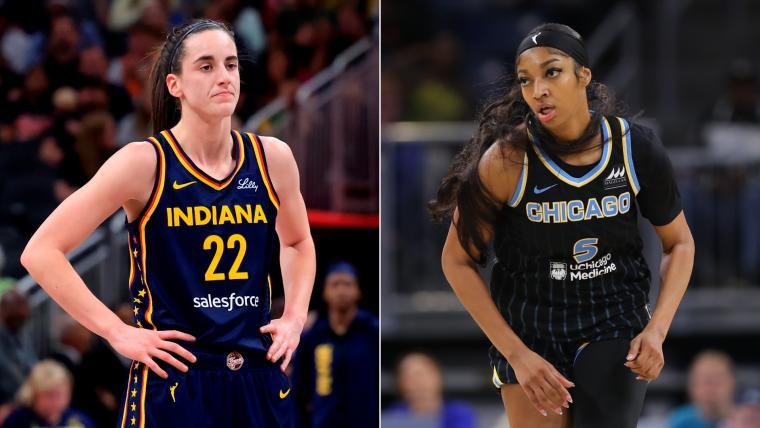
WNBA commissioner Cathy Engelbert currently regarded on CNBC’s "Power Lunch" whilst anchor Tyler Mathisen delivered up the connection among Indiana Fever famous person Caitlin Clark and Chicago Sky famous person Angel Reese, and their so-referred to as contention at the court. Mathisen requested Engelbert approximately how she attempts to handle racist and misogynistic hate, and the way she attempts to control it. Engelbert spoke back through referencing the contention among basketball corridor of famers Magic Johnson and Larry Bird, and referred to how rivalries are right for the league’s viewership and business. "It is a little of that Bird-Magic moment, if you recall, from 1979 when those two rookies came in from a big college rivalry, one white, one black, and so we have that moment with these two,” Engelbert said. “But the one thing I know about sports is you need rivalry. That’s what makes people watch. They want to watch games of consequence between rivals. They don’t want everybody being nice to one another”, says Engelbert, completely dodging the question and problem.
1. Introduction to Racism in Sports
The issue of racism in sports is alive and well, despite strides in integrating sports. Women of color face a double struggle with fans, both in terms of gender and race in a hegemonic white male-structured society. African American women are subjected to racism that is deeply rooted in a society built on exploiting kidnapped Africans as indentured servants and slavery. We will outline how the language of WNBA players on Twitter showed the nature of racist hate fans directed at them. Critical Race Theory (CRT) has challenged the supposed elimination of segregation and identified white normativity in basic legal structures. Racism is not only in relations of power between the individual and arbiter. We agree, and by looking at the fan, we can determine how fans negotiate white normativity in society.
The WNBA provides us with an opportunity to analyze both the Taunt Study portion of anglocentrism and the systemic racism used by fans to put Black women basketball players "in their racial place" as sportswriters once did. As sociologists and sports sociologists, we aim to problematize a male-only athlete versus fan and/or the athlete versus sportswriter framework of victimized young men assaulted by cruel, crude, and even criminal fans. An examination of the woman athlete is timely for not only the WNBA but college basketball as well.
The Racism in the WNBA: Study of Racist Taunts by Fans recognizes the incarnation of identity presented at WNBA games by white fans, the association of women with their masculine teams, and the dollar auction that plays out.
1.1. Historical Context of Racism in Sports
Racism in sports is a nuanced, deep-seated issue. Given the ingrained history of racism in that sector of life, this paper explores the racism embedded in professional sports: racism ingrained in fans seen through the analysis of racist taunts hurled at players. Society has had a historical habit of measuring human value by the color of an individual’s skin and using it as a determinant for human worth. This habit is what fueled such criticism of athletes during their era of dominance — their sustained excellence in a primarily white sport was a monstrously furious thing to suppose over. In this paper, I look at the continued racism against mainly Black female athletes and players through to the major professional men’s sports leagues. This analysis through the high-energy, animal intonations of the racist taunt in a professional sports environment will provide insights into many layers of the insidious hatred lumped onto these athletes.
For much of America’s young history, sports have often reflected its deeply ingrained racial prejudices and, at times, have been a platform for resistance against institutional racism. Race and sports have had an ever-evolving relationship since it was first brought to American soil. The history of race and sports has three phases. First is the time of segregation. Following comes the second stage of desegregation and Black participation in sports of the white majority. The final phase comes into play as sport becomes a platform for sociocultural justice movements worldwide. In sports, especially professional sports, Black individuals have often been the only ones subjected to racism. Even in America, the country of the free and land of the brave, not all professional team sports were fully integrated until the late 1940s or early 1960s. With this context laid out, it begs the question: how have we still not been able to properly address racism today in professional sports when it has been over seventy years since the first major professional sport was integrated? How have we not only failed to address it, but allowed it to manifest as bad or worse than it was then?
2. The WNBA: A Brief Overview
The Women's National Basketball Association (WNBA) is a professional sports league for elite female athletes who compete at the highest level in the United States. Established in 1996, the organization shares the same name as the professional men's league and is a subsidiary of the NBA. During the early to mid-1990s, the United States experienced a national wave of interest in women's sporting events after their national teams won both the FIFA Women's World Cup and the Olympic gold medal in women's soccer. This interest spread to the sport of basketball and culminated in the creation of the WNBA.
The decision to initiate a league for women in basketball was motivated by a federal statute known as Title IX, which opened the door for women to participate in collegiate and professional sports in the U.S. It was noted that from 1980 to 1990, the number of female basketball athletes nearly doubled in the U.S., and women's basketball became one of the fastest growing sports in the country during the 1990s. Despite cynicism and low expectations from the press, the WNBA has become a culturally relevant and impactful sports organization over the last 20 years. The league's remarkable players, such as Lisa Leslie and Tamika Catchings, among others, are honored for their athletic achievements. League teams including the Minnesota Lynx, Phoenix Mercury, and Houston Comets have won multiple championships. The entire organization is passionately supported by millions of fans, and the All-Star Game is consistently one of the highest trending topics on social media, earning global attention. For young girls who dream of playing professional basketball in the U.S., the WNBA is a place where women succeed and lead.
2.1. Establishment and Growth of the WNBA
The Women’s National Basketball Association, or WNBA, was established just 25 years ago for the 1997 season. Founding principles of the league included celebrating community, activism, and emotion; men found themselves continuously explaining the male athletes in policy conversations, which led the elite group of five-year-old leagues to highlight female athletes who can also speak on policy. The commercial success of a professional women’s soccer league combined with the gold medal of the 1996 Olympics women’s basketball team was also an influential factor in the formation. Financial and infrastructural support of former NBA commissioner is of note. The NBA was financially involved in the evolution of the WNBA from the May 1996 launch, even though other NBA executives were involved with early planning stages. The NBA’s financial investment was not solely because it believed in women’s basketball, but also reflected an effort to save declining member interest in NBA ownership. wanted to save NBA organizations and make NBA arenas more profitable with other events; even if the WNBA struggled, he would still get some value out of those arenas.
Research statistics from the WNBA are in millions of U.S. dollars. By season four in 2001, team values increased by $6–15 million from their original values. The number of NBA ownership partners increased by 700 percent; 70 percent of teams experienced operating profits with a TV contract running $2 million. Early WNBA top corporate sponsors were Champion, General Motors, the U.S. Marine Corps, and Sears. Sponsorships and partnerships allowed the WNBA to not only form a national television broadcast agreement but also local team deal breakers in franchise areas. The 2008 season was noted for the highest average attendance and average national television audience to date. WNBA President stated that NBA referees calling WNBA games made the games more easily viewable. In 2003, the international reach of elite women’s basketball players playing in the United States continued growing when the signed Russia’s Maria Stepanova.
3. Racism in Women's Basketball
Analyzing Racism in the WNBA This study is about racism in women’s basketball, specifically an analysis of the sexist and racist taunts hurled at WNBA players by their own team’s fans. Women play basketball worldwide, at national and international levels of play. In playing, women confront the combination of society’s racial and gender biases and expectations that affect our everyday experiences. In order to introduce those reading this report to some of these experiences, I include testimony by current players, from their public accounts, out of their own courageous struggles and perseverance. The text is recorded in the women’s own words, as these testimonies, offered in the face of critiques to the contrary, need to be conveyed intact, capturing their fullness and profound eloquence.
The appearance/ability hierarchy, a fundamental cultural bias operating at home and abroad about “the way women athletes are supposed to look and play,” has been referred to as the “femininity matrix.” Importantly, the femininity matrix maps onto gendered racial/ethnic identity. Most girls and women who play basketball, especially those of color, Native American, Latina, Asian, and Black girls especially, will never have contact with people from the middle and upper classes who can change the femininity matrix. Thus, girls and women, particularly from the lower classes, receive the harshest treatment and face the greatest structural barriers. Even those women and girls of color who display remarkable playing ability will, from the micro and macro aggressions they face daily, become used to being thought of and represented as “second class” humans, and “inevitably,” unable to play in the pros. Through continuing research, I have the intent of “telling the rest of the story.”
3.1. Challenges Faced by Women Athletes of Color
83.4% of the women in the WNBA are of color, the majority of them being Black. While often hailed for innovation and progress, the WNBA is a prime example that change cannot happen without resistance. Black women have been leading the charge for gender and racial equity in sports. They challenge and inspire people's notion of what an athlete can look like through their hard work, dedication, and fearlessness. Despite their many contributions to the game, the women of the WNBA experience hate and inequality in many forms—much of it based upon the intersection of their race and gender. Studies show that even college-level basketball players experience racism before they step foot in college.
Recruitment into college corresponds with the availability of funding for travel teams or AAU team fees, private coaching, gym time, and club teams. Black Americans are twice as likely to be poor as White Americans. With these kinds of financial barriers to elite training and development for women of color, the pool of recruits into higher education shrank considerably, which has a known impact on who is playing college-level sports. In college, most of the press and media representation is for the men's teams, which results in the women's sports teams being almost invisible. Women athletes, especially women of color, do not see themselves reflected in the media that covers their sport. In 2008-2009, men received 66.2% of the NCAA press coverage, 97.1% of TV coverage, and 99.2% of the radio news. This is an enormous barrier when the majority of Americans rely on television and radio coverage to get coverage of women's sports. 96% of the stories produced in sports media focus on just the statistics and wins, with only 2-4% being human interest pieces. People who are not Sports Center-obsessed would only see the wins in the paper or on their evening news broadcast. For women athletes, who are largely delineated on the basis of lack of wins, low graduation rates, sexualization, and objectification in ads, there are hardly any pink headlines. Furthermore, minority women athletes regularly report being recruited to play college basketball on the street via strangers, which has been a proven NCAA recruiting violation. Industry statistics also reveal that athletic businesses, media outlets, and TV networks are more discriminatory towards female sports in general—with African American media entities being the primary offenders. Calls have been made for private groups to increase their share of color ownership in the industry and increase current and corporate investment.
The emotional and psychological tolls of facing racism are profuse but understudied, and at the worst, survivors, in trying to toughen their skins, are not taking stock of the stress that racism puts on them. Research in sports psychology posits that about 50% of a person's performance is mental. Discriminatory taunts can distract a player from their game, diminish confidence, incite anger, lower performance, increase anxiety, and can disrupt team cohesion in athletes. Many athletes, individuals, and the general public see the game as a place where all are on equal footing and can let go of daily social problems. Assuming the definition of sport as unfiltered leisure enables one to see that the magical properties that encapsulate sport are challenged by racism. If people treat racial taunts, slurs, and discrimination in a game as if it were a workplace issue instead of an inconsequential insult in sport, the escape from reality that sport offers would be defeated. Notwithstanding existential threats in society, women athletes of color still play, develop, and express authority over their bodies and physical intelligence at the margins. These strong women are the best models of resilience and avocation. They knew, know, and will continue to work strategically and fiercely to increase opportunities and resources.
4. Fan Behavior in Professional Sports
Fans play a unique role in the professional sports environment. Scientists and biologists have long suspected that a player’s in-game performance can be affected by crowd size and the noise generated from such. Variations in cheers, chants, and vocalizations of social dominance have been effective when studying related dynamics of these loud displays of human behavior, swapping scales, and sports behaviors into the everyday lives of spectators. Globally, approximately 70% of elite athletes from a survey of numerous Olympic sports agreed or strongly agreed that their performance would be worse if there were little to no crowd noise. Thus, we know that fans have a direct role in facilitating the atmosphere of games, contests, and competitions. This can result in wonderful, emotionally elevating displays of admiration from fans to players, coaches, referees, and others that impact the game. Oxytocin, also referred to as the bonding hormone, is a neuropeptide released in physical contact, for example, patting someone on the back. Having fans or engaging family and friends before gameplay can meaningfully influence the neuro-dynamics of social interactions with positive effects. This sometimes leads to negative displays of behavior from fans toward respective persons. One off-court study of umpires found that when the official was joined by predominantly opposing fans, this generated an increase in incorrect calls for essentially equally important plays. As a spectator, the psychological relationship with the athlete has both positive and negative interactions. Inevitably, the fan relationship with the athlete builds through a framework of exclusiveness to favorite teams and favorite players. The effect of fan engagement with athletes is particularly apparent in the pursuit of perfection, extra careers, maintaining historical legacies, and even national identity during international play. Additionally, attitudes and perceptions by athletes also combine in harmony with fan attitudes for off-court behaviors. The concept of fan behavior in sporting events is centered on the theories of situational, social identity, deindividuation, and moral disengagement, where cultural advancement has enacted exemplars in a classic discursive manner. In the world we inhabit today, fan behaviors epitomizing strength and power could no longer reflect the integrated and complacent world of nearly a half-century ago. Some of these international organizations and governing bodies question how racism among athletes in soccer can still occur and question why the behavior of fans cannot be altered. It is evident that the governing body of the sport understands it should no longer be tolerated. For the modern-day sports event, these oaths of violence and discrimination are indicators of the de-evolution of sport stadiums and possibly even the degradation of modern society as a whole. It is moving so quickly that one could postulate that these individuals are not undersocialized and are the product of a society we all help militate.
4.1. Impact of Fans on Athletes
Athletes in professional sports face various pressures from the general public, including fans. Research has shown both supportive athlete-fan dynamics and consequent positive athlete outcomes, as well as negative interactions that can hamper athlete performance. Studies have also looked at the impact of emotional reactions from negative in-game fan interactions, the physical and psychological effects of dealing with sporadic harassment, and the overall pressures fans can place on athletes. Marital satisfaction can play a role in athlete performance, and it can be influenced by negative in-game interactions. Furthermore, research has shown that fandom can create perceived in-group/out-group biases that are linked to racism and stereotyping. Fans can perpetuate stereotypes and aggressive behavior, or they can be respectful and model proper fan behavior. The approach of fans can ultimately affect how an athlete processes and performs in that given situation.
To enhance their emotional resiliency, athletes can utilize mechanisms such as decreasing their level of investment into the intra-spectator interactions, enhancing their feelings of control, self-investment, the realization and understanding of fan antics, and various forms of self-expression. The personal development of emotional resiliency is unique to each individual and can help create a stronger and more positive fan experience in the face of negativity. The memories of the supportive and friendly fans tend to stay with athletes longer as well. We must also address the notion of 'blaming' athletes for their emotional reactions to negative encounters, as saying that an athlete is supposed to simply 'brush it off', 'ignore it', or 'shouldn't react' runs counter to the emotional wellness of the human body. This side of it is worth exploring, and thus athlete emotions during negative encounters such as racism should be viewed in the same way. Additionally, many are calling for a culture of change, and athletes are beginning to speak up. Many are acknowledging the necessity for change within the community, most notably a chairman who addressed it in his statement. The general public is also calling for a similar change. An analyst claims that spectators of racist hooliganism during professional sports need to be held responsible, and with developments in technology, many are publicly exposing and/or suing those who perpetrate such heinous acts. In recent times, however, racism has experienced something of a resurgence in the community, and specifically, those unfortunate incidents of racist taunts expressed by fans will be the focal point of our research.
5. Racist Taunts in the WNBA
Racist Taunts in the WNBA
In a 2008 regular season game, the Los Angeles Sparks and Detroit Shock faced off in Auburn Hills, Michigan. The following incident occurred: As Sparks forward DeLisha Milton-Jones waited to inbound the ball with 2 minutes and 2 seconds remaining, someone in the crowd put down a photo of a monkey with the words "DeLisha, quit monkeying around." The shock value was enough to stop play. Security hustled one male fan out of the building, and the Shock, which had watched a double-digit lead dwindle, closed out an 85-78 victory over a flustered opponent. Milton-Jones, the Sparks' only Black player, heard what the offending fan said to her that night, and she had heard mostly the same before. But she had never seen anything quite so offensive conveyed through a mixture of hate speech and racially charged imagery just before throwing a basketball back onto the court. The league, then and now, did not punish the Shock for what had happened at the Palace of Auburn Hills. Instead, though guilty of the aggression in the league's estimation, Detroit was absolved.
In June of 2017, a public address announcer from the Dallas Wings was suspended for making a "hurtful" and "inappropriate" statement at a home game against the Phoenix Mercury. This statement was "brief" and "personal." The league, however, was not able, or else not willing, to reveal what the announcer said about Imani Boyette, the Mercury player who was endangered. In July of 2018, following a home loss to the Las Vegas Aces, Natasha Howard accused the accompanying audience of using racial taunts against her. The league conducted an investigation but found "no conclusive evidence" of racism. A league source told the Storm's editor that, "contrary to a five-figure fine, the investigation merely acquainted the 3,686 baying attendees with eavesdropped statements from 15 witnesses and six canvassed interviews about violence in the Golden 1 Center." Walking off the floor at the Mandalay Bay Events Center on July 21, 2019, reigning league MVP Elena Delle Donne heard one streaming fan accuse her of being a "pathetic white girl." When asked about this later, Delle Donne understandably didn't feel "like it's a huge issue."
5.1. Incidents of Racist Taunts in the League
Between 2019 and 2021, a search of a leading database of major newspapers and news magazines for exclusive mentions of "WNBA" and related terms identified twenty-one different reports that made mention of a specific incident involving racist taunts from an opposing player, coaches, or fans. Seven of these exclusive reports have an overall racist mention, while four reports are focused specifically on the WNBA and racism, with three incidents from this database being mentions of racist taunts in print only. For an extended example of the print-only mention, consider an incident involving the Minnesota Lynx where players wore shirts to support a movement. The players were denounced by their constituency, one fan throwing an object at Black players while yelling. Incidents before the resurgence in sports, 2015-2019, are included in my examples. During a 2019 WNBA preseason game, a white fan in the upper deck of a fixture between the New York Liberty and the Chinese team hurled a double middle finger to the Liberty players, who were themselves standing for the playing of the national anthem. Frustratingly, one player "directed his middle fingers to his head and pointed his head toward her" with his hands still motioning in what she thought were outwardly hostile gestures. There has been a discussion about why racism exists in sport, mainly that fans see sport as a mirror of society and take the opportunity to be both heard and anonymous. That said, racism is important to discuss in women's sport overall and needs to be more openly researched and covered as part of the growing misogyny in society. Even for a league that predicates itself on justice and equality, reflective as one player argues on the "women can do everything men can" dichotomy, racism is still a far-too-often occurrence. It's only how the league responds to it that is different from most other leagues: the WNBA shows utmost solidarity in a league that is very player-driven, with players often handing sanctions to owners and not the other way around. A vice president of business operations for a sports organization told me that the incident of racism she was most proud of this season actually occurred in a game in which one team played. "One team did a really great job of helping a young fan understand that it is not acceptable to taunt someone by race. And our fans did it, too. Our fans and their fans threw out two men from the game in question. I thought it was really cool to have someone in the stands call racism out and have both teams support the message of respect, not only from a business standpoint, but more importantly, from a societal standpoint. [...] We strive on being inclusive and can sometimes be slow to understand what racism is doing here. It's a role we have to play and are still learning to reach." Social issues are topics of potential fragility: fans can be easily quick to dismiss or re-contextualize the event so as to fit into their pre-existing notions of racist actions. The only Black man who makes an appearance in the first edition of this report defends the racist fan; the player involved takes time out of practice to sit with three reporters to explain to anyone willing to listen that the event was a racist taunt, scary, and life-deteriorating for her. "There's no place for it in anything I do," said the player. "Whether it's me at home, whether I'm at the store, whether I'm playing basketball. If you don't appreciate my playing, no reason to come to the games and watch me because I'm Black, then it's really sad." Such dispositions make racism unperceived and invisibilized in print, further exacerbating that issue.
6. Impact of Racist Taunts on Players
Racist taunts destroy self-esteem, belonging, and team dynamics.
There are clear damaging effects of being on the receiving end of an experience of racism. Athletes who experienced fan racism have reported it has negatively impacted their self-esteem and feelings of belonging. In addition, our data suggests these incidents can contribute to higher anxiety and, subsequently, decreased athletic performance.
Our data indicates that there are similar long-term effects of racism in terms of diminished sense of belonging. It is based on this new data that we suggest that individuals who experience racism can begin to feel, over time, increasingly isolated and less able to reach out and appeal for social support than those who do not experience racism. The emotional labor required to seek social support and re-engage can be so exhausting that it may be easier to just withdraw in the long term. We know that extraversion correlates with seeking social support, just as we know that social support is integral in order to protect mental health.
Aside from the individual, there are clear deleterious implications for team dynamics when athletes experience fan racist or sexist hate. Not only are other team members personally bound to the one who experiences the racist encounter, but there is also a chance that a sense of care extends further through the club. While we like to think of sport as a space free from prejudice, we are prone to external forces over which internal policy of club politics has little to no control. Given this, attention should also be paid to how racist encounters for the individual might function to primitively polarize them from their fellow athletes. As well as concerns about the damage to a sense of care and community within the team, individuals felt that the management of these issues by coaches was unequal and that some individuals were treated with specialist care while others were not given the same attention.
6.1. Psychological Effects
Williams has been anticipating this moment. Psychological effects refer to the mental aspects of an experience that are often more stigmatized than other elements. Some of the examined racism literature briefly addresses psychological consequences; however, in a context of sport, these authors will foreground the psychological aspect of what happens when racist taunts are made. For example, a question might be: What are the effects of being taunted on a person's overall life? What mental health effects might it have? Does suffering from these effects make you question something about your identity? In the context of sport, all of the psychological consequences explored for tennis player Darian King are relevant here; that is: therapy, anxiety, and disturbing turmoil.
Shiann Darkangelo and Jessica January are two others who said they faced racial abuse from fans as teenagers. January, who played at DePaul and recently completed a season in the WNBA, believes a fan taunted her with a racist slur at a DePaul-Marquette game during the season. And for women athletes, talking about mental health presents its own set of challenges because of the stigma surrounding mental health – and more so mental health and female athletes. When Minnesota Lynx coach Cheryl Reeve took the extraordinary step of hiring a chaplain for mental health purposes, not one player took her up on the weekly sessions. She tweaked the approach to bring the chaplain together with her two leaders, Seimone Augustus and Rebekkah Brunson, and they bought in. Today, the Lynx take mental health seriously – there are enough tips and resources out there now that the team has its own site. It is argued, "‘Mental health’ wasn’t mentioned in reference to these players until midway through the third and final segment, which is framed largely around a montage of plaques in recovery centers. It’s adjacent to the first time the documentary deigns to mention anything about these women’s physical health: Scarlet O’Neil’s torn ACL, in 1954. The only treatment the players received in their heyday was, the film reports, hormone injections. That’s it."
7. Addressing Racism in the WNBA
The WNBA has long had strategies and initiatives in place to address racism and hate speech. The league has made a public statement that its goal is to ensure that every player in the league has access to fair and safe competition, free from any form of discrimination or racism, and the league’s anti-hate speech policy is the primary tool the WNBA uses to work toward this goal. To foster an inclusive, accepting, and welcoming environment for all players, promoting diversity, inclusion, and fair play is one of the WNBA’s guiding principles. As one prong of this principle, the league addresses player development for WNBA players because where barriers to full participation exist, discrimination may occur. Positive action and targeted programs are needed when addressing the lack of diversity in positions of leadership and management. The league has developed several policies, such as its anti-hate speech policy and its anti-discrimination policy, that are designed to foster an inclusive, accepting, and welcoming environment.
Although the passage of these policies reflects a step in the right direction, the WNBA has not been completely successful when it comes to ensuring a safe and respectful workplace for its athletes. WNBA players still report discrimination, racism, sexism, and disregard for players’ safety. Perhaps one reason the WNBA has had difficulty rooting out these problems is that the league’s attempts to regulate hate speech do little more than crack down on overt public speakers of hate. While in isolation any of these approaches has value, what the hate speech and equal employment pieces lack—and what most of the WNBA’s strategies lack—is a broader approach to ending racism. In other words, the WNBA’s use of its current anti-hate speech policy on its own does not adequately address racial issues that WNBA players face. And while the policy’s use in collaboration with advocacy organizations is certainly a good start, the WNBA can and should do more.
7.1. League Initiatives and Policies
The WNBA has had initiatives in place for a number of years, targeting the issues of equity. The league has an education initiative for all members of the league, staff, and fans. However, it has been life-skills education programming that is included in their community outreach initiative, that has focused on inclusivity with sexual orientation. This group’s work includes the Stadium Project, with some cultural and heritage events in conjunction with LGBT events, as well as inclusion on their social channels. The Los Angeles Sparks have hosted a Beach Party Pride game for five years. While these programs are meaningful, we feel that there needs to be intense focus on equity, class, and sport, including the part of that name as it refers to a whole section of the marginalized participation cadre in class. The WNBA has created a Cultures of Inclusion educational program, in which teams report and post attendance. This initiative teaches the value of people of different backgrounds in sport, work, and life.
Education is also aimed at league, team, and arena staff. Women are the primary audience for this education, although men within the league also attend and interact with individuals with disabilities. WNBA teams also engage in community programming that introduces players to new and diverse individuals. It is hoped that this will help give the players an elite level of basketball and the impact of this program. Clearly, a major challenge in proving the efficacy of these policy measures is the monitoring of fans’ behaviors. This is not an insurmountable challenge, but sports teams and leagues traditionally jealously guard information about their fans. In order to truly measure if the policies, procedures, and training we have been discussing are successful, the WNBA would have to step out of that protective shell and supply us with a roster of data, including demographics on audience behaviors and a filtering of the data to produce reports and studies, analyzing these subjects by factors such as sex, player, class, or race. Finally, the league has partnerships with organizations in the area of sports, social justice, and equity.
Strengths and Weaknesses: The WNBA has put into place a variety of policy and educational steps to further make their organization systemic and serious about building an anti-racist culture. But the challenge with accountability is that maintaining interested newcomers and long-term participants in keeping this initiative vibrant is always with us. Maintaining efforts and energy are the big next steps here, in our opinion. While our roadmap and steps more than cover the educational needs of players around equity and an anti-racist culture, it must be noted that this writer is involved in levels one and two, has been trained in image management at level one, and last coached at the college level in 2010. We are not qualified to suggest or recommend educational tools or schedule classes but have made decisions about the educational needs of our members that are in contrast to the staffing level five. Personnel cannot continue with a policy that addresses only the basic educational needs of the organization. So, we have only adjusted to the category of personnel, which implies that it is better for assessing fans in a fair fashion. I hope we shamed the WNBA and we refuse to let it happen anyplace else, including our league.
8. Conclusion and Future Directions
Conclusion
Our examination of racist taunts by fans against WNBA athletes provides a crucial lens for understanding racism in the WNBA. We note the significant changes the league has made to protect its athletes from racial microaggressions, but we also observe that many athletes do not believe that these changes have improved fans’ behavior. Moreover, some athletes are also aware that these rules were principally motivated to ensure the WNBA would be perceived as a sports league instead of "politics." Finally, perplexingly, some athletes feel that fans’ racist behavior is a reflection of the racism that the mostly Black athletes have internalized from being raised in a white-supremacist society, because, as one player best put it, their white parents think "just because they have a biracial daughter, that they are no longer racist when they marry a white man." Scouts, coaches, league officials, fans, and media often stereotype and overlook the contributions of players with multiple marginalized social identities. These findings reveal the complex ways that racism operates in the WNBA and other sporting contexts that need further examination.
While social change for people at various levels of power in the WNBA is working to address the issue and has been making progress in certain areas, it is quite evident that fans still pose a threat to athletes. Therefore, stakeholders must commit to confronting racism, redoubling their vigilance on and off the court, in the barracks, and in the streets: the mission of justice is far from done. In order to prevent racist treatment of athletes, academics and advocates must continue to center the voices and experiences of athletes in future research and criticisms. Scholars must also address the paucity of WNBA racism research in the social science literature and conduct broader studies of racism in sports. Intersections of potential areas of inquiry include, but are not limited to: racist behavior towards officials, media coverage of predominantly Black female sports, and broader fan conduct which employs racist stereotypes. Ultimately, research does not exist in a vacuum, and we invite ongoing conversations with advocates to prescribe future initiatives to alter sports and society for the better. Sports resist and cause profound social change in nearly equal measure by reinforcing cultural norms and also offering hopes of transformation.
8.1. Call for Continued Research
This study on racist taunting by fans at WNBA games raises more questions than it answers, a specific goal of this last section. As the data hopefully makes clear, studying racism and sexism in sports offers a unique perspective. The behavior of WNBA and NBA fans is clearly conditioned by the fact that players, who garner the attention and accolades of athletics, are Black women. However, we also recognize that taunt studies have certain limitations. What is worse: the F-bomb or the N-word? It was difficult to convince that a part of the value of this study was that such queries could not be conclusively answered. In addition, while the response patterns associated with the WNBA taunts are disturbing, we do not contend that these incidents can have life-altering implications for the targeted athletes. Fueling oneself with hate and funneling it into the sports arena does not, for example, compare with the impact of someone who has been taught to hate and who is brutalized by those who aggressively act out their prejudices in more life-affecting situations.
We hope that other research teams address these open questions. How is it different in men's or boys' sports, if it is? Have the incidences of taunting been bracketed in an officer role, translating the damaging hate from the teen years to college or moving to wherever they can make money, and meaning this is less spontaneous and driven by racism? Does the damage that is assumed in WNBA arenas transfer to the broadcasts? What is the impact on ratings and viewership? Finally, an economic cost of racism can be determined by the loss of television audiences, or the information contained within these responses. Can policymakers make a case for heightened consequences, or is one money far more valuable than another? While overt taunting does not go unremarked at many (though not all) men's sporting events, we have elected, in this study, to focus on women's sports, specifically the WNBA. The tradition of American women's sports is generally female-related, often drawing on sociological and psychological explorations of gender. We suggest that future research reach across these literatures, placing breaking barriers in women's basketball within the structural and symbolic impact of racism. Longitudinal studies sometimes suffer from the fact that the offenders change annually, if not more frequently; however, this is not a reticence to inquire. Again, as was the case for our original study, investigation of several affected arenas would be beneficial. It is also important to note that league policy and strategies are often a part of these conversations. Because of the need to explore policy implications, future research would be a great opportunity to bring players to the table and refine our queries from this source as well. The purpose of this was the ultimatum for moving from description into policy implications. We suggest utilizing a number of men and women, if available, for focus groups.