

The Epstein Letters and the Trump Connection: Political and Legal Fallout
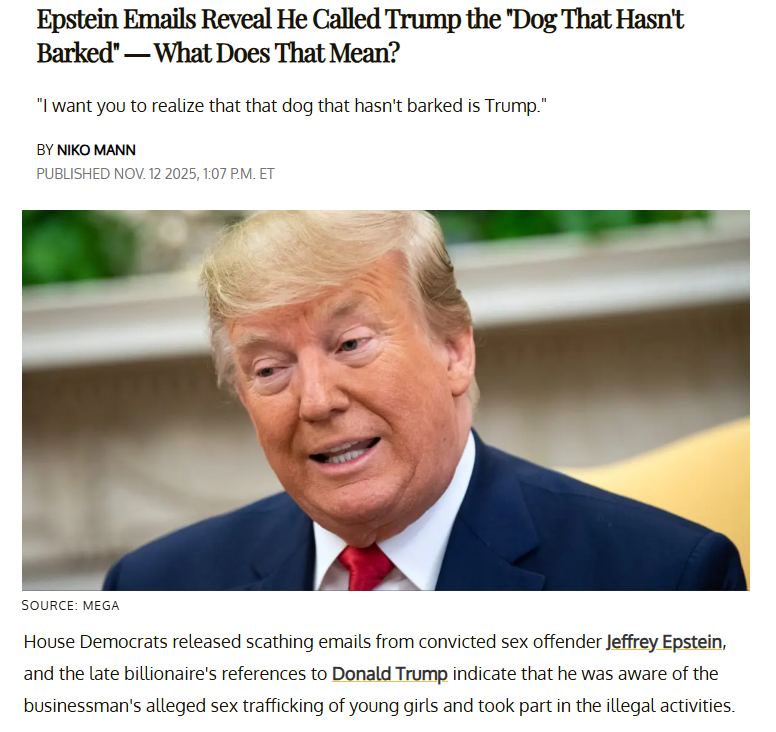
Here is a revised, full-length article focused specifically on the tranche of emails released on November 12, 2025 by the House Committee on Oversight and Government Reform (Oversight Committee) during Donald Trump’s second term — and what they may mean for Trump’s presidency.
The Latest Epstein Emails and Trump: A New Chapter in the Scandal
On November 12, 2025, Democrats on the Oversight Committee made public a set of previously unreleased emails from the estate of Jeffrey Epstein that appear to pull Mr. Trump deeper into Epstein’s orbit — raising arguably the most politically dangerous questions yet about what Trump knew and when. (ABC News)
The disclosures, timed amid a bitter government shutdown and Trump’s return to office, threaten to shift the narrative from prior associations to potential knowledge — and silence.
What the documents show
Key passages in the newly released material include:
A 2011 email from Epstein to his associate Ghislaine Maxwell in which Epstein refers to Trump as “that dog that hasn’t barked … [Victim] spent hours at my house with him … he has never once been mentioned.” (ABC News)
A 2019 message from Epstein to author Michael Wolff in which Epstein wrote, “Of course [Trump] knew about the girls as he asked Ghislaine to stop.” (Oversight Dems)
Another exchange in 2015 between Wolff and Epstein in which they discussed how Trump should respond to media questions about his relationship with Epstein — with Wolff suggesting letting Trump “hang himself” by conceding nothing. (Oversight Dems)
Simultaneously, the committee released a separate filing showing the Oversight Committee had received 20,000 + additional pages from Epstein’s estate on the same date, a large volume of material still under review. (House Oversight Committee)
Collectively, the emails suggest not only that Trump had social contact with Epstein and visits to Epstein’s home, but also that Epstein believed Trump knew more about the under-age-girls recruitment than he publicly admitted.
Why this is especially damaging for Trump now
These revelations carry particular weight for several reasons:
1. Shift from acquaintance to alleged knowledge.
Previously, Trump’s known remarks about Epstein focused on socializing, falling-out, or being unaware of Epstein’s criminal behavior. With these emails, the language moves toward “knew about the girls” — implying awareness rather than ignorance.
2. Timing and office-holder vulnerability.
Trump is now in his second term, with the full weight of the presidency behind him. The fact that documents surfaced during his incumbency raises the stakes: it’s not just a past association but one that could reflect on his current trustworthiness and judgment.
3. Political optics of silence.
The “dog that hasn’t barked” metaphor is particularly menacing: it insinuates that Trump’s silence was deliberate or conscious. In politics, being quiet in the face of wrongdoing is often as damaging as being active in it.
4. Campaign and legacy risks.
Trump’s brand has relied heavily on being a deal-maker, outsider, and challenger of corrupt elites. Here, the narrative flips: a powerful figure possibly tolerating or remaining silent about elite sexual-trafficking behavior. For supporters and detractors alike, this reversal has potent symbolic weight.
Trump’s response
The administration’s reaction was swift and predictable:
The White House dismissed the release as a partisan “weaponization” of a dead man’s correspondence, accusing Democrats of cherry-picking documents to damage Trump. (ABC News)
Trump himself described the matter as the “Jeffrey Epstein Hoax,” framing it as a distraction from other issues — particularly the ongoing government shutdown. He wrote that the Democrats were trying “anything at all” to deflect attention. (Reuters)
His press secretary asserted that the released documents prove “absolutely nothing” and reiterated that Trump “did nothing wrong.” (Reuters)
Trump reiterated that he banned Epstein from his properties once the allegations became public and called him “a creep,” repeating the message that he had no knowledge of the underlying sex-trafficking operation.
Theories on what actually happened
Given the ambiguity of the documents, several plausible scenarios are being debated:
Theory A: Trump was aware, but not involved.
Under this theory, Trump may have had social ties to Epstein and therefore overheard or was informed of misconduct. He may have instructed Epstein or Maxwell to “stop,” as the email suggests. This would align with Epstein’s wording: Trump knew about the girls rather than participating in abuses. It suggests plausible liability in awareness but not direct action.
Theory B: Trump had minimal knowledge but tolerated the relationship.
Here, the idea is that Trump may not have been fully aware of trafficking, but he remained in Epstein’s orbit and therefore implicitly accepted the risks. He may have asked Epstein to resign or distance himself from Trump’s club, in order to salvage optics — consistent with the “he asked me to resign, never a member ever” line. The implication: he attempted to minimize fallout rather than seek full accountability.
Theory C: The emails exaggerate or mischaracterize Trump’s role.
It’s possible Epstein was attempting to inflate his own influence by claiming Trump “knew about the girls” or “spent hours at my house with him.” Epstein had motive to exaggerate. Under this scenario, Trump’s actual involvement may remain minimal, and the letters are opportunistic blackmail or boastfulness rather than accurate recounting.
Theory D: The relationship was transactional and covered up.
A more sinister possibility is that Trump actively benefited from his association with Epstein — whether socially, politically, or financially — and subsequently helped protect or conceal Epstein’s activities by remaining silent. While no released document currently proves this, the combination of contact, silence, and now these emails makes the theory politically salient.
What’s next: legal and electoral implications
Legal / investigative risks:
While the emails themselves do not constitute proof of a crime by Trump, they could become fodder for congressional investigations or state-level inquiries into how the Justice Department handled Epstein’s network. If additional documents show contact post-conviction, or witness interviews implicate Trump further, the risk of legal exposure (even if only reputational) increases.
Electoral risks:
For Trump’s campaign and for his image as incumbent president, these revelations may chip away at trust among independent and undecided voters. While his core base may remain loyal, swing voters — especially women and suburban voters sensitive to issues of sexual exploitation and power abuse — may view the new narrative unfavorably. The optics of proximity to Epstein may distract from other policy priorities and give opponents a potent character-based attack line.
Campaign strategy shift:
Trump’s defense will likely hinge on denouncing the release as partisan, emphasizing policy issues over personal scandal, and doubling down on his narrative of being under attack. His team may also highlight other public figures in the Epstein files to deflect. However, as more material emerges and the story continues to circle back, ignoring the issue may no longer be viable.
Conclusion
The November 12 2025 release of Epstein-estate emails marks a critical inflection point in the Trump-Epstein saga. What once could be written off as youthful association or mistaken social ties now appears to be a matter of knowledge, silence, and potentially complicity. If Trump’s public image — of a straight-talking, outsider leader — is to remain intact, he will need not just to deny wrongdoing but to offer convincing explanations about what he knew, when he knew it, and what he did about it.
In the end, voters and history may not ask whether Trump was guilty of Epstein’s crimes, but whether he had a moral obligation to act — and if his silence was a choice or a mistake.