

The Collapse of Capitalist Ideals in Post-COVID America: Corporate Dysfunction in the Trump Era and Beyond
In the United States, the traditional promises of capitalism—competition, innovation, customer service, and economic opportunity—have eroded dramatically in the wake of the Trump years and the post-COVID landscape. What remains is not a vibrant, competitive economy, but a hollowed-out system propped up by monopolistic practices, institutional decay, and widespread corporate dysfunction.
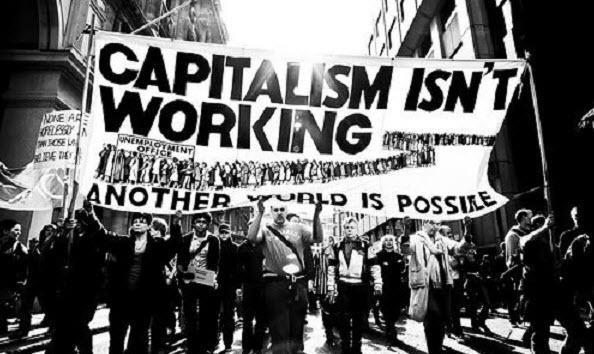
The Trump Era and Deregulated Decay
The Trump administration accelerated a deregulatory agenda that emboldened corporations to consolidate power, reduce labor protections, and prioritize short-term profits over long-term sustainability. By stripping away antitrust enforcement and gutting consumer protections, the federal government effectively greenlit corporate consolidation across sectors—from tech to healthcare to retail. This led to less competition, higher prices, and worsening service for the average American.
Post-COVID: An Economy in Disarray
The COVID-19 pandemic exposed deep systemic cracks, but instead of rebuilding, corporate America doubled down on practices that undermine consumers. Rather than compete by offering better products or more attentive service, companies shifted toward cost-cutting, automation, and eliminating human interaction altogether. The result is a degraded consumer experience and a workforce left scrambling in a gig-based, underpaid service economy.
The Healthcare Catastrophe
Nowhere is this dysfunction more evident than in the American medical system. During the height of COVID, hospitals and insurance companies raked in record profits even as frontline workers were burned out and underserved communities were decimated. In the years since, medical conglomerates have continued to grow, while access to quality care has deteriorated. Patients face increasingly opaque billing, limited appointment availability, and an overreliance on undertrained staff and AI-driven diagnostic tools. The emphasis is no longer on health but on shareholder value.
Retail and the Death of Customer Service
Retail—once a sector driven by consumer experience and brand loyalty—has become equally dystopian. Malls have emptied, small businesses have shuttered, and big-box giants have slashed in-store staff while funneling customers through broken apps and glitchy websites. Customer service hotlines are either defunct or routed through endless automated loops that rarely resolve anything. It’s not uncommon for consumers to spend hours trying to speak with a human being, only to be redirected to sub-par AI that cannot handle nuanced problems.
The AI Mirage
AI, once touted as a breakthrough that would revolutionize efficiency, is instead being used as a barrier between companies and their customers. Chatbots now answer the majority of service inquiries—but offer little in terms of resolution. The lack of oversight, coupled with poor design, has turned AI into a cost-saving measure rather than a tool for improving experiences. Corporations hide behind algorithms and remove accountability while customers are left frustrated, helpless, and alienated.
The Disappearance of Competition
True capitalist competition is supposed to reward companies that innovate and serve their customers best. But today’s corporate giants no longer win by being better—they win by being bigger. Mega-mergers, data monopolies, and the manipulation of supply chains have stifled innovation and kept prices artificially high. This isn't capitalism—it’s oligopoly.
A Failing Social Contract
The fundamental social contract of American capitalism—that hard work leads to prosperity, that businesses compete to earn consumer trust, that economic freedom brings shared growth—is breaking down. Workers are paid less, expected to do more, and provided fewer benefits. Customers receive worse service for higher costs. Meanwhile, CEOs and shareholders reap astronomical profits.
What’s Next?
If this trajectory continues, we risk entrenching a system that is capitalist in name only—one where choice is an illusion, service is nonexistent, and technology is used not to empower but to exclude. The antidote may lie in a renewed push for regulation, labor rights, and structural reform. Only by holding corporations accountable and reimagining how capitalism should function for the 21st century can the United States hope to restore a system that serves its people rather than exploits them.
Let me know if you’d like this tailored for a specific audience like activists, educators, or policy makers with more examples, statistical support, or historical context.