

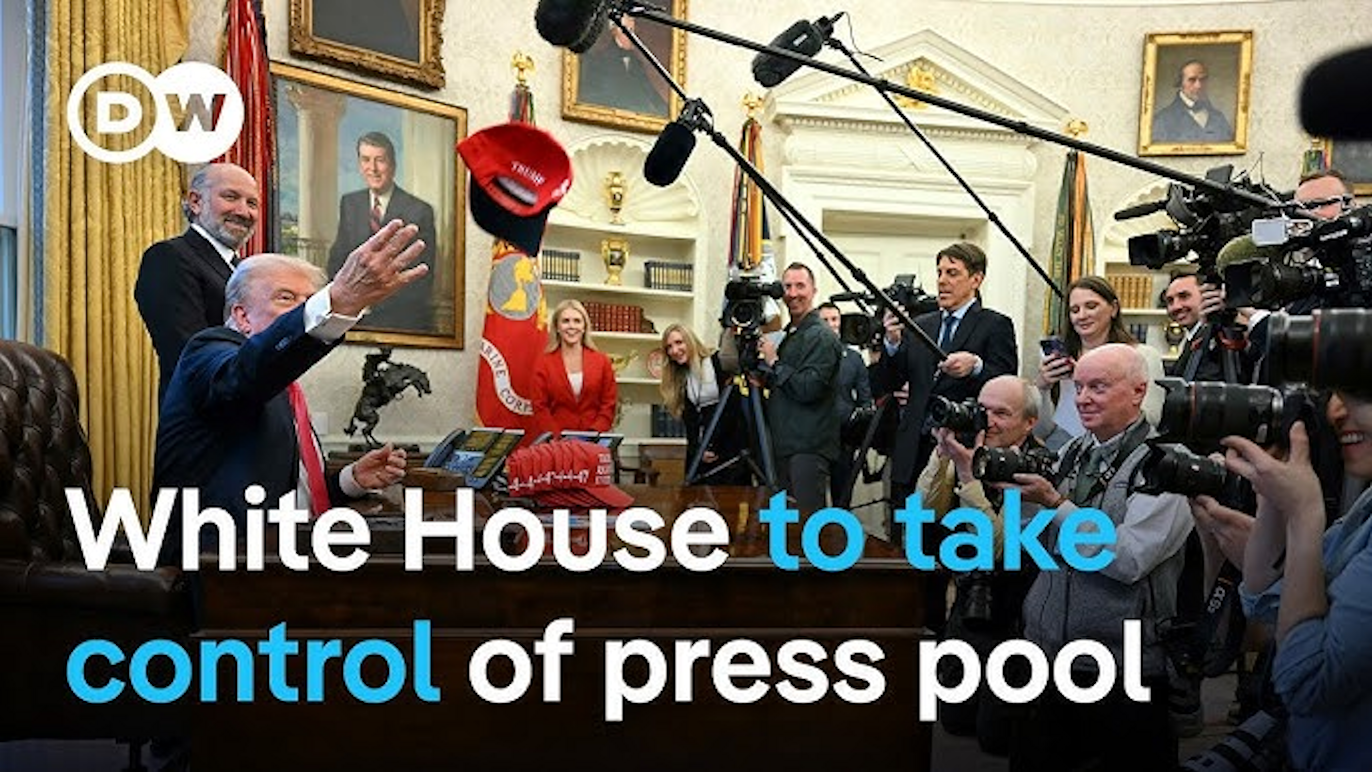
President Trump’s decision to insert himself into the bidding war over Warner Bros. Discovery (WBD) — particularly his call for CNN to be sold as a condition of any merger — marks a new chapter in his long-running campaign against independent media. To his critics, it’s not simply another attack on a disfavored network; it’s part of a much larger and increasingly coordinated effort to reshape, weaken, or co-opt the institutions that scrutinize presidential power.
This latest episode comes at a moment when WBD is weighing competing bids from Netflix and Paramount Skydance, and Trump has loudly signaled a preference for options that involve spinning off CNN. His denunciations of the network as “corrupt” and “poison” align with his years-long effort to delegitimize mainstream journalism — but now they intersect with a major corporate transaction and the president’s bully pulpit.
Trump already owns Truth Social, relies heavily on Elon Musk’s X as a sociopolitical amplifier, and has spent years cultivating a media ecosystem almost entirely devoted to favorable coverage. His pressure campaign on CNN appears to many observers as yet another step toward building a consolidated, leader-aligned media orbit — something that resembles the playbook of authoritarian and illiberal regimes.
A Consistent Pattern of Media Pressure
Trump’s campaign against mainstream media began long before the 2024 election, but in his second term the pressure has become more direct and more structural:
Direct ownership: Truth Social functions as a closed-loop distribution hub for pro-Trump news and messaging.
Platform alignment: Musk’s X has increasingly become a megaphone for Trump’s narratives, amplified by algorithmic shifts and platform policies favorable to political influencers on the right.
Delegitimizing independent media: Trump’s rhetoric about CNN, NBC, and other outlets as “fake news” or “enemies of the people” serves to inoculate his base against factual reporting that contradicts his messaging.
Policy pressure on public broadcasters: The termination of NPR and PBS funding through executive action removed a long-standing pillar of publicly supported, nonpartisan journalism — a move celebrated by far-right media ideologues.
Against this backdrop, Trump’s intervention in the WBD sale doesn’t look isolated; it looks like another escalation.
Why Critics See Authoritarian Parallels
Authoritarian governments — both historical and contemporary — tend to follow a predictable sequence when consolidating control over information:
Attack critical reporters as enemies or liars.
Promote friendly media outlets and give them privileged access.
Pressure or punish companies that control disfavored outlets.
Encourage ownership changes, regulatory harassment, or legal threats to shape the media environment.
Transform “news” into a tool of political messaging rather than a check on power.
Trump’s behavior echoes several of these steps. While the U.S. remains a democratic system with legal protections for press freedom, his attempts to influence media ownership decisions — especially ones involving a news organization that reports critically on him — raise alarms among constitutional scholars and democracy watchdogs.
Legal and Constitutional Implications
Though a president cannot directly order the sale of a private news organization, even attempting to influence the ownership of a critical media outlet raises serious First Amendment concerns. Scholars often point to several constitutional principles at stake:
1. The First Amendment forbids government retaliation against disfavored speech
The Supreme Court has consistently held that government officials may not use their office to punish or coerce private entities in response to protected speech — even through indirect mechanisms such as threats, pressure campaigns, or “advice” that has coercive implications.
If a president publicly signals that a corporate sale should be structured to punish an outlet for critical reporting, that can be interpreted as impermissible government retaliation.
2. “Jawboning” — informal pressure — can still violate constitutional norms
Legal scholars use the term jawboning to describe government officials using informal channels (public comments, private calls, regulatory hints) to influence private actors’ speech or editorial decisions.
Federal courts have ruled that jawboning may violate the First Amendment when:
the government official’s statements carry implicit threats,
the official has regulatory authority over the target, or
the private actor reasonably perceives the comments as coercive.
A president weighing in on a corporate merger that may face federal regulatory review is not speaking as a normal commentator — he is speaking as the head of the executive branch.
3. Antitrust and merger review processes must remain politically independent
The Department of Justice and Federal Trade Commission are responsible for evaluating large corporate mergers. They are expected to operate independently of political pressure.
Even the appearance that the president is attempting to steer:
which company acquires which assets, or
how a media company should be treated by regulators
can undermine the legitimacy of antitrust enforcement.
If a preferred bidder were to receive more favorable regulatory treatment after the president publicly endorsed that outcome, it could prompt legal challenges and congressional investigations.
4. Precedent warns against government involvement in editorial control
Federal courts have repeatedly blocked attempts by officials to interfere with:
editorial decisions of television networks,
ownership structures of newspaper companies, and
broadcast licenses based on political content.
The foundational principle is simple:
The government cannot shape the press to suit its preferences.
A president publicly advocating for the sale of a specific news division — especially one he dislikes — ventures into constitutionally dangerous territory.
Why This Moment Matters
Trump’s influence campaign on the WBD–CNN dispute doesn’t occur in isolation. It is part of:
a growing pattern of media consolidation around Trump-aligned outlets,
a coordinated effort to delegitimize investigative journalism, and
a political environment increasingly shaped by alternative media ecosystems.
Whether CNN is ultimately sold or not, Trump’s public intervention signals a willingness to reshape the media landscape through pressure rather than persuasion — a tactic that, historically, democratic societies have viewed as a warning sign.
As the WBD bidding war continues, so will the larger debate:
Is this merely political noise, or the latest stage in an escalating attempt to consolidate media power in service of a single president?