

The Virginia Giuffre Question: What Did Donald Trump Really Know?
The story of Virginia Giuffre has long hovered at the edges of America’s political and social consciousness—a tragic reminder of the dark underworld that mingled money, power, and exploitation. But there’s a lesser-discussed thread that demands scrutiny: if Giuffre was indeed working as a “massage therapist” at Mar-a-Lago when she was 17, how was that even legally possible under Florida law?
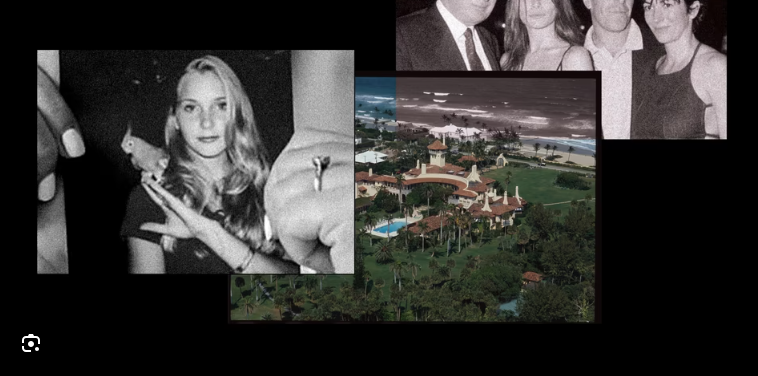
In the state of Florida, massage therapists must be at least 18 years old and state-licensed to practice. The Florida Board of Massage Therapy enforces this standard strictly. There are no loopholes or exceptions that would have permitted a 17-year-old to work in that capacity—especially not in a high-profile establishment like Mar-a-Lago, which employs vetted staff under direct supervision and federal background regulations due to its VIP clientele.s
So how did Giuffre, a minor, end up in a position at Trump’s private club? Was she hired under false pretenses? Was her title misrepresented to skirt licensing laws? Or was her “massage work” something that existed outside of official employment structures altogether?
What complicates matters further is Donald Trump’s own admission of familiarity with both Giuffre’s future abuser, Jeffrey Epstein, and the circumstances surrounding her recruitment. Trump once publicly remarked that Epstein was a “terrific guy” who “likes beautiful women as much as I do—many of them on the younger side.” Later, as Epstein’s crimes became undeniable, Trump shifted tone, claiming he had a “falling out” with Epstein and that Epstein had “stolen his employee.”
That phrase—stolen his employee—has never been fully unpacked. If Trump was aware that Giuffre worked for him, and if she was underage at the time, that raises disturbing questions about how much he knew about Epstein’s recruitment network. Was Trump aware of Epstein’s predatory activities before they became public? And if he truly saw Giuffre as “his employee,” what, exactly, was her job?
For someone who prides himself on running a “tight ship” at Mar-a-Lago, Trump’s claim of regret over losing an employee to a known sexual predator rings hollow. It suggests an awareness of who Giuffre was and of her circumstances—awareness that, if genuine, makes it difficult to believe Trump knew nothing about the exploitation occurring in his social circle.
Epstein’s arrest and subsequent death left behind a web of unanswered questions, many of which intersect uncomfortably with figures in Trump’s orbit. The legality of Giuffre’s employment, the moral implications of Trump’s statements, and the proximity of Mar-a-Lago to Epstein’s recruitment pipeline deserve far more public scrutiny than they’ve received.
If a 17-year-old was indeed working at Mar-a-Lago as a “massage therapist,” then someone broke the law. And if the owner of that establishment expressed knowledge and regret about her being taken by Epstein, the public has every right to ask: what did Donald Trump really know, and when did he know it?
Until those questions are answered, the shadow over Mar-a-Lago—and the people who ran it—will remain.